Carbon Footprint
Environmental Groups Urge U.S. Congress to Pause Data Center Growth as Federal AI Rule Looms


More than 230 environmental and public-interest groups asked Congress to halt approvals for and construction of new data centers. They want a temporary national moratorium until federal rules address energy use, water needs, local impacts, and emissions. The request came from Food & Water Watch and was signed by national and local groups across the country.
They said that the fast growth of artificial intelligence (AI) and cloud services is putting big new demands on local grids and water systems. They also said current federal rules do not cover the environmental or social impacts linked to data center growth.
Why the Groups Want a Moratorium
Data centers are using more electricity each year. U.S. data centers consumed an estimated 183 terawatt-hours (TWh) of electricity in 2024. That was about 4% of all U.S. power use. Some national studies project that number could rise to 426 TWh by 2030, which would be about 6.7% to 12% of U.S. electricity, depending on growth rates.
Global data centers used around 415 TWh of electricity in 2024. Analysts expect double-digit annual growth as AI loads increase.


AI-ready data center capacity is projected to grow by about 33% per year from 2023 to 2030 in mid-range market scenarios. Industry groups say global data center capacity could reach over 220 gigawatts (GW) by 2030.
Some groups warn that data center CO₂ emissions might hit 1% of global emissions by 2030. That’s about the same as a mid-size industrial country’s yearly emissions. They say the growth rate is rising faster than the reductions in many other sectors.
An excerpt from their letter reads:
“The rapid expansion of data centers across the United States, driven by the generative artificial intelligence (AI) and crypto boom, presents one of the biggest environmental and social threats of our generation. This expansion is rapidly increasing demand for energy, driving more fossil fuel pollution, straining water resources, and raising electricity prices across the country. All this compounds the significant and concerning impacts AI is having on society, including lost jobs, social instability, and economic concentration.”
When AI Growth Collides With the U.S. Power Grid
Several utilities have linked new power plant plans to data center growth. In Virginia, the largest power company and grid planners see data centers as a key reason for new infrastructure.
In Louisiana, Entergy moved forward with a new gas-plant plan expected to support a large hyperscale data center campus. These cases show how utilities now size new plants with AI-related load in mind.
Some utilities believe these expansions might increase local electricity rates by a few percentage points. This depends on how costs are shared. Regulators in various areas say that extra load can increase distribution and transmission costs. This might lead to higher bills for households.
Several grid operators also report congestion or long waiting lines for new power connections. Northern Virginia, Texas, and parts of the Pacific Northwest now have interconnection queues. In these areas, data center projects make up a large part of the pending requests.
Water Use and Siting Concerns
Water demand is another point of conflict. Many large data centers rely on water-cooled systems. A typical water-cooled data center may use around 1.9 liters of water per kWh. More advanced or dry-cooled facilities may use as little as 0.2 liters per kWh, but these designs are not yet common.
One medium-sized data center can use about 110 million gallons of water per year. Large hyperscale sites can use several hundred million gallons annually, and, in some cases, even more. Global estimates suggest data centers could use over 1 trillion liters of water per year by 2030 if growth continues.


These demands have triggered local resistance. In parts of Arizona, California, and Georgia, community groups have raised concerns about water use during drought periods. In some cases, local governments paused or limited data center approvals. A single campus can use more water each year than some small towns.
Trump Plans Executive Order on AI Regulation
While groups push for limits on new data centers, the White House is also preparing an executive order that would reshape AI policy nationwide, as reported by CNN. President Donald Trump has said he plans to issue an order that would block states from creating their own AI rules.
The administration aims to create one national standard for AI. This way, companies won’t have to deal with different state regulations.
Drafts of the plan say the order may tell federal agencies to challenge state AI laws. This could happen through lawsuits or funding limits if the laws clash with federal policy. Supporters say a unified national rule could help U.S. companies compete globally and reduce compliance costs.
State leaders and consumer protection groups argue the opposite. They say states have a legal right to pass their own rules on privacy, safety, and data use. Some governors argue that an executive order cannot override state laws without action by Congress. Minnesota lawmakers, for example, continue to write their own AI bills focused on deepfakes and child-safety concerns.
The debate adds another layer to the data center issue. AI systems require massive computing power. If AI keeps growing quickly, analysts expect even heavier pressure on local grids and water systems. Advocacy groups say that this makes federal regulation more urgent.
Scale of AI and Hyperscale Build-out
The U.S. is in the middle of a major build-out of hyperscale and AI-optimized data centers. Industry trackers report that hundreds of new hyperscale facilities are planned or already under construction through 2030. Many of these campuses are designed specifically for AI training and inference workloads.
Major cloud and social media companies have sharply increased capital spending to support this build-out. Amazon, Google, Microsoft, Meta, and other major platforms, combined spending on AI chips, data centers, and network upgrades reached hundreds of billions of dollars per year in the mid-2020s. These spending levels signal how fast demand is growing.
Some experts track how major technology firms have changed over time. For example, one big cloud provider said its data center electricity use has more than doubled in the last ten years. This increase happened as its global reach grew. This gives a sense of how long-term trends feed current infrastructure pressures.
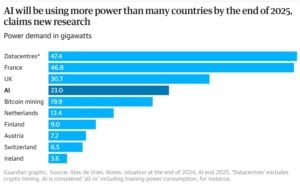
AI also adds new layers of demand. Training one large AI model can use millions of kilowatt-hours of electricity. Operating a popular chatbot can require many megawatt-hours per day, especially at peak traffic.
Research shows that processing one billion AI queries uses as much electricity as powering tens of thousands of U.S. homes for a day. This varies with the model’s size and efficiency.

Cities and States Move Faster Than Washington
Local governments have acted faster than federal agencies to respond to public concerns. More than 100 counties and cities have passed temporary moratoria, zoning limits, or new environmental rules since 2023. Examples include parts of Georgia, Oregon, Arizona, and Virginia, where communities plan to evaluate energy and water impacts before approving new projects.
Advocacy groups also argue that federal standards have not kept up. The U.S. does not have national energy-efficiency rules for private data centers. It also does not require detailed, mandatory reporting on energy, water, or emissions for the sector. The groups pushing for a moratorium say Congress must update these policies before more sites break ground.
What the Debate Means for 2026 and Beyond
Congress will review the environmental groups’ request in the coming months. Lawmakers are expected to weigh economic benefits against rising tensions around energy, water, and local resources. At the same time, the White House may release its AI executive order, which could shape how states and companies set their own rules.
With rapid AI growth, rising electricity use, and expanding data center construction, both debates are likely to continue through 2026. Many experts say long-term solutions will require national standards, better reporting, and closer coordination between states, utilities, and federal agencies.
The post Environmental Groups Urge U.S. Congress to Pause Data Center Growth as Federal AI Rule Looms appeared first on Carbon Credits.