Climate Change
“Do we have the appetite?” – Shell’s fear of Niger Delta clean-up costs revealed

Newly-released internal documents from Shell suggest that a desire to avoid incurring the costs of shutting down its oil pipelines and cleaning up spills from them was part of the energy giant’s motivation in selling off its onshore oil assets in the Niger Delta.
The company has been accused by campaigners of cutting and running by selling its controversial oil infrastructure to African firms without the resources to deal with the pollution or decommission the pipelines, leaving Nigeria’s oil-rich southern region worse off.
Climate Home News has previously revealed that highly-polluting gas flaring in the Niger Delta has soared since the sell-off, while Shell avoids responsibility and continues to profit from the oil assets it sold.
-
How Shell is still benefiting from offloaded Niger Delta oil assets
Shell used its exit from onshore operations in Nigeria to boost its climate credentials, but new reporting shows that the firm continues to trade oil from its former business -
Gas flaring soars in Niger Delta post-Shell, afflicting communities
Since the multinational sold its assets in Nigeria’s oil hub, data analysis for Climate Home News shows flaring has risen, harming locals and the climate

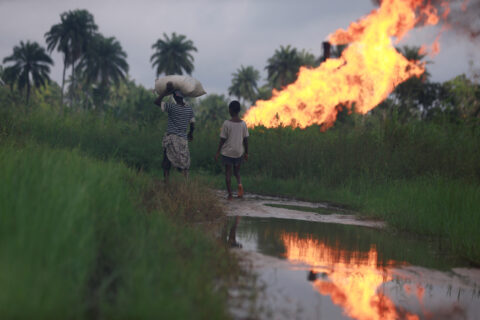
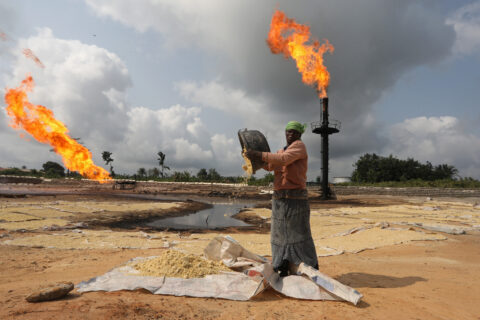
The documents – which were cited in UK court proceedings and featured in a new Amnesty International report released on Wednesday – show that in June 2013 a Shell presentation to a policy forum on Nigeria considered options for “handling potential liabilities related to [Shell] past oil spills”.
The presentation identified 375 square kilometres of mangrove forests – an area the size of a large city – which had been affected by oil spills and asked “do we have the appetite to take on this open-ended problem?”
The next year, in 2014, Shell’s then CEO Ben van Beurden was warned by colleagues that closing down the company’s pipelines in the south of Nigeria would cost billions of dollars and take several decades.
The year after that, in 2015, Shell began to divest its Niger Delta oil businesses by selling its stake in a pipeline to Nigerian oil company Aiteo for $1.7 billion.
“Well aware” of the costs
At the time of this divestment, Amnesty International’s report says Shell “appears to have been well aware of the massive costs of decommissioning the entirety of its aged and decaying infrastructure. Rather than cover these costs, it appears that Shell decided to sell.”
The process continued, with Shell selling all its remaining onshore oil operations to a local consortium called Renaissance. At the time, Shell said its divestment “aligns with its intent to simplify its presence in Nigeria” and focus investment on offshore oil.
UN experts accuse top oil firms of rights violations over Nigerian asset sales
Despite calls for the sale to be blocked, Nigeria’s oil regulator gave it fast-track approval. Mark Dummett, deputy director and head of business and human rights at Amnesty International, told Climate Home News that this allowed Shell to “cut and run”, while communities remained trapped with polluted land, poisoned water and no justice.
Some of the affected Niger Delta communities have since taken the oil giant to local and international courts. In 2015, the Ogale and Bille communities filed a UK legal action against Shell and its Nigerian subsidiary over serious oil pollution which is scheduled to be heard in March 2027.
Shell had not responded to a Climate Home News request for comment by the time of publication. But in a statement included in the Amnesty report, the company rejected “the characterisation and portrayal of Shell” presented by the rights group findings, which it said did not reflect the “challenging operating environment in the Niger Delta at the time, including large-scale oil theft, sabotage and illegal refining carried out by organised criminal gangs”.
For blighted Niger Delta communities, oil spill clean-ups are another broken promise
The oil major added that it is “committed to honesty, integrity and respect for people, and to conducting business in an ethical and transparent manner”, noting that it had worked with Nigerian authorities, the state-owned partner and communities to clean up spills. Decontamination and restoration efforts continue in the delta under a government-led programme.
Olanrewaju Suraju, chairman of the Nigeria-based HEDA Resource Centre, an environmental justice NGO which partnered with Amnesty on the report, criticised Shell for taking oil and profits from the region and leaving pollution behind. “Communities in the Niger Delta deserve truth, justice, clean-up and full remedy,” he said in a statement.
The post “Do we have the appetite?” – Shell’s fear of Niger Delta clean-up costs revealed appeared first on Climate Home News.
“Do we have the appetite?” – Shell’s fear of Niger Delta clean-up costs revealed