Climate Change
COP31 Bulletin Day 5: Cover decision wishlist issued as China bows out of COP33
As consultations on a potential cover decision for COP31 continue on Friday, the presidencies put out a “summary of reflections” on views expressed so far.
It is basically a menu of elements a text could contain, with the COP31 presidency stressing “it is not intended to reflect consensus, nor the strength or prevalence of views expressed”.
As we reported yesterday, some large emerging economies are even arguing there shouldn’t be a cover decision, feeling it’s something that has been thrust upon them and led more by the Turkish and Australian presidencies than by countries.
Nearly everything remains in the informal note for now – from responding to an overshoot of 1.5C warming to welcoming the roadmaps on transitioning away from fossil fuels and tackling deforestation, and increasing electrification to 35% of final energy consumption by 2035.
Also grabbing the attention of delegates on Friday was news about where future COPs will take place. Hopes that the world’s top-emitter might host COP33 in 2028 – a key year when the next review of global climate progress will be concluded – appear to have been dashed. The Guardian reported on Friday morning that China has ruled itself out of the running.
Climate Home News understands that the information comes from the ministerial level, although the reasons for the decision have not been explained. The US presidential election will happen close to the beginning of the COP that year, although any change in government – following the Republicans’ drubbing in the midterms – would not take effect until the start of 2029.
The host country for that year must come from the Asia-Pacific region, and other candidates are said to include Uzbekistan, South Korea, Indonesia and Thailand. In April, a South Korean official told Climate Home News the national government has not formally expressed an interest in hosting COP33 and questioned whether it would have the capacity to do so as it is running the G20 in 2028.
At climate talks in Bonn in June, the Indonesian government asked about the timeline for the selection of the COP33 host and Indonesian ministers are understood to have discussed whether to host the talks. A decision on the issue is not due in Antalya, so more speculation is likely.
Friday is Finance and Trade Day at COP31, so we’ll be reporting on related discussions. In the meantime, don’t miss this exclusive comment piece from eight ministers arguing that as governments turn to trade-related measures to deliver on their climate targets, cooperation is vital to reduce fragmentation and costs, and build more resilient economies.
Presidency publishes countries’ wishlist for cover decision
After a first round of consultations on the COP31 cover decision, in which some large emerging economies questioned whether it should exist at all, the presidency has published its summary of the views countries expressed.
The document is essentially a lengthy wishlist of the pet ideas governments would like to see in the final text. Many are unlikely to make it past the next hurdle. The presidency itself stresses that the note does not reflect consensus, nor how widely each view is held.
At the heart of the text are calls for a response to the overshoot of the 1.5C warming limit, which the UN now says is unavoidable, at least temporarily. Concepts in the summary include limiting the magnitude and duration of the overshoot, keeping the peak as low as possible, returning to 1.5C as soon as possible, and understanding the scientific implications of surpassing the threshold.
-
COP31 Bulletin Day 4: Emerging economies question need for COP31 cover decision
Russia, Saudi Arabia and others are questioning the legitimacy of the Australian-Turkish push for an overarching COP31 agreement -
COP31’s electrification pledge wins support, with caveats on clean power and finance
At least 14 countries have endorsed the voluntary pledge so far, but island nations warn it must not distract from the shift away from fossil fuels


Speaking on Friday morning, Diana Acconcia, director for international affairs at the European Commission, said the bloc supports the COP31 presidencies’ proposal to acknowledge and address the overshoot in the cover decision.
But Climate Home News understands that during the initial consultations some countries, including Saudi Arabia, tried to cast doubt on the science behind the landmark UNEP report acknowledging that overshoot is inevitable and charting pathways to come back down.
They reportedly argued that, as it is not peer-reviewed, it should not be used as a basis for discussions. The summary does include an ask for the cover decision to exclude “grey literature”, the term some governments have used for the report in discussions.
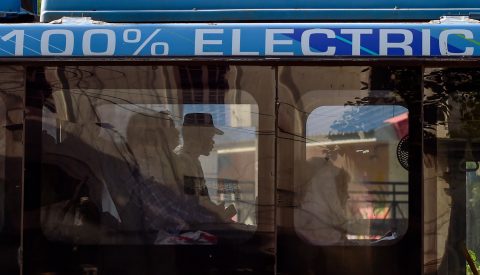
Widely trailed proposals include the “35 by 35” electrification target championed by the Turkish and Australian presidencies, which would aim to raise electricity’s share of final energy demand from around 20% today to 35% by 2035. Also on the list are a follow-up to last year’s goal of tripling adaptation finance, including a baseline and milestones to track it, and an emphasis on the importance of forests and oceans.
Other ideas are likely to prove much more controversial. A call to tackle methane, a highly potent but short-lived pollutant, is favoured by the EU and UK, among others. It specifically mentions venting, flaring and “near-zero intensity”, and might face resistance from fossil fuel producing countries.
The same is true of a request to “welcome” the fossil fuel transition roadmap released by the COP30 presidency. The roadmap calls on governments to prepare national transition plans by 2028, with the replacement of fossil fuels targeted only from 2031–2033. Arab countries have already drawn a line in the sand: in its opening statement the group opposed references to the COP30 presidency’s roadmaps and the Action Agenda in any decision.
A call to “accelerate” carbon capture and storage and carbon removal technologies, framed as necessary to bring temperatures back down after the overshoot, is favoured by fossil fuel producers and especially Gulf states. It will probably face stiff opposition from countries that see these technologies as a distraction.
A proposal for developed countries to take the lead by reaching net zero earlier than developing nations, and then going “net negative”, is also set to sow divisions. Wealthy nations are expected to resist new differentiated obligations.
Trade is another flashpoint. The summary includes a call for a time-bound phase-out of “unilateral climate trade measures”, a thinly veiled reference to the EU’s new carbon border levy. A proposed agenda item on trade was dropped at the start of the summit, so supporters see the cover decision as the next-best home for it.
Another round of consultations is taking place at lunchtime on Friday. Countries will then be invited to submit written views until Saturday, after which the presidency is expected to produce a first draft of the text.
The post COP31 Bulletin Day 5: Cover decision wishlist issued as China bows out of COP33 appeared first on Climate Home News.
COP31 Bulletin Day 5: Cover decision wishlist issued as China bows out of COP33