Climate Change
COP31 Briefing: What to expect from the Antalya climate summit?
Here’s an overview of issues to watch as governments, businesses and civil society head to the Turkish seaside resort of Antalya for two weeks of negotiations, leaders’ speeches, panel discussions and initiative launches.
This is the first COP to be staring an almost certain overshoot of the 1.5C warming limit in the face, even as countries squabble over when the next UN science reports should be delivered.
The geopolitical mood ahead of the annual talks, from November 9-20, has been sweetened somewhat by Lula’s surprise re-election in Brazil and American voters delivering a thumbs down to climate change-sceptic Donald Trump in the US midterms this week.
Still, neither of those things will make the talks much easier in practice, as fossil fuel-producing emerging economies are unlikely to want to make compromises on issues such as the energy transition and donor nations aren’t expected to turn up with much additional money for helping developing countries deal with worsening climate impacts.
With government budgets squeezed by ongoing conflicts and oil prices riding high after the Strait of Hormuz crisis, there will be a focus on the national benefits of boosting renewables, from a security and cost perspective. This advances the cause of the voluntary electrification goal proposed by Türkiye – which could be one of the biggest headlines from this COP.


How did we get here?
In terms of the mechanics of how COP31 will work, all eyes are on the relationship between the co-hosts Türkiye and Australia. This unusual splitting of the presidency roles wasn’t born out of love, despite the friendly demeanour the country’s two environment ministers displayed at the pre-COP in Fiji.
The deal, for Türkiye to host the COP on its soil and run the non-negotiated Action Agenda side of things while Australia manages the formal negotiations, was reached last year after Ankara steadfastly refused to back down in the face of greater support for its rival. It’s all smiles for now, with Australia backing the Turkish-championed electrification goal and early signalling in Fiji that both COP31 teams will work on producing a COP cover decision, summarising key outcomes and setting the political direction for the year ahead.
Türkiye says it has “final decision” at COP31 despite Australia running negotiations
But what if they disagree on how things are going? That’s where it could get awkward. As we have reported, Türkiye is adamant it will have the final say over what happens in Antalya. Ahead of the COP, the government of President Recep Tayyip Erdoğan has been criticised by rights campaigners for cracking down on civil liberties in the country, while COP31 attendees have been warned not to interfere in Türkiye’s internal affairs. Apparently government approval for the traditional COP climate protest due to take place on Saturday is still pending.
The view from Climate Home News
With the opening plenary scheduled for Monday, Australia is doing its best to try to avoid an agenda fight at the start. African countries have submitted requests for additional items including on adaptation finance and trade.
Nepal, which is still struggling with the aftermath of August’s huge flash flood, has also thrown its hat into the ring, requesting an agenda item to kick off a formal work programme on mountains and climate change. A row over what to discuss even before the talks start is never a good look, but it’s unclear how Australia is going to settle this ahead of time.
Later in the week – on November 11 and 12 – the leaders’ segment takes place. The early speaking list shows a relatively low-key turnout, with the few big hitters including Brazil’s Lula, the UK’s Andy Burnham and Spain’s Pedro Sanchez. India and China aren’t sending their top men. We’ll be listening out for whether leaders commit to the electrification goal, national plans for transitioning away from fossil fuels and cutting deforestation, and/or any new pledges of climate finance.
Early speakers’ list suggests few powerful leaders will attend COP31
On the last of these, it’s likely to be slim pickings, with the EU saying it’s coming empty-handed. The Adaptation Fund will be seeking contributions from donor governments as will the new Pacific Resilience Facility. African and other developing countries will push for a number to be put on last year’s vague goal to triple adaptation finance by 2035, as well as talks on how to get there. If rich nations refuse to budge at all, we expect fireworks.
Towards the end of the talks, all eyes will be on the cover decision – what goes into it and what doesn’t. Key elements that could be in there, according to Australia, include some wording on the 1.5C overshoot, the electrification goal, cutting methane emissions, early warning systems, improved access to finance for climate-vulnerable countries and nature-based solutions including more action to protect forests and oceans.
The elephants in the room will be whether and how to incorporate the new global roadmap on transitioning away from fossil fuels into the formal COP outcome and any specification – wanted by the EU, for example – that the new electrification goal should be achieved using largely clean sources of power.
Fossil fuel transition and how to cut emissions
Having seemingly emerged from nowhere, the idea of a global fossil fuel roadmap became a flashpoint at last year’s summit in Belém. After countries fought bitterly over it in the formal negotiations, with only around half of countries in favour, COP30 president André Corrêa do Lago saved the day by promising to produce a voluntary roadmap.
Unveiled on November 3, the 182-page document sets out a voluntary three-stage timetable to 2033. Countries are advised to draw up national transition plans by 2028, in time for the next Global Stocktake, then prioritise building up clean energy in 2029–30, with the main push to cut fossil fuel production coming only from 2030 onwards.
The EU has made clear that the extension of the work programme is one of its priorities for the summit.
It remains to be seen how the blueprint will be followed up. Brazilian officials have emphasised that it is not a formal document that needs to be negotiated.
But some governments, especially Europe and small island states, might lead a charge to try and include references to it in the COP31 cover decision, expected to be the summit’s main negotiated outcome. Fossil fuel-producing nations, meanwhile, have already made it clear that’s a no-no for them.
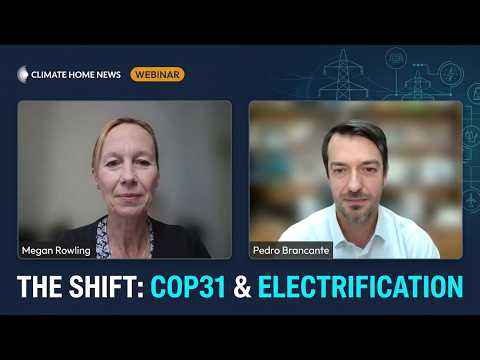
In the formal negotiations, the hottest ticket is the mitigation work programme (MWP) – the dedicated track for discussing emission-cutting measures that’s barely made progress over the years, primarily due to stonewalling from fossil fuel producers like Saudi Arabia and Russia.
After failing to agree on minimal conclusions last June in Bonn, countries now need to decide in Antalya whether this forum should continue to exist and, if so, in what form.
The Least Developed Countries (LDCs) and small island developing states want the MWP to continue with a stronger mandate more closely linked with efforts to deliver on the outcomes of the Global Stocktake, which in 2023 called for the transition away from fossil fuels in energy systems. Emerging economies like Saudi Arabia, India and China are likely to fiercely oppose that framing.
Science row set to rumble on
While it’s not on the negotiating table, climate science could carve out a more prominent place than at recent COPs. The context is stark: the UN now accepts that overshooting warming of 1.5C is unavoidable, and even its most optimistic scenario sees it peak at 1.7C–1.8C around mid-century before falling back again.
Some countries may push for COP31’s headline outcomes to acknowledge the overshoot and call for stronger efforts to limit it. Others may point to it as evidence that the world should abandon 1.5C altogether.
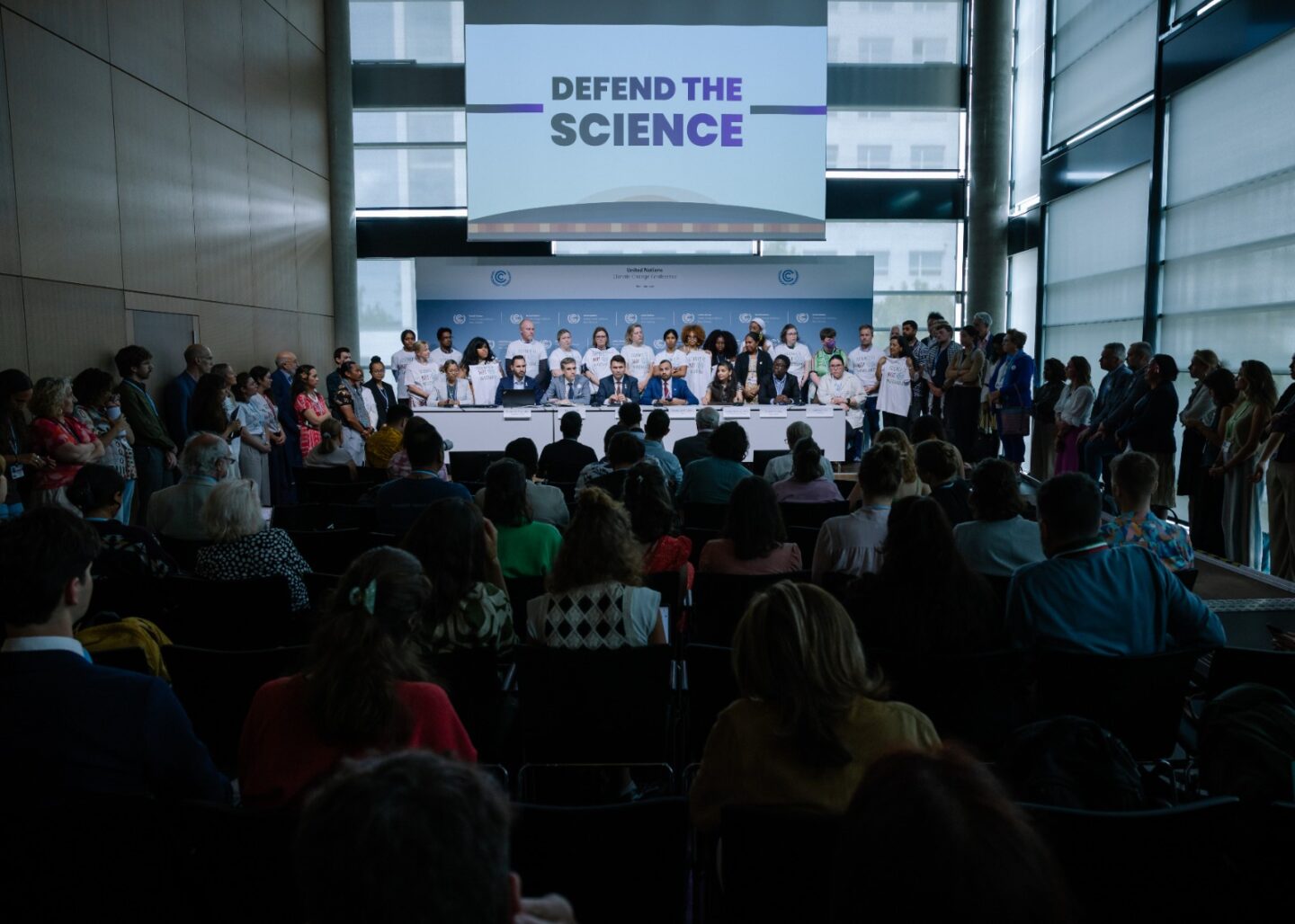
A bigger fight over science has been rumbling on elsewhere, at the Intergovernmental Panel on Climate Change (IPCC), but it is likely to cast a long shadow over proceedings in Antalya. The UN panel’s last meeting a few weeks ago was suspended after governments failed, for the sixth time, to agree on a timeline for its next flagship assessment.
A majority of countries want the AR7 set of IPCC reports ready in time for the second global stocktake (GST) of climate action, due to end in November 2028. But a smaller group of developing nations, led by Saudi Arabia, India and Russia, have pushed back claiming this schedule would make it harder for developing-country scientists to contribute. While governments will continue discussions online at an extraordinary IPCC meeting in early December, some might push for the COP31 to send a signal.
One option floated by scientists and policy experts is for the COP31 cover decision to call on the IPCC to deliver its inputs to the GST in good time. And with the dispute now more political than technical, the presidency could use the presence of world leaders and ministers in Antalya to try to broker a deal that has so far eluded their more junior colleagues at the IPCC.

Electrification goal – a bright spot?
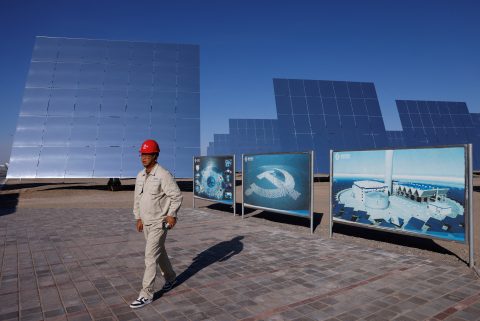
COP31’s flagship initiative to accelerate the electrification of the world’s economy – which is part of the Action Agenda being led by Türkiye – has been criticised for failing to include a commitment to produce the power from clean energy.
Governments that sign onto the voluntary pledge in Antalya will commit to increasing electricity’s share of total energy consumption to 35% globally by 2035 in line “with pathways consistent with keeping 1.5C alive”, the text put together by the Turkish presidency says.
The pledge’s text says the electricity goal should be supported by “diverse and sustainable energy sources”, but stops short of explaining what these sources are. The goal is “complementary to efforts to expand renewable energy and improve energy efficiency”, but the “use of clean electricity” will vary according to national circumstances, it adds.
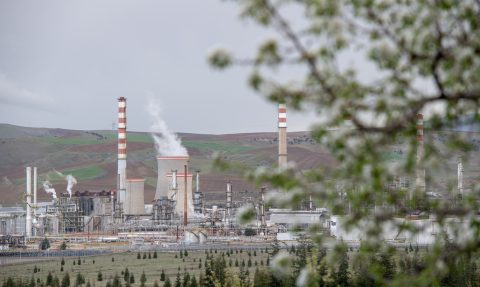
COP31 president Murat Kurum has said that the push to make electrification more “widespread” – through measures like the rollout of electric vehicles and heat pumps – will “automatically” lead to a reduction in the use of fossil fuels. But many campaigners disagree, criticising the proposed pledge for failing to give an explicit signal on the fossil fuel transition.
-
Clean power shields China from oil shock more than any other country
Rapid clean power growth and electrification have boosted China’s energy resilience as well as its confidence in its energy policy pre-COP31, experts say -
Turkish giant sponsoring COP31 cut climate goals then cashed in on oil boom
COP31 sponsors should be screened for “climate integrity”. Yet Koç Holding has become a top partner while its oil refiner runs flat out and its climate targets slip


On Energy Day, on November 10, the Turkish presidency is expected to formally launch its flagship electrification pledge, revealing which countries have signed up. So far, Australia is on the list, and European countries are also likely to back it. India could well be a no, and China’s a maybe.
Meanwhile, there are concerns over whether and how the world can meet the goal. Currently electricity’s share of final energy consumption is around 23-24% and to reach the target that will need to grow by around one percentage point a year. But based on current policies, it’s only set to reach 28% by 2035, according to a new analysis by Climate Action Tracker, with transport falling far behind despite rising sales of electric vehicles.
Experts highlight the urgency of investing in bolstering grids and storage, especially in developing countries, which have not kept pace with fast-growing renewables capacity.
A new mechanism for just transition
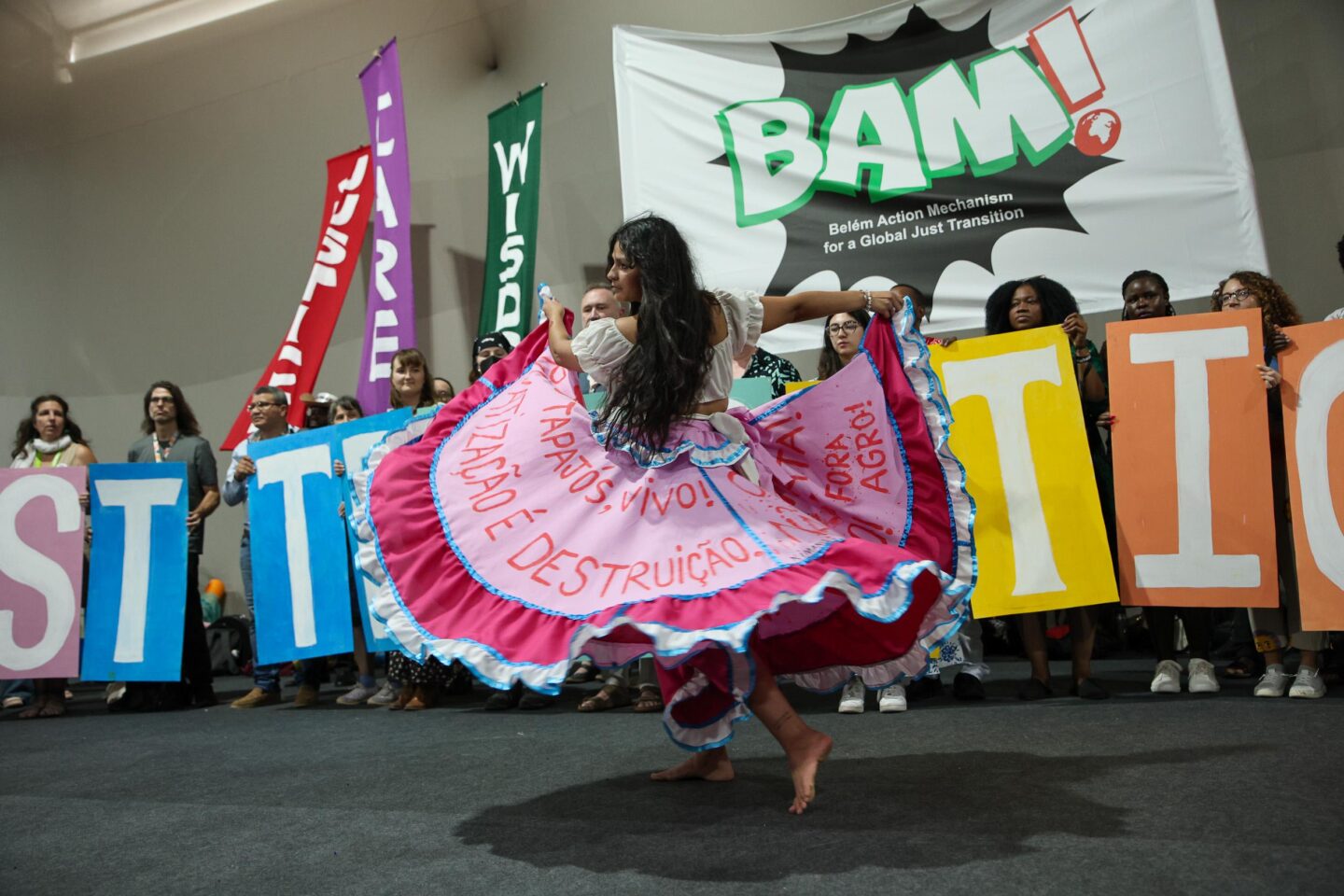
A new mechanism to help countries transition to a cleaner world while reducing inequality is set to be one of the main deliverables from the climate summit, as stated by Australia. Civil society groups – which were pivotal in winning last year’s agreement in Brazil to set up a mechanism – want to see it established in Antalya and take shape over the coming year.
At the mid-year talks in Bonn, countries discussed the design features of the mechanism – including its scope, governance arrangements, structures and functions. The outcome was an informal preliminary note compiling a range of views and possible options.
Exactly what the mechanism should cover, and what it should not, remain a contentious subject for governments. For example, the Like-Minded Developing Countries – a bloc of more than 20 low- and middle-income nations including China and India – and the Arab Group oppose it being used to push them to transition away from fossil fuels (TAFF).
That contrasts with some Latin American and small island states who want to see the mechanism used as a way of furthering global commitments already made in 2023 on TAFF and tripling renewable energy by 2030. Developed countries, for their part, insist the mechanism should not put responsibility on them to provide new financial support.
From Belém to Antalya – gains, gaps and challenges for a new Just Transition Mechanism
Some experts want the new Just Transition Mechanism to lay out actions across different parts of the economy – not just to protect workers in the energy sector but also in agriculture and heavy industries. Others say it should be wider-ranging, making sure vulnerable people get a fair share of benefits from the green economy and efforts to build resilience.
Campaigners, who have nicknamed it the “Belém-Antalya Mechanism” (BAM), have come up with a proposal to keep the thorny issue of how to finance just transitions on the agenda while assuaging concerns that yet another UN fund will be set up and need to be filled at a rather barren time for climate finance.
Climate Action Network International is pushing for a “resource mobilisation group” to be created under the BAM, which could explore and develop ways to boost the quantity, quality and governance of finance for just transition around the world, which is currently not well defined or tracked.

Hunt for more adaptation cash amid surging impacts
As intensifying climate disasters, including floods, heatwaves and drought, continue to hit poor countries the hardest, calls for funding to help them cope have become central to their demands at the climate talks – and COP31 seems set for a new round of fights on adaptation issues.
In a new letter sent to the UNFCCC, African negotiators have asked for three new items, including adaptation finance, to be added into the formal negotiating agenda.
At last year’s COP30, governments agreed to at least triple adaptation finance by a deadline of 2035 but without clarity on the baseline year for tripling, the amount to be delivered, who will pay and the mode of delivery. Countries also agreed to a set of indicators aimed at tracking national efforts to strengthen climate resilience, although these were weakened and cut down from an initial list of 100 to 59 indicators at the last minute.
Last week, the chair of the African group, Antwi-Boasiako Amoah, told a media briefing that “nobody is even sure of the [tripling] baseline and then there’s no clarity on the pathways, and so it’s important for us to be able to get some visibility and some credibility in that aspect”.
Comment: COP31 must deliver finance for Africa or there will be no implementation
At the mid-year talks in Bonn in June, developed countries, mostly European governments, refused to include a target to triple adaptation finance by 2035 in the decision text for the Global Goal on Adaptation (GGA), casting doubt on their commitment to the goal.
And on Wednesday, a United Nations report found that, even if developed countries do triple adaptation finance by 2035, it would only meet about a third of developing countries’ needs.
Other issues up for negotiation on adaptation include deciding on how to put the GGA indicators into practice and where the Adaptation Fund sits within the UN climate architecture, as it needs to be given a mandate to serve the Paris Agreement and receive the proceeds of a 5% levy on UN carbon markets.
China and Africa keen to talk trade
China has made clear it wants COP31 to tackle the thorny issue of trade measures that prevent the free flow of cleantech equipment. As the world’s dominant manufacturer of clean energy technologies, this may be unsurprising. How far China is willing to push the issue in Antalya and what it hopes to achieve are less clear, however.
The issue is poised to re-surface tensions about the use of tariffs and export controls to regulate the trade of both cleantech and emissions-intensive goods.
Tensions set to flare over trade at COP31 as China makes it a priority
At COP30 in Brazil last year, trade became one of the talks’ most contentious issues after China and large emerging economies lobbied to get “unilateral trade measures” on the agenda – a move mostly targeting the EU’s carbon border levy on high-emission imports.
Brazil proposed containing the discussions to a series of dialogues adjacent to the formal negotiations, with initial meetings taking place in Bonn in June. But these have yet to yield practical solutions on a way forward.
Once again, observers anticipate trade to surface as one of the most prominent and challenging issues of the talks. The African Group of Negotiators has already requested an agenda item on trade in an effort to tie the ongoing trade dialogues to the formal negotiation process in the next two years, which is bound to get pushback from European countries.

Support for green industrialisation
Expanding clean technology manufacturing and decarbonising dirty industries has been creeping up the agenda of UN climate summits and has a prominent place on COP31’s non-negotiated Action Agenda.
Host Türkiye – which boasts a large industrial economy – made the issue a central pillar of its push to accelerate global emissions cuts to 2035.
This includes the launch of a Green Industrialisation Facilitation Mechanism, which aims to help Least Developed Countries (LDCs) capitalise on rapidly expanding renewable energy and cleantech value chains to create jobs and spur economic growth.
The mechanism isn’t a new financing scheme but aims to help countries turn their industrial priorities into viable projects and connect them with technical expertise and existing finance.
Separately, an initiative to promote collaboration and exchange between governments, industry and financial institutions on cleantech production and industrial decarbonisation will be launched in Antalya.
The Global Green Industrialization Agenda builds on a declaration endorsed by 19 countries in Belém last year, which called for a mechanism to support industrial strategies that are just, sustainable and provide economic opportunities in developing countries. It will be hosted by the UN Industrial Development Organization.
Oceans emerge as top nature concern
With a super El Niño event shattering temperature records beneath the waves and weakening the planet’s largest carbon sink, protecting the ocean is an issue Türkiye and Australia seem to align on.
The Turkish presidency has ranked it high up its Action Agenda and is preparing a declaration on the topic, while Australia has signalled that a mention of ocean-based climate measures could be included in a cover decision.
In the lead-up to COP, a coalition of over 100 nations, including Brazil, the EU and the group of African countries, has called for a strong ocean outcome at COP31. Unlike previous decisions that merely “recognise” the ocean’s importance, they argue Antalya should deliver a plan for implementation of ocean measures.
Pacific islands have pushed strongly for this too, and as part of the pre-COP in Fiji, they also launched their own declaration calling for elevating the role of oceans in reducing emissions. Some countries have called for a longer-term process that culminates in the second Global Stocktake.
Pacific leaders rail at climate finance failures after pre-COP trip to Tuvalu
Veteran US negotiator Sue Biniaz said the outlook is relatively positive, with strong support from both presidencies and little pushback. Countries should now commit to ocean conservation measures as part of their climate plans, she said, which is something championed by the Blue NDC initiative outside of the formal talks.
Ilana Seid, the chair of the AOSIS group of small island states, said “the best way we can alleviate stress on the ocean is to transition away from fossil fuels”, which is something the Arab group of nations has warned against discussing in the context of ocean negotiations.
Unlike last year’s Amazon COP in Belém, action on deforestation has been almost entirely cut out of Türkiye’s Action Agenda. Still, some work has continued towards meeting a global goal of halting deforestation by 2030, including a COP30 presidency roadmap launched on November 3 by Brazilian officials.
It outlines a menu of policies – including on protecting standing trees, channeling new finance and planting new forests – to reach the global goal, agreed three years ago in Dubai. Brazilian officials told the roadmap’s launch that it is up to countries to decide how they adopt these recommendations.
The post COP31 Briefing: What to expect from the Antalya climate summit? appeared first on Climate Home News.
COP31 Briefing: What to expect from the Antalya climate summit?