Climate Change
Climate adaptation helps African nations tackle rising conflict over resources

Somali farmers and herders battered by droughts, floods and decades of conflict are starting to get help in the form of climate-smart crops and animals, new wells and restoration of barren landscapes to boost their resilience in a warming world.
Some of this support is being provided under Ugbaad, the Somali name for a new project meaning “fresh sprouting pasture”. Backed by an $80-million grant from the UN’s Green Climate Fund, it is enabling farmers to earn a more reliable living as climate shocks intensify. The project is also reducing conflict tensions among communities, according to a government representative.
Abdiaziz Ibrahim Aden, adaptation and resilience lead at Somalia’s Ministry of Environment and Climate Change, said farmers who lost their land to floods and erosion have been able to rehabilitate it and plant crops like banana and sesame for export. “Their productivity is increasing now,” he told Climate Home News.
He said the project, which aims to benefit over 2 million people in total, has made young people less vulnerable to recruitment by armed groups. Beyond improved water access for pastoralists, the initiative also includes ways to disseminate timely climate information to communities and build government capacity to keep land and ecosystems in better shape.
Nonetheless, Somalia remains one of the countries most vulnerable to climate change, with millions of its people facing food insecurity, displacement and recurring climate disasters.

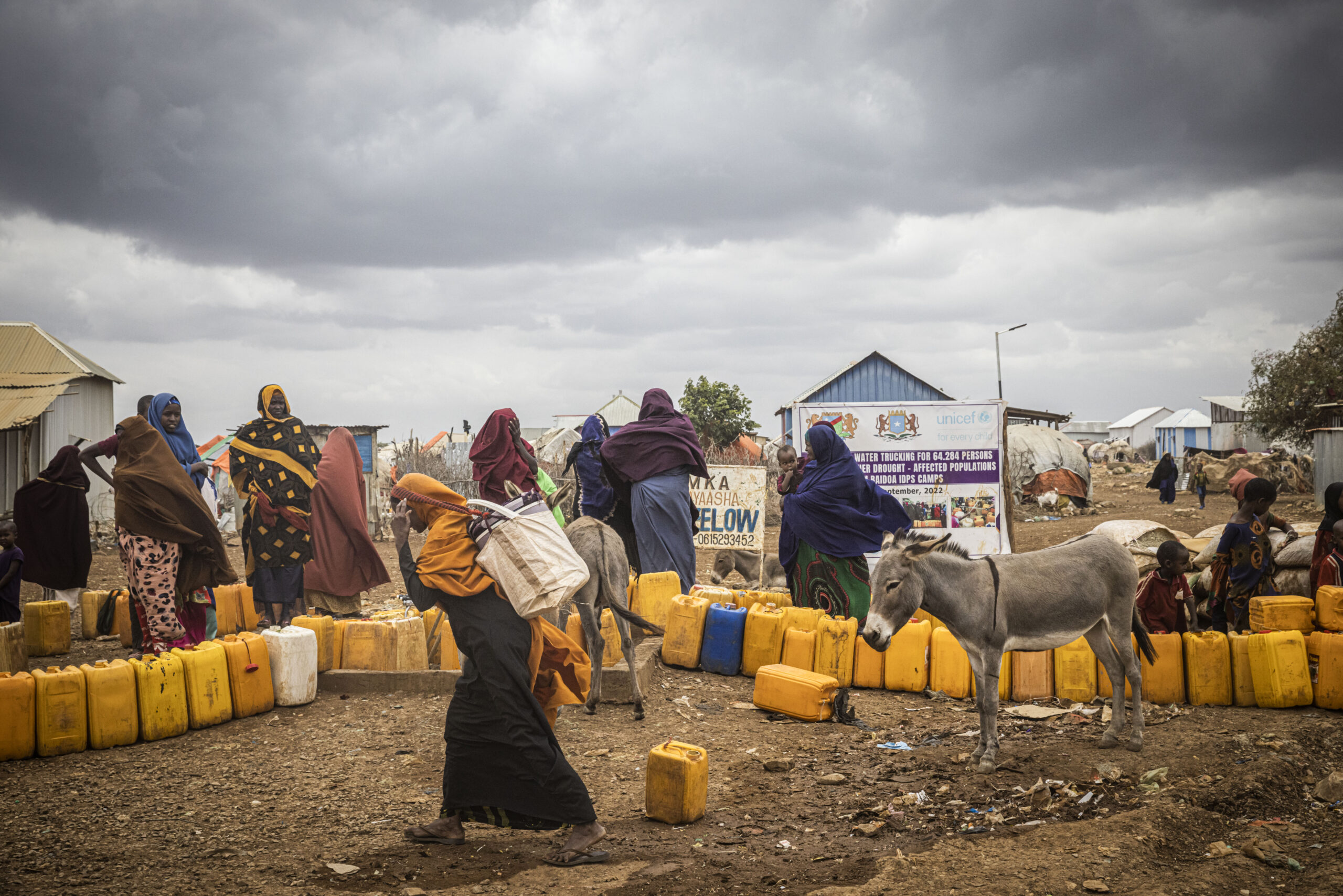
Poor rains and major aid shortfalls have forced critical food and nutrition programmes to close, worsening hunger. The Integrated Food Security Phase Classification, a global system used to measure hunger crises, has warned that nearly 2 million Somali children could face acute malnutrition this year.
Climate change – a threat multiplier
Somalia’s economy hinges on agriculture and repeated climate shocks continue to inflame tensions related to farming and food production. According to the United Nations Development Programme (UNDP), every two in three conflicts in the country stems from competition over natural resources.
During drought periods, disputes often flare up among neighbouring communities over scarce water sources as herders move with their livestock in search of boreholes, Haji said.
Clashes can quickly escalate in Somalia where many herders carry guns for protection, he added. “If two people meet at the water borehole and they fight over that area, then the war prolongs and extends from that zone to other zones,” he explained.
Aid agencies grapple with climate adaptation in fragile states
Somalia is not alone. Across conflict-affected parts of Africa, climate change is fast becoming more than just an environmental challenge. From the shrinking of Lake Chad in the Sahel region to devastating floods in South Sudan and prolonged droughts across the Horn of Africa, stronger climate impacts are intensifying competition to maintain livelihoods in regions already struggling with weak governance, displacement and insecurity.
Alec Crawford, director of nature for resilience at the International Institute for Sustainable Development (IISD), described climate change as a “threat multiplier” that worsens already existing social and economic tensions. “It is a contributing factor to violence and instability and conflict, but it’s not the sole driver,” he emphasised.
Fragile states coordinate peacebuilding and adaptation
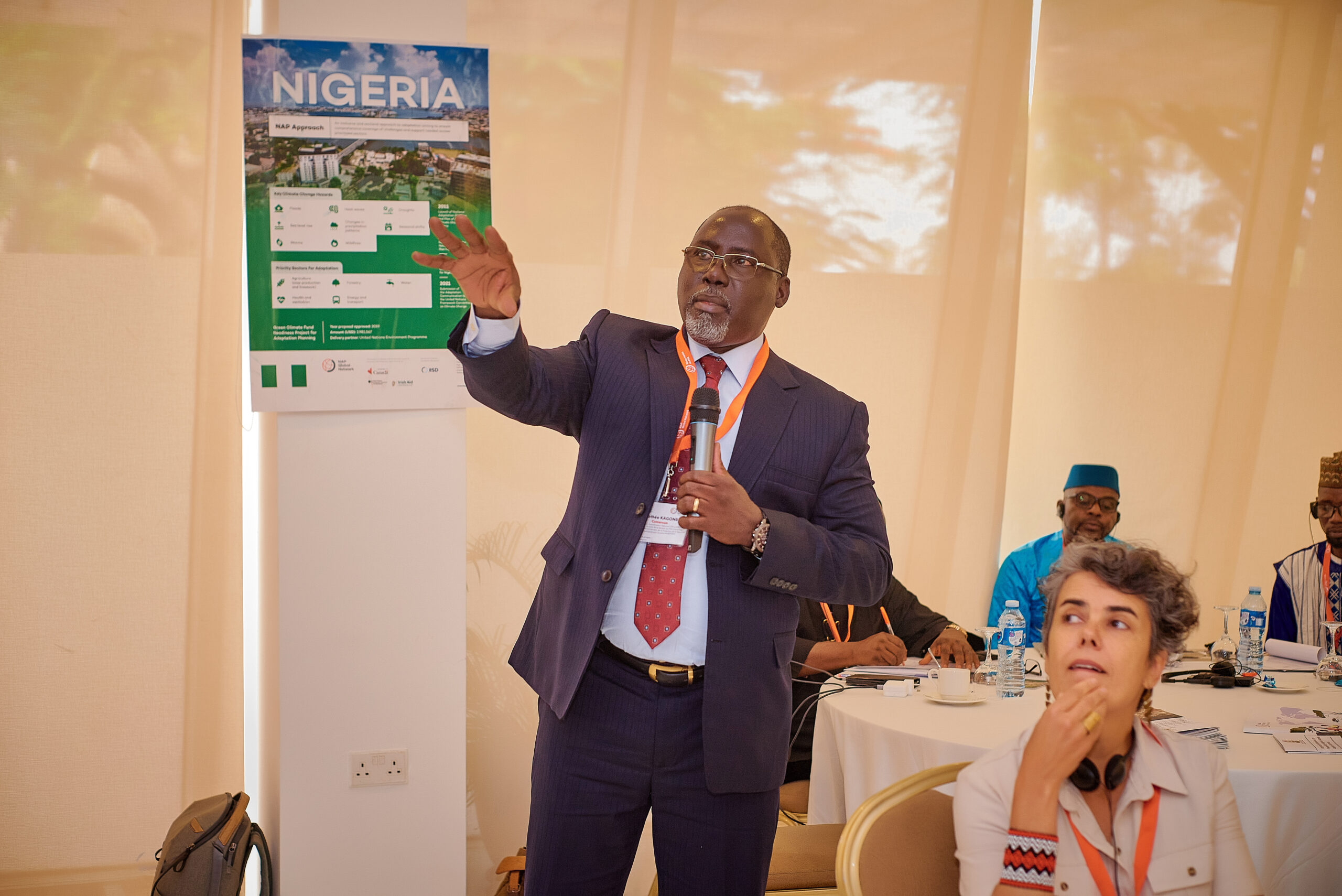
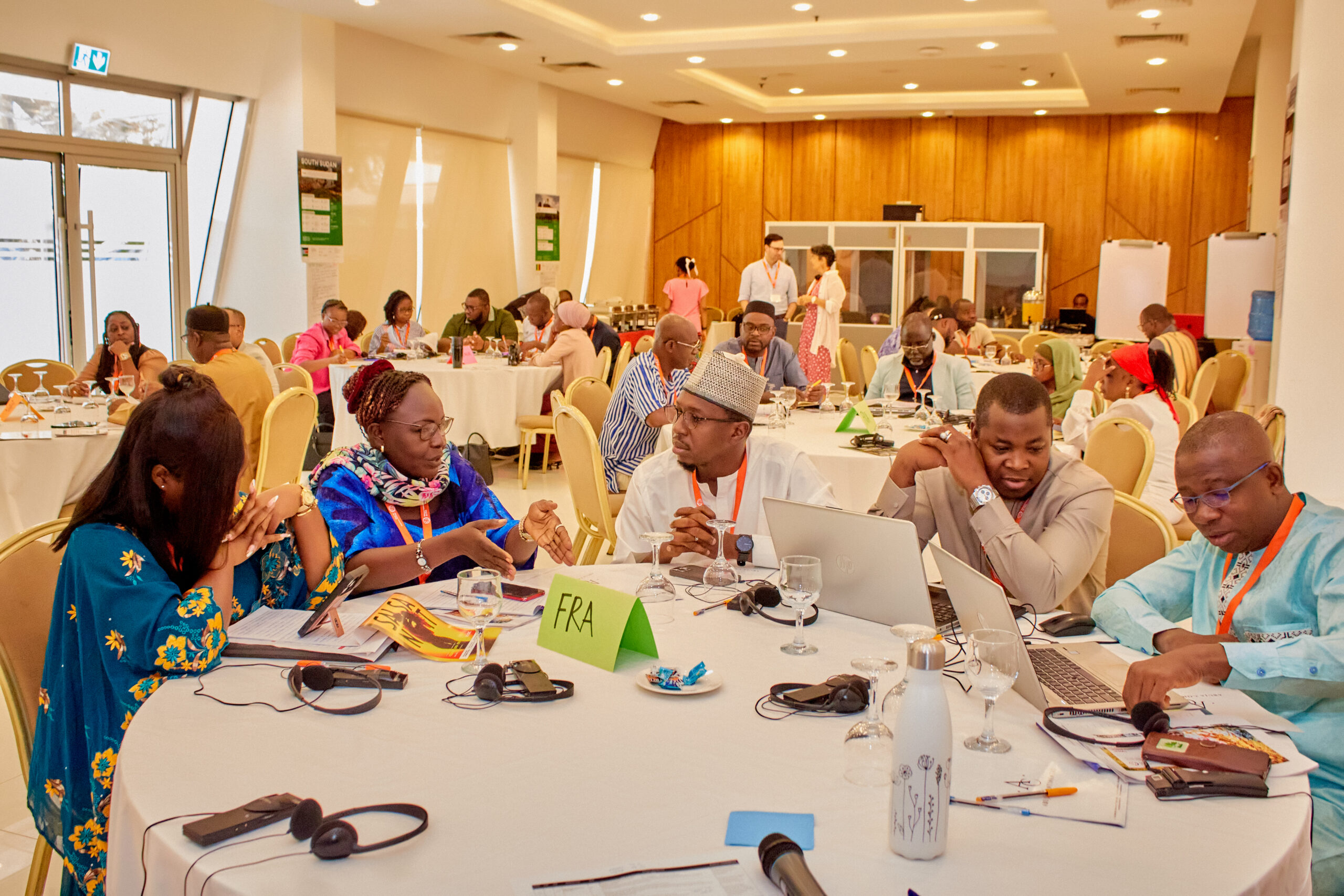
The growing overlap between climate vulnerability and insecurity is forcing governments and development agencies to rethink adaptation efforts. This was evident at a recent conference in Nigeria that brought together conflict-affected African countries including Burkina Faso, Somalia, Mali, South Sudan, Cameroon, Central African Republic and Chad.
At the event, governments explored how peacebuilding can be integrated with their national climate adaptation plans, helping prevent conflict in communities facing mounting pressure over fertile land, water and other natural resources.
For many of these countries, none of the UN’s Sustainable Development Goals will be achieved until peace and security are in place, Crawford said. They are currently trapped in a vicious cycle. “Some of these climate impacts are potentially worsening the conflict dynamics, while at the same time conflict is really getting in the way of reducing vulnerabilities and adapting to climate change,” he explained.
Politically fragile countries are increasingly looking for solutions to reduce the tensions within their borders that are preventing them from tackling climate change impacts. At the COP28 climate summit in Dubai in 2023, governments and aid agencies issued a joint call for “bolder collective action to build climate resilience at the scale and speed required in highly vulnerable countries and communities”.
Crawford said many fragile states are overstretched and under-resourced because of conflict. He pointed to South Sudan as an example of a country simultaneously trying to house displaced people, rebuild schools and clinics, and restore basic infrastructure after war, making climate adaptation difficult to prioritise. However, ignoring climate risks could undermine any progress such countries manage to make, he warned.

UN adaptation metrics exclude conflict
Another thorny problem is finding ways to track progress on climate adaptation in conflict-affected states. A set of indicators to measure how countries are doing in their efforts to implement the Paris Agreement’s Global Goal on Adaptation (GGA), finally agreed 10 years later at COP30 in Brazil, deliberately left out metrics relating to peace and conflict.
Katharina Schmidt, policy advisor at the NAP Global Network, a global initiative coordinated by IISD to help developing countries advance their climate adaptation planning, pointed to longstanding reluctance to formally integrate peace and conflict issues into core UN climate frameworks. This, she said, is partly because some countries want climate finance to stay separate from funding for peacebuilding and development.
However, Schmidt said the absence of specific indicators in the GGA framework does not mean adaptation in fragile and conflict-affected states is being ignored. “Everybody agrees that there needs to be adaptation in [these] states,” she said, even if it is “often not reflected prominently in these negotiation documents”.
New data shows rich nations likely missed 2025 goal to double adaptation finance
This is why the NAP Global Network, which organised the recent conference in Abuja, is trying to strengthen coordination and peer learning among conflict-affected countries, helping them overcome some of the barriers that make adaptation planning difficult.
Many lack the climate data and infrastructure needed to understand and respond to climate risks, in some cases because conflicts destroy weather stations and disrupt climate monitoring systems, Crawford said. To fill these gaps, the network is helping countries tap into existing global systems and open-source data platforms.
Bridging the gap through the NAP process
For over a decade, the process for putting together National Adaptation Plans (NAPs), established under the UN climate framework in 2010, has helped countries identify climate vulnerabilities, integrate adaptation into long-term development planning and strengthen resilience to climate impacts.
Crawford, who also works with the NAP Global Network, said one core pillar is to strengthen governments’ capacity to plan and implement adaptation measures across ministries.
As part of its NAP process, Somalia conducted vulnerability assessments in several states and regions, helping the government understand how climate impacts, risks and adaptation needs vary across the country, according to government official Aden. This also revealed previously undocumented challenges facing different communities, from drought and water scarcity to coastal threats and land degradation.
“The NAP project helped Somalia identify some cases that were not known before,” he said, adding that it allowed the government to plan its budget to meet differing regional needs.


More than 6,000 kilometres away, the Liberian government, through its NAP process, is also identifying potential sources of tension around land rights, tenure and resource distribution, particularly as people fleeing conflict in Burkina Faso cross into Liberia through Ivory Coast.
Arthur Becker, Liberia’s NAP coordinator, said Liberia’s ongoing NAP review process will incorporate peacebuilding considerations that were largely absent from its current 2020-2030 adaptation plan.
The NAP process aims to help countries move beyond short-term responses to climate disasters, Crawford said.
“It’s really about looking to the medium and long term and saying, this is how the climate is changing within our country, this is going to have fundamental impacts on our development trajectory – how do we put adaptation to climate change at the heart of that development trajectory?”
Nigeria addresses conflict and climate risks together
Nigeria, which is already grappling with multiple security challenges linked to resource competition and environmental pressures, is also integrating peacebuilding into its NAP.
A climate risk and vulnerability assessment found that factors such as drought and desertification across northern Nigeria have made food less available and encouraged criminality and banditry. Down south, sea level rise, coastal erosion and flooding are destroying livelihoods and property and displacing people. Those impacts are increasingly fuelling tensions between communities and driving protests over environmental injustice.
Nigeria’s deadly flood exposes urgent need for climate adaptation plan
Kayode Aboyeji, Nigeria’s NAP coordinator, said it was in the course of the NAP process that “we realised that some of the conflicts in Nigeria are not just politically driven but that environmental issues, demand for natural resources, [and the] threat of climate change are some of the triggers.”
He said Nigeria has now integrated conflict sensitivity and peacebuilding into its NAP – which has yet to be formally approved and published – recognising the need for climate responses that do not worsen existing tensions. It is also raising awareness among key actors, including the Ministry of Agriculture and Water Resources, around the importance of adopting conflict-sensitive approaches to climate adaptation.
In addition, Nigeria has developed adaptation strategies tailored to each of its geopolitical zones, which local authorities can use to better address climate-related challenges in their regions.
Finance a major barrier to implementation
While countries are increasingly integrating peacebuilding into their climate adaptation planning, financing such work on the ground remains a major challenge, especially for fragile African states already grappling with insecurity, debt and weak public finances.
Nigeria’s Aboyeji said the country’s NAP requires resources to roll it out across the country. While the government is looking to development bodies, philanthropies and the private sector for support, it is also exploring domestic financing mechanisms such as green bonds and budget appropriations to help fund implementation.
For countries like South Sudan – where ongoing instability continues to undermine the government’s ability to finance adaptation measures – the struggle is even more pronounced. Peter Jonglei Kureng, acting deputy director for its Budget Policy Directorate, said the government tries to include adaptation in national budgets, but implementation often stalls because the promised funds are never released.
“We can budget for it, but when it’s time for execution, there is no money,” he said.
Can climate funders overcome fear to tread in conflict zones?
Liberia faces similar constraints. Becker said adaptation interventions are expensive, and the country is committing domestic resources to climate action even while expecting the bulk of financing to come from international partners.
The financing gap remains one of the biggest hurdles to adaptation efforts. New OECD data shows that wealthy nations are likely to have missed their 2025 goal of doubling adaptation finance for developing countries, with funding reaching just under $35 billion in 2024 – far below estimated needs.
While international support remains non-negotiable and should be increased, especially for fragile countries, Crawford said they cannot rely solely on external funding, especially as many donors are cutting their overseas development assistance.
Governments will also need to explore how to harness more domestic resources, while recognising the role private-sector actors can play, he added.
“Advocating for more of that financing flowing into adaptation is going to be crucial, because after all the work that goes into NAPs, it’s essential that they turn into concrete measures and don’t just gather dust on a shelf,” he said.
The post Climate adaptation helps African nations tackle rising conflict over resources appeared first on Climate Home News.
Climate adaptation helps African nations tackle rising conflict over resources