Greenhouse Gases
Celebrating the launch of BRIDGE: CCL’s new advocacy program for 2026
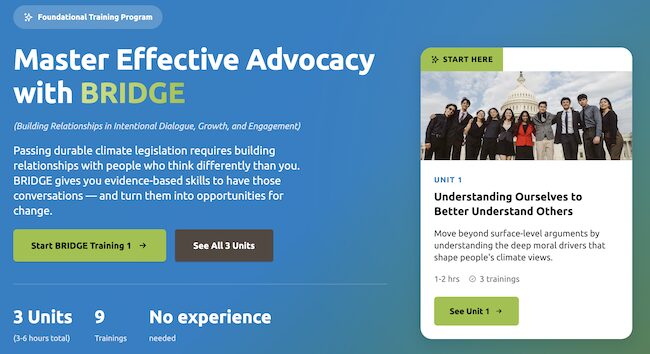

Celebrating the launch of BRIDGE: CCL’s new advocacy program for 2026
By Elissa Tennant, CCL Director of Marketing
The start of a new year always brings a sense of renewal. With every January comes a fresh start and a chance to decide how we’ll show up for the next 12 months. This sentiment was reflected in CCL’s first Monthly Meeting of the year, which took place Saturday, January 10.
CCL Executive Director Ricky Bradley started the call with an organizational update. In 2026, CCL is looking forward to applying our new strategic plan, leaning into our relational advocacy roots, and making progress on key policy areas. Ricky also emphasized the importance of our volunteers and gratitude for CCLers’ persistence, strength, and belief in our climate work.
From there, CCL Vice President of Field Operations, Dr. Brett Cease, joined the call to introduce CCL’s newest initiative, which will shape the way we approach our work in 2026: BRIDGE. If you want to move Congress forward on climate change, and you understand it’s going to take something above and beyond the usual tactics, BRIDGE is the program for you.
What is BRIDGE?
BRIDGE stands for Building Relationships in Dialogue, Growth, and Engagement. “At its heart, it’s a volunteer training program designed to help us become even more effective climate advocates,” said Brett. “It will deepen our skills in communication, relationship-building, and strategic engagement.”
CCL has always believed that relationships truly can change what is possible on climate progress. When thousands of CCL volunteers across the country practice the same shared approach — listening well, aligning messages with values, and building durable relationships — our impact compounds. We become more consistent, more strategic, and more aligned in how we work with communities and Members of Congress across the political spectrum.

What will volunteers actually learn?
The framework is grouped into trainings of three within three successive units. Each unit will roll out throughout one quarter of 2026. Throughout the first unit, CCL volunteers learn the foundations of relational advocacy.
- Unit 1 (Jan.-Mar.): Start by exploring how behavioral science has helped us understand how people arrive at their beliefs and why that matters for climate advocacy. Then dive into Moral Foundations Theory and practice moral reframing.
- Unit 2 (April-June): Learn how to research your Member of Congress, understand their pressures and priorities, and identify realistic next-step actions. Follow this up with a lesson on the Scale of Support, which helps volunteers recognize where a policymaker currently stands and how to work together on policy.
- Unit 3 (July-Sept.): Practice techniques drawn from social sciences — things like active listening, conflict de-escalation, motivational interviewing, and persuasive communications — to build confidence engaging in conversations that are hopeful, respectful, and constructive, even when there’s disagreement.
And importantly, this isn’t just material we pulled from books — we’ve been in touch with nearly all of the researchers whose work we’re using, and they’re aware of how BRIDGE is applying their theories in the real world.
How will BRIDGE be rolled out across the year?
One of the most important parts of BRIDGE is that it isn’t a one-time training or something volunteers are expected to absorb all at once. It’s a comprehensive, step-by-step process. Each month will focus on a new BRIDGE topic, and with material and practice exercises woven through our monthly meetings, action sheets, and deep dive training sessions
The first training session, which took place Jan. 22, helped volunteers further explore the first section of Unit 1. The event aimed to give space for discussion, examples, role-play, and reflection with other volunteers around for support.
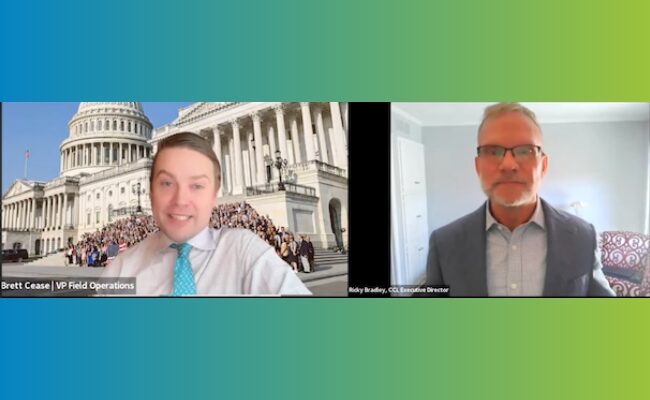

“It’s exciting to see how many people are already excited about BRIDGE and invested in building more effective advocacy skills,” said Brett. ”More than 200 volunteers came to our first ‘deep dive’ training.”
How does BRIDGE help in this polarized political moment?
BRIDGE is designed to help us respond in this moment and build a healthier political landscape for tomorrow — by building the kinds of trust, connection, and cross-difference communication that strengthens democratic life from the ground up.
“We’re launching BRIDGE at a time when many Americans have diverse and important concerns about our current state of democracy,” said Brett. “A lot of political discourse in our times is built around shaming, calling out, or ‘owning’ the other side.”
Polarization is the problem. Relationship-building is the strategy. BRIDGE is the tool.
How can I get started?
BRIDGE training modules will open throughout the year on CCL Community. The first module (Unit 1, Training 1), “Understanding Ourselves to Better Understand Others,” is available here. The first deep dive training is live now.

RIDGE exists because the policies we need don’t advance through talking past one another — they advance through relationships. When volunteers are trained not just to advocate, but to listen, to connect, and to invite people in, that’s how we make a difference.
Access BRIDGE Unit 1 now
The post Celebrating the launch of BRIDGE: CCL’s new advocacy program for 2026 appeared first on Citizens' Climate Lobby.
Celebrating the launch of BRIDGE: CCL’s new advocacy program for 2026