Contemporary Amperex Technology Co. Limited (CATL) released its 2025 Annual Report on March 10, 2026. The report highlights strong financial growth, rapid global expansion, and continued innovation in battery technology. The company reinforced its position as the world’s largest battery manufacturer while advancing its vision of becoming a leading zero-carbon technology company.
The report explains how CATL is expanding beyond traditional battery markets. The company is applying its technology across electric vehicles, energy storage, aviation, shipping, and AI infrastructure. CATL refers to this strategy as “all-domain growth,” meaning the electrification of multiple industries through advanced battery systems.
In 2025, the company reported strong revenue growth, record battery shipments, and higher profits. At the same time, it expanded its manufacturing capacity, increased research spending, and advanced sustainability efforts to build a circular energy ecosystem.
Revenue reached RMB 423.7 billion, a 17% increase from the previous year.
Net profit rose to RMB 72.2 billion, growing 42% year on year
The company also generated strong operating cash flow. Net cash flow from operating activities reached RMB 133.2 billion, showing steady demand for its products and solid business performance.
Much of this growth came from the rapid expansion of electric vehicles and energy storage systems worldwide. Governments and companies continue to invest heavily in clean energy, which has increased demand for reliable battery technology.
Battery shipments played a key role in this growth. CATL sold 661 gigawatt-hours of lithium-ion batteries during the year, a 39% increase from 2024. This shows the company’s ability to scale production as global demand for batteries continues to rise.
Data Source: CATL
Maintains Its Global Battery Leadership
According to data from SNE Research, the company held a 39.2% share of the global power battery market in the last year. Thereby, solidifying its leadership in the global battery market.
The company also expanded its international presence. Overseas market share reached 30%, and CATL batteries have now been installed in more than 24 million vehicles globally.
Energy storage has also become a major growth area for the company. Some notable milestones include:
Accounted for 30.4% of global energy storage battery shipments in 2025. This allowed the company to maintain the top global position in energy storage batteries for the fifth consecutive year.
Supported around 2,300 energy storage projects worldwide. At the same time, shipments from its energy storage system integration business grew by more than 160% compared with the previous year.
This growth reflects the increasing role of battery systems in balancing renewable energy grids and improving electricity reliability.
Furthermore, to meet growing global demand, the company expanded its manufacturing capacity to 772 GWh by the end of 2025, with 321 GWh under construction.
It operates advanced Lighthouse factories that use digital technology and automation to boost efficiency and reduce environmental impact.
New Battery Technologies Expand Product Portfolio
The company introduced several new battery technologies during 2025, reflecting its focus on innovation and product diversification. These include the second-generation batteries, such as:
Shenxing superfast charging
Shenxing Pro
Freevoy dual-power
Naxtra
Super Hybrid
These technologies aim to improve charging speed, increase reliability in extreme environments, and reduce dependence on critical raw materials.
Advancement of Sodium-ion Batteries
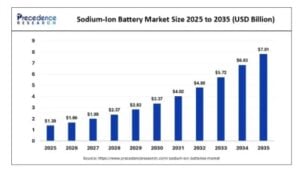
One important development is the advancement of sodium-ion batteries. These batteries offer an alternative to lithium-based technologies and can reduce reliance on limited mineral resources.
CATL expects sodium-ion batteries to see broader adoption beginning in 2026 across applications such as battery swapping systems, passenger vehicles, commercial vehicles, and energy storage.
Batteries Supporting AI Data Centers and Digital Infrastructure
Another emerging opportunity for CATL is energy infrastructure for artificial intelligence. Modern AI data centers require large and stable electricity supplies. Energy storage systems can help manage power consumption while improving efficiency.
CATL already provides storage solutions for SenseTime’s AI data center in Shanghai. The system helps optimize electricity usage and reduce operational costs.
According to the company, the storage system saves more than 10 million kilowatt-hours of electricity every year. It also lowers electricity costs by around 7% and prevents roughly 3,000 tonnes of carbon dioxide emissions annually.
This example shows how battery technology can play an important role in supporting the growing digital economy while also reducing emissions.
Expanding Electrification Into Aviation and Shipping
The company is expanding into aviation, maritime transport, and logistics as part of its broader electrification strategy.
In aviation, subsidiary AutoFlight completed the first public flight of the world’s largest five-ton electric vertical take-off and landing (eVTOL) aircraft. This shows the potential of electric aircraft for city transport and logistics.
In shipping, its battery systems have been approved by major international maritime authorities, making them safe for use in commercial ships.
CATL batteries are already powering nearly 1,000 electric vessels worldwide. The company also launched a “Ship–Shore–Cloud” system that connects electric ships, port charging, and digital energy management to reduce emissions and improve efficiency.
Research and Innovation Strengthen Technology Leadership
Research and development are a key part of CATL’s strategy. In 2025, the company spent RMB 22.1 billion on R&D, and over the past ten years, total investment exceeded RMB 90 billion.
CATL has six research centers and about 23,000 engineers and scientists, helping it create new battery technologies and improve existing ones. By the end of 2025, it held over 54,000 patents and ranked second among Chinese companies in international patent applications.
Moreover, the company uses artificial intelligence in research and manufacturing. For example, its next-generation lithium-ion battery project won the World Economic Forum’s MINDS award, showing how AI speeds up innovation.
CATL’s strategy goes beyond producing batteries. The company is working to create a complete zero-carbon energy ecosystem that integrates clean electricity, storage, and transportation.
Source: CATL
Battery swapping is an important part of this strategy. CATL has built more than 1,000 Choco-Swap stations for passenger vehicles across 45 cities in China. These stations allow drivers to replace depleted batteries with fully charged ones in minutes.
The company also operates battery swapping infrastructure for heavy-duty trucks through its QIJI Energy network. This network includes more than 300 stations across 26 provinces and supports tens of thousands of kilometers of green logistics routes. In 2025, the combined network provided more than 1.15 million battery-swapping services.
CATL is also developing zero-carbon industrial parks and integrated renewable energy systems that combine power generation, storage, and electricity management.
One major project is located in Shandong province, where the company is building what it describes as the world’s first off-grid zero-carbon industrial park powered entirely by renewable electricity. The facility will supply green power to a lithium-ion battery plant with an annual capacity of 40 gigawatt-hours.
Advancing Circular Energy and Sustainability
Alongside business expansion, CATL continues to strengthen its sustainability commitments. In 2025, the company achieved an MSCI ESG rating of AA and was included in the S&P Global Sustainability Yearbook as well as the FTSE Emerging Index.
Battery recycling plays a key role in this effort. CATL recovered and processed 210,000 tonnes of used batteries during the year. From this recycling process, the company regenerated 24,000 tonnes of lithium salts, helping reduce the need for newly mined materials.
To support the development of a global circular battery economy, CATL also launched the Global Energy Circularity Commitment initiative.
Looking ahead, CATL plans to continue expanding its technology leadership and global partnerships. Growth is expected across electric vehicles, renewable energy storage, electrified transport, and digital infrastructure.
Through continued innovation, manufacturing expansion, and sustainability initiatives, CATL aims to strengthen its role in the global transition toward a zero-carbon energy system. The 2025 annual report shows that the company is not only leading the battery market but also shaping the future of clean energy worldwide.