Climate Change
Billions unlocked as Green Climate Fund agrees to spend more and save less
The Green Climate Fund (GCF) will have nearly $6 billion more to spend on emissions-reduction and climate adaptation projects in developing countries, after its board agreed to a management proposal to reduce the proportion of money it has to keep in reserve.
At a meeting in Tajikistan this week, the government representatives who make up the fund’s board endorsed the proposal to revise its financial rules so that it no longer has to set aside one dollar for every dollar it spends.
Instead, the buffer amount will be decided based on a new, looser methodology. The GCF’s chief financial officer, Darren Tan, told board members that the old rules had led to too much cash building up in the fund’s reserves and “constrained the resources that we could deploy”.
The fund has a portfolio of 360 projects to which it has allocated $20.5 billion, but it has struggled to collect all the pledges made by donors as the US has failed to deliver billions and other wealthy nations are now making cuts to their funding for climate work in developing countries.
-
World Bank’s climate work can endure without finance target, experts say
Even though the global lender has ditched a headline goal for its financing with climate benefits, it has decided to continue its climate action plan in the face of US pressure -
Can giant batteries unlock Africa’s green industrial future?
Battery energy storage systems (BESS) could drive clean tech manufacturing in Africa but shortfalls in finance and data are still limiting deployment at scale -
Ocean summit stays silent on new wave of offshore oil and gas expansion
At this month’s Our Ocean Conference in Mombasa, campaigners warned that ocean protection requires governments to halt new offshore fossil fuel projects






The new system has been independently validated and is supported by the GCF’s trustee, the World Bank. Tan said the approach is still prudent enough that the fund will remain “financially resilient even under adverse conditions”.
The change “allows the fund to do more with the same resources”, Tan concluded, adding that “this translates directly into greater climate impact”. The shift leaves the fund with $5.65 billion to put into projects instead of around $1 billion under the previous rules.
The reforms follow wider moves to get funders of climate action to do more with their money. In 2023 and 2024, the World Bank lowered its equity-to-loans ratio from 20% to 19% and then 18%, freeing up around $7 billion a year for it to invest.
At their meeting in Dushanbe, GCF board members broadly welcomed the proposal, although several complained they had not been given enough time to consider reforms of such importance.
“No brainer”
While developed countries were all supportive, developing nations’ responses were more mixed. Some called for the new system to be implemented immediately but others urged a slower roll-out and raised concerns that the changes would lead the fund to give out more loans and fewer grants.
Canada’s representative said the approach is “considered standard practice across the climate finance architecture”, the UK said it “seems sensible”, France called it a “no-brainer” and New Zealand said it would “grow the funding pie”.

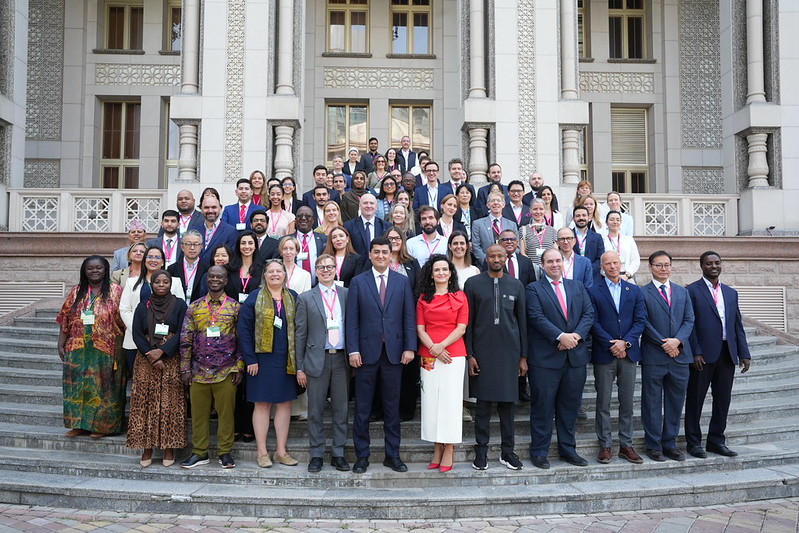
Germany’s Annette Windmeisser said it “responds to the COP29 decision to triple outflows from the mutilateral climate funds”. This goal was agreed after a push from small island and least developed countries but – with funding from wealthy governments faltering – the GCF is looking at controversial options like borrowing from banks to meet it.
Japan’s Kazuho Taguchi hinted at similar motivations for supporting these reforms. “Efficient use of limited public resources” is essential, he said, because “it is unrealistic to expect public finance from developed countries alone to meet the full scale of need”.
Fears grants replace loans
Some developing countries strongly supported the reforms too, including Gambia representing the least developed nations, Costa Rica and Uruguay.
Others urged caution. Georgia’s Nino Tandilashvili said the “outside world… want more projects from us” but also “financial sustainability of this fund”.
Botswana’s Balisi Gopolang echoed this and Ghana’s Antwi Boasiako-Amoah said the fund’s models should be tested against performance and the changes should be implemented slowly and piloted first.
Boasiako-Amoah also said he was concerned that the new methodology would be used to increase the proportion of the fund’s money that is loaned out to developing countries rather than distributed as grants. As the money is intended to be returned, loans are less financially risky to the GCF than grants.
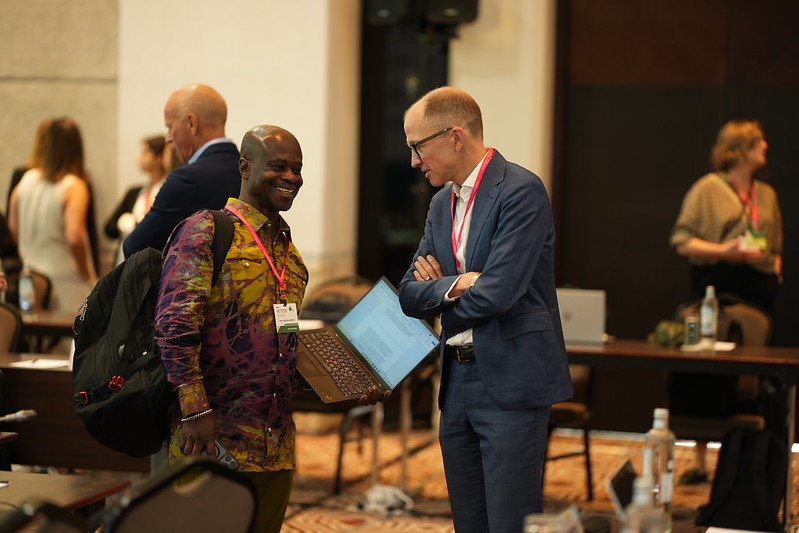
The board’s decision approving the reform incorporated this concern by noting that the “risk appetite or financial instrument mix” of board spending decisions should not be influenced by the new policy.
Liane Schalatek, who monitored the meeting for the Heinrich Böll Foundation, told Climate Home News that the reforms give the GCF “some breathing room” for the next year or two, after the Trump administration reneged on US pledges and the UK halved the contribution it had promised for 2024-2027.
But, Schalatek added, “it does not solve the fundamental question of whether developed countries are willing to stick to their obligations under the Paris Agreement and the [UN climate regime] that still requires them to provide substantial inputs into the GCF for the next replenishment period from 2028-2031.”
The post Billions unlocked as Green Climate Fund agrees to spend more and save less appeared first on Climate Home News.
Billions unlocked as Green Climate Fund agrees to spend more and save less