Climate Change
As COP31 co-host, Australia should make its polluters pay for climate damage

Harjeet Singh is the global convenor of the Fill the Fund campaign and founding director of the Satat Sampada Climate Foundation. Julie-Anne Richards is strategic campaign lead for the Make Big Polluters Pay campaign in Australia.
This year, a glacier collapse in Nepal’s Himalayan valleys swept away the lives of at least 1,500 people, with recovery costs of US$5 billion, or 10% of national GDP. But this was not a tragedy for which no one can be blamed. This was a crime with a balance sheet – one whose costs are paid by people who did nothing to cause it, and whose profits are booked by polluting corporations that did everything.
Across the Pacific, the calculation of injustice is now brutally clear. According to Oxfam Australia, the average yearly GDP loss of Pacific countries from climate disasters has increased four-fold over the last decade, reaching 14.3% of GDP. The number of Pacific people battered by climate disasters has risen by 700% in a decade. Whole villages are being packed up and moved as the sea takes the land beneath them.
-
What’s on the climate calendar for October 2026?
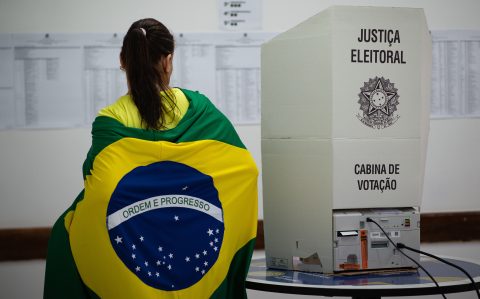
Brazilians are heading to the polls, diplomats are gathering in the Pacific for Pre-COP, and it’s crunch time for the IPCC

Let’s look at the other ledger. This year, as climate change and an oil shock drove up the cost of living for ordinary families, Woodside – touted as “one of Australia’s biggest winners” from the war in the Middle East – reported revenues jumping nearly 30% to AUD$6 billion in just three months.
In Australia, Oxfam finds that in 2023-2024, fossil fuel corporations paid only AUD$22.8 billion in corporate income tax – just 5% of their AUD$436 billion in total reported income – while 26 out of 80, or one in every three large fossil fuel corporations, did not pay corporate income tax at all.
The polluters are not struggling to pay for the damage they cause. They are choosing not to.
This is the moral obscenity at the heart of the climate crisis: the money exists. It is simply flowing in the wrong direction. And nowhere is that clearer than in the funds the world built to protect the vulnerable, now left to languish.
Funds struggle to fill their coffers
The Fund for Responding to Loss and Damage (FRLD) has received US$2.8 billion in requests from 119 countries. And Nepal has sought an urgent US$20 million for immediate needs. Yet the Fund has only US$342 million in total to give.
The Pacific Resilience Facility – a fund the Pacific designed for itself, to prepare its own communities – sits well short of even its modest US$500 million capitalisation target. And the Adaptation Fund is running on empty. While adaptation needs in developing countries could reach US$387 billion a year by 2030, according to the latest UNEP Adaptation Gap report, the Fund’s resource mobilisation target of a modest US$300 million for 2025 fell far short, with only US$135 million pledged.
This is a matter of priorities, not of resources. For decades, the world has accepted a simple principle – the polluter pays principle – whether through the OECD, of which Australia is a member, or Europe’s carbon pricing. New York and Vermont have already passed laws to make Big Oil pay into climate superfunds, and ten more US states are moving to follow.
The idea is neither radical nor new. It’s time to make big polluters pay.
Comment: After Hormuz, Nepal and wildfires, people want action to make polluters pay
What is urgently needed is the courage to apply it to the fossil fuel corporations that have spent decades avoiding it. In November, Australia takes up the presidency of the COP31 negotiations, committing to stand shoulder to shoulder with its Pacific neighbours.
Australia, together with the Turkish COP31 Presidency, must guide and inspire progress at the upcoming climate conference, including on new climate finance pledges by developed countries (which agreed to mobilise at least $300 billion by 2035) and triple the funds available to the FRLD, the Adaptation Fund and the other UN climate funds.
Rich countries agreed to these goals two years ago at COP29. Yet, the reality is that developing countries’ need for climate finance is in the trillions annually, while developed countries continue to delay providing even what they have already committed. A clear signal recognising the importance of delivering the promised climate finance must come at next week’s Pre-COP in the Pacific, and COP31 in Antalya must go on to deliver against existing promises or risk an irreparable breakdown in trust.
Time for a climate pollution levy
Countries must also ensure funding for loss and damage takes its rightful place as the third pillar of climate finance, alongside mitigation and adaptation, in negotiations regarding the UNFCCC climate finance work programme and Article 9 on shifting finance flows towards a low-carbon, resilient world.
Australia, as President of Negotiations and as a Pacific nation, cannot ask the world to fill these funds while it lets its own coal and gas giants off the hook. Australia should not only stop approving new and expanded coal and gas mines, it should also introduce a Climate Pollution Levy on big coal, oil and gas corporations – a charge on every tonne of carbon pollution they extract and profit from. Independent analysis shows such a levy could raise tens of billions of dollars a year, and can be designed so the cost falls on the corporations, not on households.
This is not charity – it is compensation. It is the beginning of accountability. And the public is far ahead of its leaders: eight in 10 people worldwide, and a clear majority of Australians, want fossil fuel firms taxed to pay for the damage they cause.
Fossil fuel expansion threatens COP31 hosts’ credibility, experts warn
The money must go where the harm lands. A Climate Pollution Levy should feed the funds frontline communities are relying on – fully capitalising the Pacific Resilience Facility this year, replenishing the Adaptation Fund, and delivering the billions the loss and damage fund needs.
It is essential for these funds to be able to provide grant-based finance that reaches communities directly, not more loans that push drowning nations deeper into debt. With Nepal’s recovery costs estimated at around 10% of the country’s GDP, if we leave it to fend for itself without loss and damage funding, Nepal will likely be saddled with debt and could fail to recover adequately, increasing poverty and inequality.
We have heard enough empty pledges. We have watched enough funds announced with fanfare, only then to be starved in silence. The era of asking polluters politely is over. Australia, as COP31 president, has a rare chance to prove that the polluter pays principle means something and apply it to those who have profited the most.
The post As COP31 co-host, Australia should make its polluters pay for climate damage appeared first on Climate Home News.
As COP31 co-host, Australia should make its polluters pay for climate damage