Climate Change
After COP31, our chance to save climate diplomacy lies in global shipping

Simon Kofe is Tuvalu’s Minister for Transport, Energy, Communication and Innovation
The just-wrapped COP31 has been called “the worst COP in history” for good reason.
What was billed as the “implementation summit”, translating previous climate promises into concrete progress for countries and people, collapsed without a deal. The meeting did not live up to the collective resolve to tackle the root cause of climate change: fossil fuels.
The fight is now moving to our next best opportunity to implement real action: at the UN’s International Maritime Organisation (IMO) decision summit starting on 30 November in London. The IMO’s 176 member states will debate the adoption of the world’s first global carbon pricing on any polluter, the Net-Zero Framework (NZF) for global shipping.
The IMO is different from the UNFCCC process in four key ways, which means it is much closer to actual implementation than any COP would ever be.
First, the talks focus on the climate impacts of international shipping, aiming to phase out around one gigatonne of greenhouse gas emissions a year. This is about the emissions share of major economies like Germany or Japan, a non-negligible chunk when science tells us every tonne of carbon and every degree of heating prevented matters.
Two, the IMO can set legally binding targets and enforceable measures to bring down shipping emissions. In other words, the IMO can regulate the entire global industry. This makes the outcomes of these negotiations far more consequential than big promises during COP announcements.
-
London talks raise hopes for green shipping deal
Despite fears of US wrecking tactics, the IMO says there have been “constructive discussions” over how to meet the industry’s green targets -
Ugandan oil official welcomes transition roadmap as nation gears up for exports
A senior Petroleum Authority official described the global roadmap as “fundamental” to Uganda’s transition planning as it prepares to become the world’s newest oil exporter


Three, the IMO member states have already approved the NZF. In April 2025, an overwhelming majority of countries in Africa, Europe, South America and Asia voted in favour of the agreement, against the opposition from the same blockers who sank the COP last week: Saudi Arabia, Russia and other largely Middle Eastern petrostates. Our coalition of Pacific Island states abstained in the vote, because we believed more ambition is necessary than the NZF compromise.
Four, while the IMO aims to find agreement by consensus, this is not strictly necessary. Failure to find consensus can lead to a vote. This stops climate blockers from delaying and derailing negotiations. Indeed, the NZF was “agreed” upon in a vote without their support.
Adopting the NZF next week will require a majority of countries to show up and stand firm. Our opponents will attempt to either water down the agreement to sheer meaninglessness or outright kill it completely. The latter is something they have been desperately trying to do since the agreement was reached.
But Antalya showed us 130 countries who are dead serious about climate action and who are united in their shared understanding that this unequivocally means phasing out fossil fuels. It’s on them now to show the same resolve and understanding in London.
Panama’s Environment Minister, Juan Carlos Navarro, made impassioned speeches demanding a transition away from oil, gas, and coal. Our hope is that the Panamaninian delegation will echo this message at the IMO and support adoption.
Germany’s Minister Carsten Schneider refused to accept the weak outcome text when it failed to mention fossil duels. Germany and the entire EU block need to maintain its climate leadership and not fall for weak compromises at the IMO.
-
COP31 Bulletin Day 13: Talks fail as many countries reject main deal
The EU, the AILAC group of Latin American states and the Least Developed Countries (LDCs) said they could not accept the draft “Antalya Pact” -
COP31 Bulletin Day 12: Divisions on fossil fuels, adaptation finance and trade set to delay deal until Sunday
A COP31 cover decision is not likely to be adopted before 9am on Sunday, with many negotiators complaining they had not yet seen the full text -
COP31 Bulletin Day 11: Countries decry cover text for omitting fossil fuels
Small island states and a group of Global North and South nations say the draft decision is too weak on issues ranging from the transition away from fossil fuels to finance provision
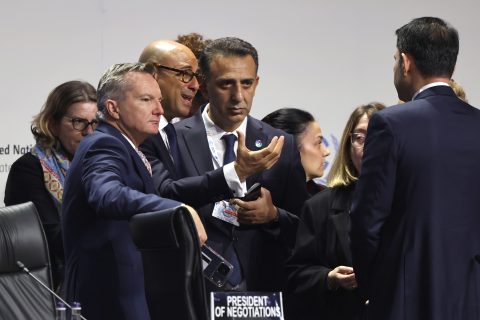
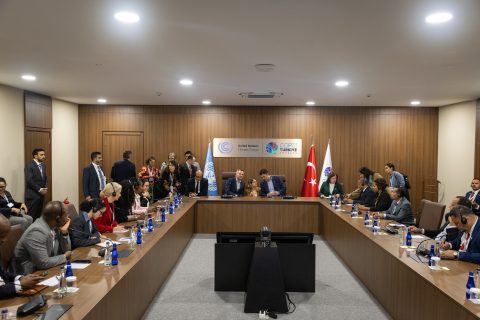
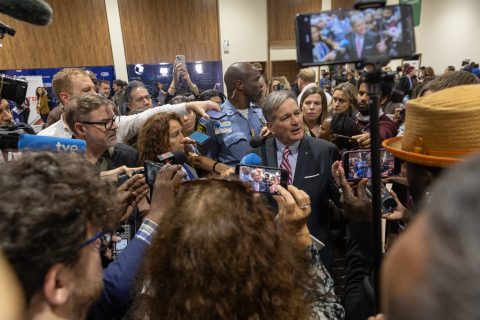
Tuvalu insisted that we need to keep the 1.5°C limit alive, despite recent warnings that we are certainly overshooting. We will continue to support the highest possible climate ambition across international fora to ensure a livable planet for everyone, including our citizens.
It’s easy to get on the stage at COP and ask for a phase out of fossil fuels. Luckily, next week, it’s equally easy to push for a concrete action that helps deliver just that. All the hard work at the IMO has been done over the past five years of negotiations, and the agreement is ripe for adoption.
To the industry, the NZF provides the certainty it is asking for to invest faster in green technology. To developing and most vulnerable countries, it generates up to $15 billion a year in revenues to help fund a just transition to clean energy in maritime and beyond. And it gives people hope that nations can still work together on the international stage to deliver meaningful progress against the climate crisis that threatens to overwhelm us all.
The coming fortnight at the IMO offers a unique chance to deliver a concrete first step to truly start moving away from fossil fuels. While we can expect petrostates to bring the same playbook to London as they did to Antalya, it’s up to us to seize the opportunity and show the laggards the tide is turning.
The post After COP31, our chance to save climate diplomacy lies in global shipping appeared first on Climate Home News.
https://www.climatechangenews.com/2026/11/23/after-cop31-our-chance-to-save-climate-diplomacy-lies-in-global-shipping/