Climate Change
Africa can lead the Age of Electrification
Mohamed Adow is the founder and director of Power Shift Africa.
At London Climate Action Week, electrification moved from the margins of climate policy to the centre of the road to COP31. The launch of the Electrify Now campaign gave fresh momentum to a target floated at the Bonn climate talks: by 2035, electricity should provide 35% of the world’s final energy consumption, up from just over 20% today.
That makes electrification one of the defining tests for this year’s climate summit in Türkiye. If COP31 is to be more than another exercise in negotiating text, it must show how the world can replace fossil fuels in transport, heating, industry and everyday life with clean electricity.
For Africa, this agenda presents both an extraordinary opportunity and an immense challenge.
For decades, the continent has been viewed primarily through the lens of energy poverty. More than 600 million Africans still lack access to electricity. Yet that very deficit also means many African countries are not locked into ageing fossil-fuel infrastructure in the way industrialised economies are. They have the chance to build cleaner energy systems from the outset.
-
Iran war fuel shocks threaten Africa’s clean cooking push, IEA says
Disruptions in the Strait of Hormuz have hit supplies of liquefied petroleum gas (LPG), seen as a cleaner cooking alternative to charcoal and wood -
COP31 leaders unveil global targets, with spotlight on electrification
Co-hosts Türkiye and Australia want countries to sign on to global targets in three of their priority areas for this year’s COP climate negotiations -
EU, UK lead push for electrification as “powerful weapon” against fossil fuels
A group of dozens of countries seeks to build momentum for a COP31 pledge to electrify 35% of global energy use by 2035 as an alternative to fossil fuels


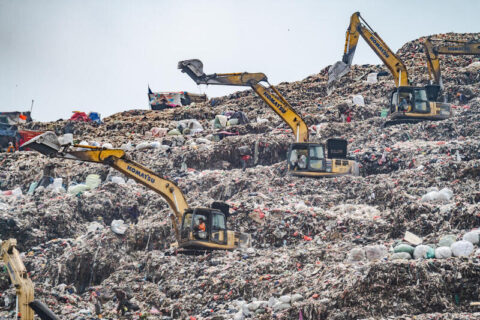

The case for electrification is compelling. Transport, industry and heating account for much of the world’s fossil-fuel consumption. Replacing combustion engines with electric vehicles, diesel generators with renewable power and fossil-fuel heating with electric alternatives is one of the fastest ways to cut emissions while improving energy security. Electric technologies are also far more efficient, and renewable electricity is now the cheapest source of new power across much of the world.
Africa also possesses one of the greatest renewable energy endowments on Earth. The continent possesses some of the world’s best solar resources. Vast wind corridors stretch across North, East and Southern Africa. Geothermal energy is already powering much of Kenya’s electricity system. Hydropower resources remain significant in several regions.
But potential is not the same as progress.
The biggest obstacle is not a lack of sunshine or wind. It is a shortage of investment.
Financial barriers
African countries pay some of the highest borrowing costs in the world despite contributing the least to climate change. Projects that would be commercially viable elsewhere become prohibitively expensive because of high interest rates and perceptions of financial risk. Until the cost of capital falls, many countries will struggle to build the renewable power stations, transmission lines and battery storage needed to electrify their economies.
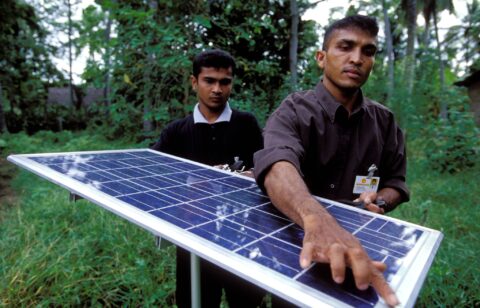
The electricity itself is another challenge. It is difficult to persuade people to buy electric vehicles or industries to electrify production if power supplies remain unreliable. Many national grids require major investment to expand access, improve reliability and accommodate growing volumes of renewable energy. In rural areas, decentralised solar and battery systems will often provide the quickest route to universal electricity access, but they too require finance and supportive policy frameworks.
Industrial policy matters just as much.
Africa is rich in many of the minerals needed for batteries and clean technologies, yet too often it exports raw materials and imports finished products. If electrification simply creates new markets for imported batteries, electric vehicles and solar equipment, much of the economic opportunity will be lost. The transition should also become a strategy for building African manufacturing, creating skilled jobs and capturing more value from the continent’s own resources.
There are encouraging signs. Ethiopia has pushed aggressively to promote electric mobility while seeking to reduce its dependence on imported oil. Kenya has become a global leader in geothermal electricity and is seeing rapid growth in electric motorcycles. Morocco is building an industrial base around renewable energy and battery supply chains.
Electrification is happening
These examples show that electrification is no longer a distant prospect. But they also remain outliers rather than the norm. For most African countries, unreliable grids, high borrowing costs and limited access to finance still stand in the way of a much broader transformation. That is precisely why the emerging electrification agenda matters.
If the world wants electricity to account for 35% of final energy demand by 2035, then success cannot be measured simply by announcing a global target. It must be measured by whether developing countries have the finance, technology and policy support to make that transition possible.
For Africa, electrification is not only about reducing emissions. It is about determining what kind of development path the world’s youngest and fastest-growing continent will follow.
More than a billion people live in Africa today. By mid-century, that number will be closer to 2.5 billion. This is a continent on the cusp of sweeping economic transformation, with cities expanding, industries growing and hundreds of millions of people rightly demanding the energy, mobility and prosperity long enjoyed elsewhere.
Campaigners oppose Dangote’s planned Kenya refinery over climate and ecological risks
That development will require vast amounts of power. The question is whether it will be delivered through the old fossil-fuel model of imported oil, gas infrastructure and polluting combustion, or through clean electricity generated from Africa’s own renewable resources.
This matters for Africa. But it also matters for the world. A global transition to electrification cannot succeed if a continent of this scale is locked into a new generation of fossil-fuel dependence. Nor can it be just if Africa is told to decarbonise without being given the finance and technology to build something better.
The choice facing COP31 is therefore not simply whether electrification will happen. It is whether Africa is helped to become an electro-state continent, powering its development through clean electricity, or pushed by neglect into repeating the fossil-fuel pathway that has already destabilised the climate.
For the age of electrification to be a success, COP31 needs to ensure Africa is equipped to shape and accelerate it. If Africa is left behind, the global energy transition will fall behind with it.
The post Africa can lead the Age of Electrification appeared first on Climate Home News.