Green Living
6 Best Non-Toxic and Safe Dressers and Changing Tables for Nurseries (2026)
As you’re planning out a nursery for your newborn or baby on the way, you might be thinking about how you can ensure cleaner indoor air in the room your baby will be spending a whole lot of time in. This guide will help you with one part of that plan: non-toxic dressers, many of which can be easily used as changing tables as well.
What is a Non-Toxic Dresser?
There is a lot to consider in non-toxic furniture, but for the sake of this guide, we’ll focus on only the elements relevant to wood furniture since most dressers are primarily constructed with wood.
You might be thinking: why would I need a wood product to be non-toxic? Isn’t wood a natural material?
This is true, but similar to how natural fabrics like cotton can still be dyed with toxic dyes and treated with chemicals like PFAS (forever chemicals), natural furniture materials can also be stained and finished with harmful substances. Plus, composite wood products are certainly not the same as their solid wood counterparts, which we’ll get into in a moment.
By the way, below I will refer to “VOCs”, which if you haven’t heard this term before, it stands for volatile organic compounds. You can read more about VOCs and the associated health risks from the EPA.
Non-Toxic/Low-Tox Wood
Composite wood, like MDF, is often glued together with glues that can contain high levels of formaldehyde. (Not exactly the kind of toxic, carcinogenic VOC you want your little ones exposed to.)
Given this, I typically recommend looking for solid wood furniture. That said most dressers (even if their constructed with majority solid wood) will often have drawers made of composite wood or use composite wood for other parts of the dresser that aren’t as visible. With that in mind, I would recommend a dresser made with at least partial solid wood and certified non-toxic composite wood elsewhere. When this isn’t possible, look for a certification like GREENGUARD Gold. More on that below.
*Important to note: living trees actually produce formaldehyde, so there are still trace amounts of naturally occurring formaldehyde in even solid wood. But as this study from NC State University explains, most of the emissions of formaldehyde from wood are “produced during hot-pressing of composite panels”, not from the wood itself. In other words: man-made composite wood like plywood, MDF, particle board, and veneers is the much larger concern compared with solid wood.
As with everything in sustainability: there are trade-offs. First off all: the more solid wood that’s used, the more expensive (and heavy!) that dresser is likely to be. And sometimes it could even be cost prohibitive. Additionally, composite wood can sometimes be a more sustainable choice — since it doesn’t waste wood offcuts, but may sacrifice on chemical safety standards.
That’s why I like to provide you with options so you can make the decision that works best for you and your family.
Zero or Low VOC Finishes
Most wood furniture isn’t left raw, but is finished with a wax, oil, lacquer, varnish or other type of finish. Some of these finishes can contain high levels of VOCs.
Look for brands that use low-VOC or zero-VOC finishes. Some brands will even use natural finishes like linseed oil or beeswax.
GREENGUARD Gold Certified
This is the most common non-toxic furniture certification. While this certification does not ensure zero emissions, the GREENGUARD Certification program by UL is a third-party verification that tests for over 10,000 chemical emissions and VOCs to verify low chemical emissions.
Even if a company reports that they use zero-VOC or low-VOC finishes, a GREENGUARD Gold certification is still a smart extra level of protection to look for, since many VOCs can be difficult to measure.
Where to Find Non-Toxic Dressers for A Nursery
Now that we have a foundation for what we are qualifying as a “non-toxic dresser”, let’s dive into our recommendations for where to find these dressers.
Note that some of the following links include affiliate links, which means we may earn a small commission at no additional cost to you if you choose to purchase through these links. This reader support helps us continue to create more resources for low-tox and sustainable living.
1. Green Cradle
Best for: solid wood dressers and chests
Conscious Qualities: Made in US, Solid Wood, Zero VOC Finish
Price Range: $2,199 – $4,099
Shipping: Ships to continental US; contact for AK, HI, and Canada delivery
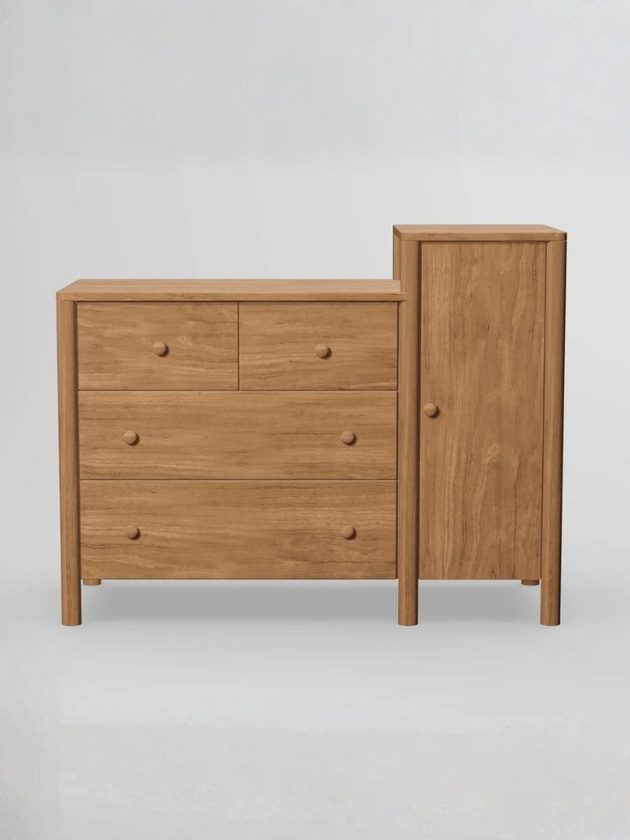
If you want top of the line quality without compromise, Green Cradle’s solid wood dressers — made from locally sourced wood and finished with natural linseed oil — would be my pick. You can also add on organic cotton changing pads.
Green Cradle has traditional dressers as well as the sweetest chest + drawer combos with hanging space perfectly sized for your little one. That said, Green Cradle is also the most premium priced option on this list.

2. Oeuf
Best for: European-crafted design with smart nursery features
Conscious Qualities: Made in Europe, Non-Toxic Water-Based Finishes, FSC-Certified Facility
Price Range: $1,245 – $1,695
Shipping: US-wide delivery via Urban Natural
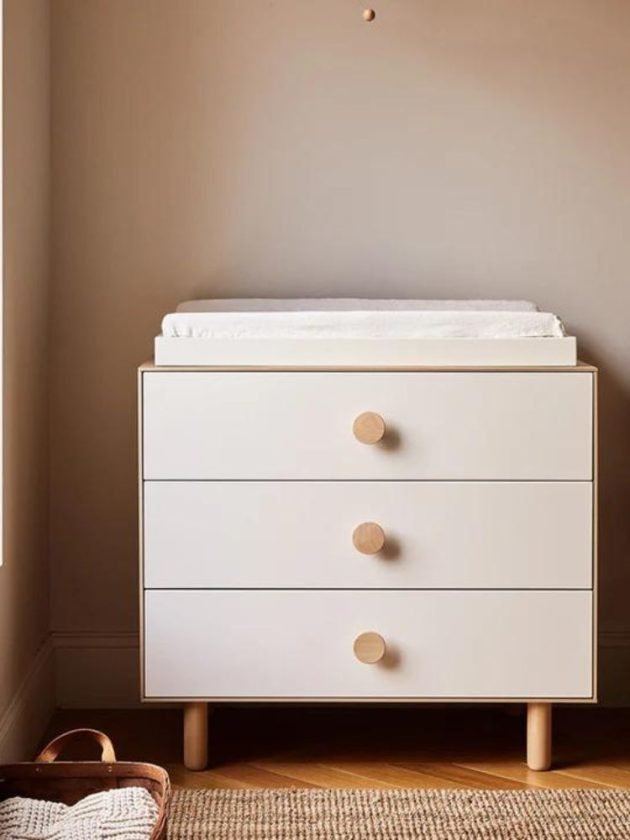
This family-run eco-friendly children’s furniture company prioritizes intelligent design (like baby changing trays that fit Oeuf’s dressers), quality craftsmanship, and sustainability. The brand’s furniture is made in a Forest Stewardship Council-certified facility in Latvia. However, Oeuf does use baltic birch plywood and “eco-MDF” — so the pieces are not solid wood like Green Cradle.
3. Babyletto
Best for: an affordable non-toxic dresser
Conscious Qualities: GREENGUARD Gold Certified Products, Exceeds Anti-Tip Furniture Standards, Sustainably-Sourced Wood
Price Range: $349 – $899
Shipping: Free Delivery in Contiguous US (shipping charges elsewhere priced in cart)
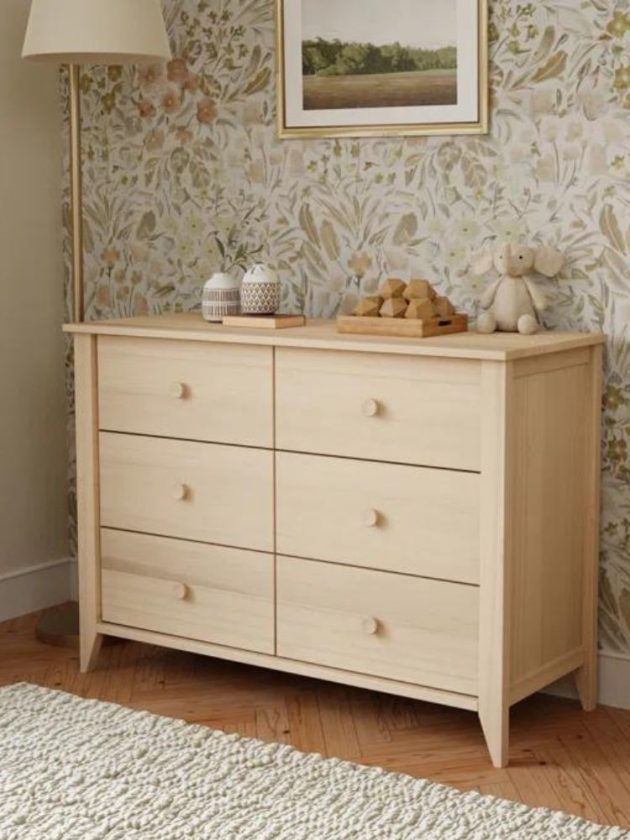
Babyletto offers a more affordable non-toxic dresser options for nurseries. And I think some of the cutest designs! Plus, many of the dressers either include a removable changing tray or are compatible with the brand’s changing trays. That said, as is to be expected with a lower price point, you’ll see more engineered wood — in Babyletto’s case, that’s the drawer fronts and frame. Some reviewers have expressed complaints on the quality, though most products have an above 4.5/5 star-rating.
4. West Elm (GREENGUARD Gold Certified Collection)
Best for: on-trend nursery design with GREENGUARD Gold options
Conscious Qualities: GREENGUARD Gold Certified Options, FSC Certified Wood Options, Some Products Made in Fair Trade Certified

Price Range: $499 – $1,949
Shipping: Contiguous 48 U.S. States only for large furniture items
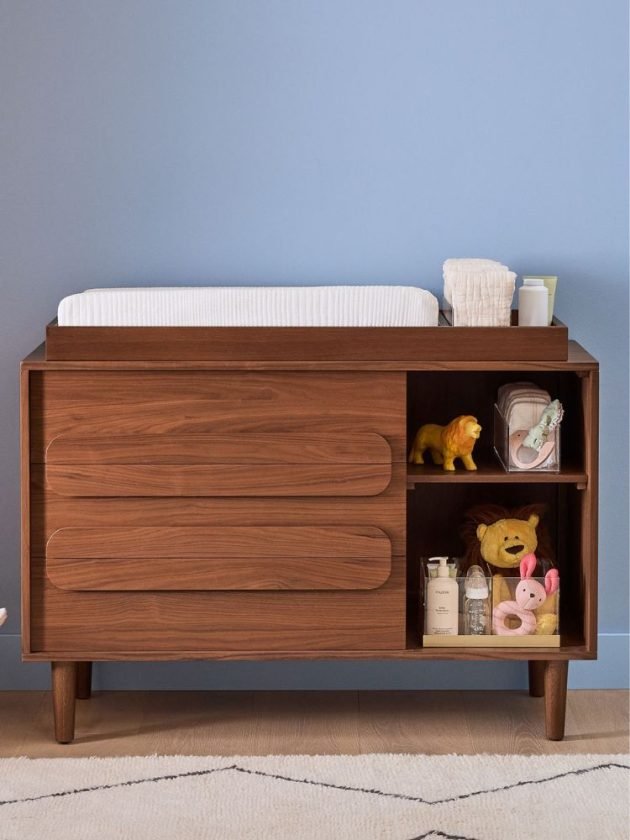
Add a touch of West Elm’s signature design sensibility to your little one’s nursery with the retailer’s selection of GREENGUARD Gold Certified dressers and changing tables. The brand has adorable painted playful dressers for nurseries, but I also appreciate that they have mid-century modern and glam modernist nursery dressers that can easily stay in use as your little one grows up.
5. Thuma
Best for: a modular dresser that grows with your family
Conscious Qualities: GREENGUARD Gold Certified Product, Upcycled Solid Wood, Tool-Free Assembly, Highly Rated
Price Range: $1,165 – $3,495
Shipping: U.S. and Canada
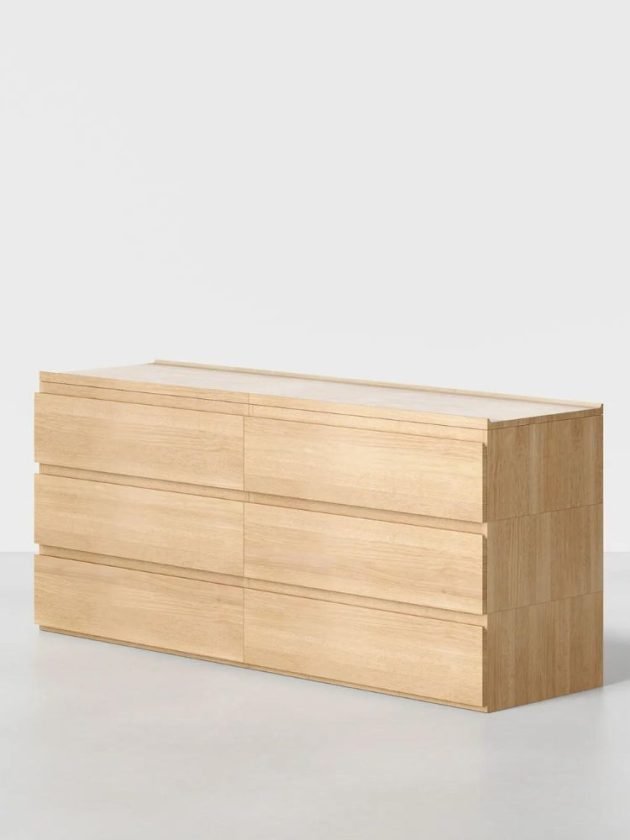
With nearly 600 reviews ranking this dresser an average of 4.7/5 stars, Thuma is clearly doing something right with their signature non-toxic dresser. While this dresser isn’t specifically marketed for a nursery, the modular approach makes it easy to start small and configure additional drawers as your baby or family grows later on. Meaning this dresser could last you a lifetime, which I consider a key part of sustainability too. There is also the option to add anti-tipping hardware for safety.
6. Pottery Barn Kids (GREENGUARD Gold Certified Options)
Best for: combined changing tables and dressers
Conscious Qualities: GREENGUARD Gold Certified Options, Some Products Made in Fair Trade Certified
Price Range: $499 – $1,899
Shipping: Contiguous 48 U.S. States only for large furniture items
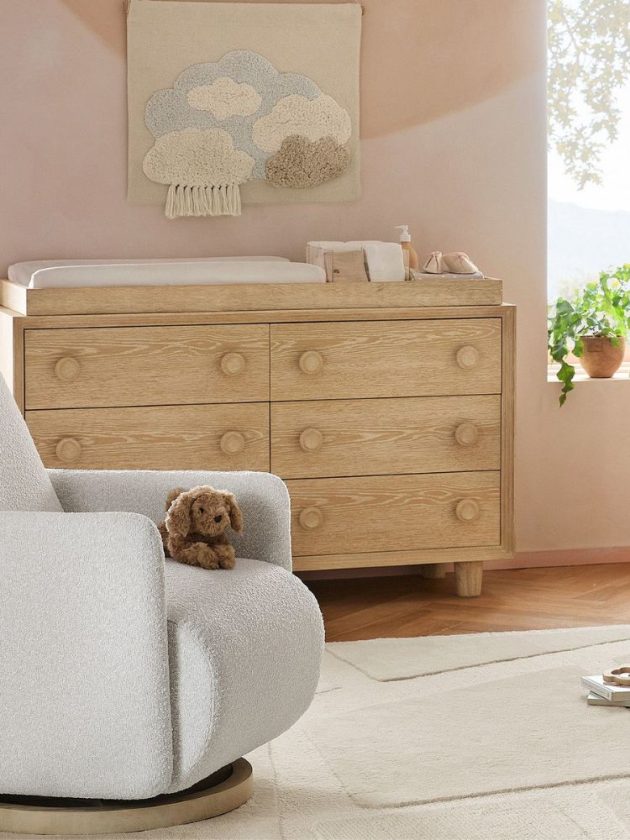
Pottery Barn — West Elm’s more rustic sister brand — also has a number of options for non-toxic changing tables and nursery dressers. The retailer’s dressers are made with a mix of solid wood and engineered wood, but they do have many GREENGUARD Gold certified dressers. I’d just look at each individual product description to confirm whenever purchasing from a larger retailer with a wide selection.
Questions about Non-Toxic Dressers
Can a wood dresser be “organic”?
Typically we wouldn’t use that term. “Organic” is usually a description of a process or certification for grown fibers like cotton on a changing pad cover, not for wood. If you do see “organic dresser” used to describe the wood itself, treat it as a loose figure of speech rather than a real certification. What you might look for instead on a wood piece is the FSC certification (responsible sourcing) and GREENGUARD Gold (low chemical emissions) or zero VOC finishes.
That said, if the dresser doubles as a changing table, you can check whether the changing pad cover is certified organic cotton. That’s where organic would be a real vetted claim.
Does non-toxic mean solid wood?
Not necessarily. Non-toxic is generally a claim referring to low chemical emissions. A dresser can be made from pressed wood, and still emit low chemical emissions and be called “non-toxic”. So if solid wood is important to you, look for that specifically (for example from Green Cradle listed above), not only “non-toxic.”
What is the safest dresser for a nursery?
There are a lot of variables in a dresser selection, from budget and location to personal priorities and aesthetics. But when it comes to chemical safety, I would personally look for solid wood with a zero VOC natural finish as my top choice. That said, those options are going to be the heaviest and often the most expensive. So if that doesn’t work for your situation, I would look for GREENGUARD Gold certified dressers, ideally with solid wood frames, even if the drawers are composite wood. This certification doesn’t ensure zero emissions, but it does test for low emissions.
More Non-Toxic Furniture Guides:
15 Best Non-Toxic Furniture Brands for a Healthier Home
9 Non-Toxic Bedroom Furniture Companies for a Safer Sleep
7 Best Places for Non-Toxic Nightstands
The post 6 Best Non-Toxic and Safe Dressers and Changing Tables for Nurseries (2026) appeared first on Conscious Life & Style.
6 Best Non-Toxic and Safe Dressers and Changing Tables for Nurseries (2026)