Connect with us

Published

on

For those who have never heard of GAME: the acronym stands for Global Approach by Modular Experiments, an internationally oriented research and training program in marine ecology that is in existence for over two decades now. Every year, young researchers from around the world – from Finland to Malaysia, from Japan to Chile – work together on a common research question. Identical experiments are conducted at eight different locations so that the results, which are obtained within six months, can be compared across latitudes, climatic conditions, and biogeographical zones.

In a time that confronts us with global environmental crises, such as climate change and the massive loss of biodiversity, we need precisely such large-scale, coordinated research approaches. Because only by understanding how the reaction of ecological processes to anthropogenic pressures is shaped by environmental conditions, we can make well-founded statements about their stability, vulnerability, or adaptability – and ultimately develop better conservation measures.

And who is GAME 2025? We are 16 master’s students from various countries—Japan, Malaysia, the Philippines, Cape Verde, Wales, Finland, Chile, and Germany—who, after a one-month long preparation course at GEOMAR in Kiel travelled in teams of two persons to eight countries to collect data. Everything is coordinated by Mark Lenz. Since 2004, the Kiel native has been the scientific coordinator of the international research and training program GAME at GEOMAR.

And who are we?
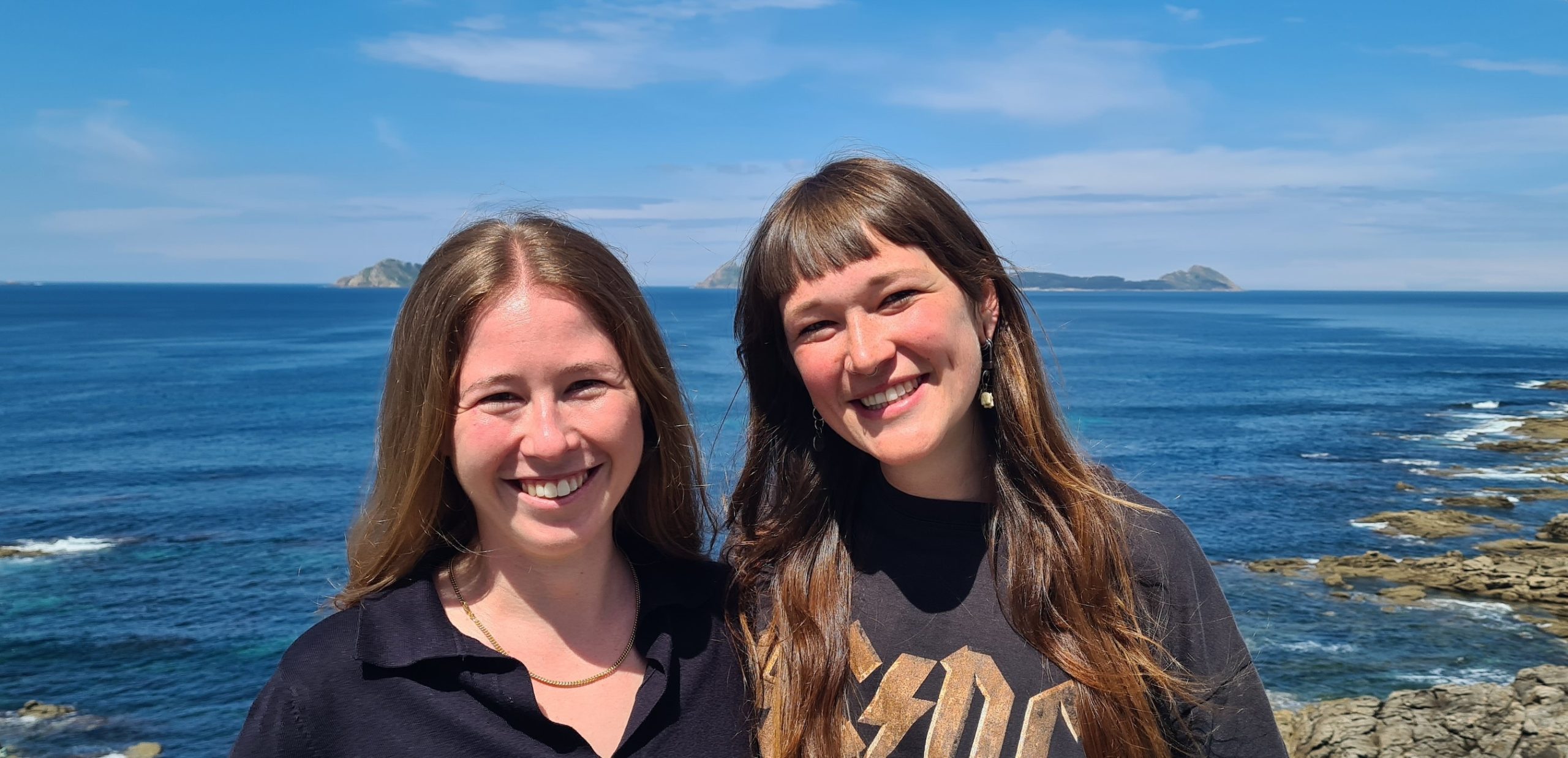
Anna (left) and Verena (right) are happy about their new, beautiful workplace, where they can enjoy their coffee break with a fantastic view. Photo: Team Spain 2025.

Hola from Spain!

Anna [27] from Osnabrück and Verena [27] from Potsdam are Team Spain 2025.

Anna

I began my biological career in Osnabrück with a Bachelor’s degree in Biosciences. I continued within the Master’s program, “From Molecule to Organism,” also in Osnabrück. During my studies, I had the opportunity to explore many different fields and build a broad knowledge base. Two marine biology excursions, in particular, captured my enthusiasm: one to the Biologische Anstalt Helgoland, and another to the Station Biologique de Roscoff on France’s north-western coast. Working in marine biology was so rewarding that I wanted to write my master’s thesis in this field. Since there is unfortunately no sea in Osnabrück, I looked for alternatives and discovered GAME. What fascinates me about the program is its global character and excellent training, which prepares you for a career in science—on top of that, the research topic of 2025 itself is truly captivating.

Verena

Originally, I come from the southwest, from the beautiful and most sunny place in Germany – Freiburg – but started studying biology in Tübingen. For my Bachelor thesis, I already worked with aquatic organisms and investigated the behaviour and personalities of weakly-electric fish (Apteronotus leporhynchus). After the time in the south of Germany, I wanted a change. Change in place and change in study and this brought me to Potsdam and to Geoecology. Through my studies, I already had a lot to do with global concepts and that was one of the reasons why I wanted to be part in an international program like GAME.

And now? We are in Spain. More precisely….
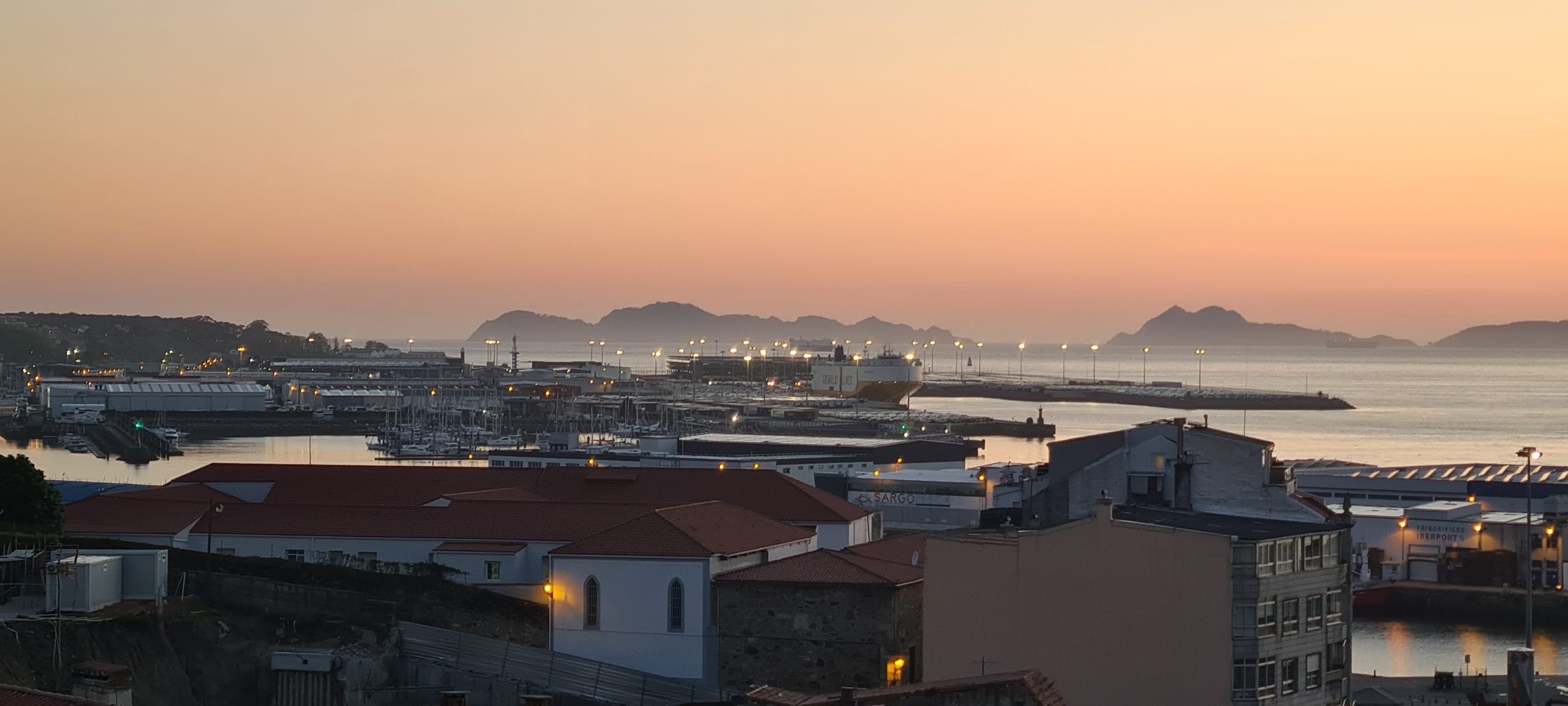
Night view from the Mirador (Spanish for viewpoint) of the Paseo de Alfonso XII over the port of Vigo, our study location – Marina Davila – and the Cíes Islands in the background. Photo: Anna 2025.

…in Vigo. For many, it may be just a tiny dot on the map in the far northwest of Spain—if they even know it at all. Nestled between dense pine forests, the rough Atlantic Ocean, an impressive mountain backdrop, and a view on the Cíes Islands (part of the Islas Atlántica de Galicia National Park), Vigo will be our new home and workplace for the next six months.
The name might suggests that Vigo is a small town. The name comes from the Latin vicus spacorum, it means “small village.” However, it is the largest city in Galicia, located in northwest Spain on the Ría de Vigo, a bay that extends 15 km inland to Arcade (Santiago).

The proximity to the Atlantic Ocean and the surrounding mountains not only offers a breathtaking panorama, which can be admired from many viewpoints (Mirador) in and around Vigo, but also means that this region is blessed with very high rainfall. Vigo records an annual rainfall of 1787 mm, compared to only 750 mm in Kiel.
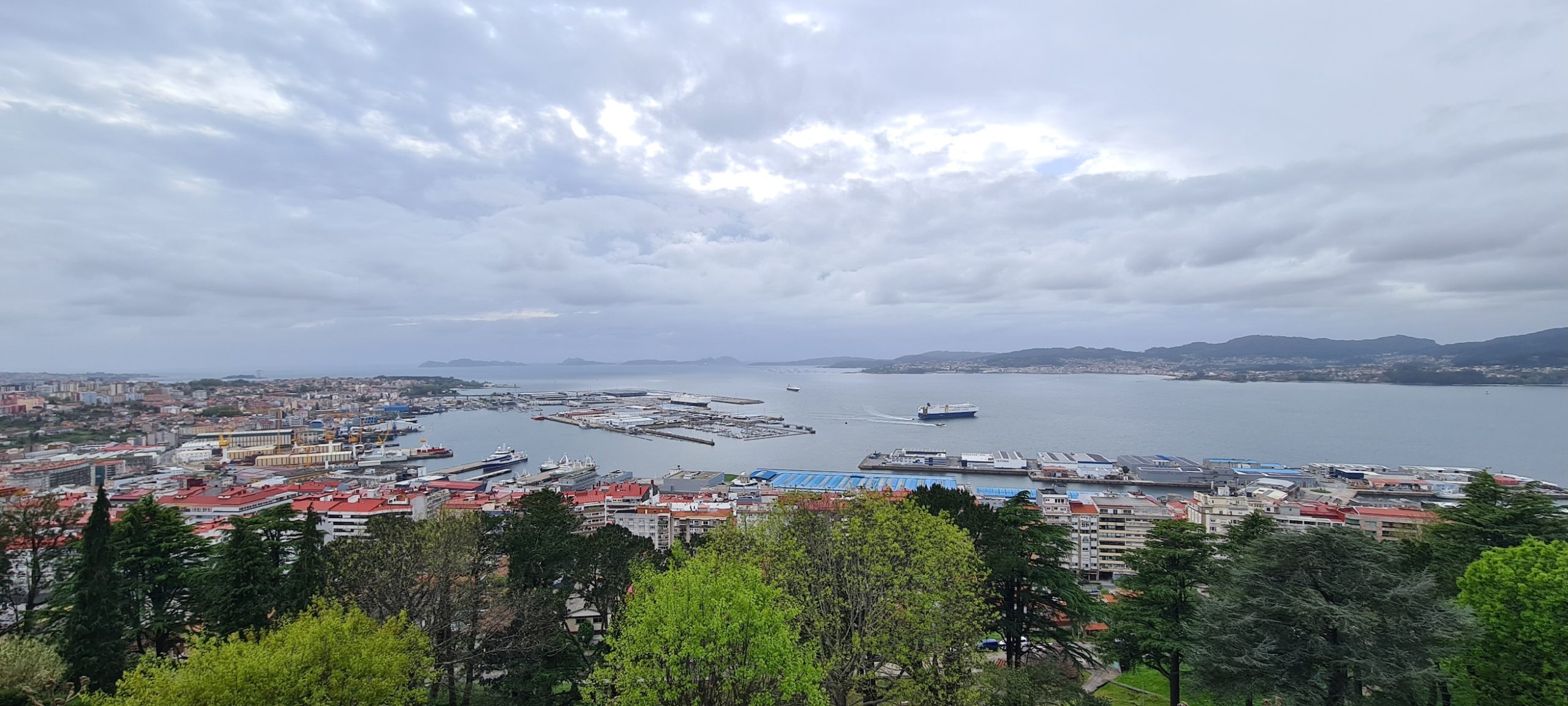
Cloudy view of Vigo from the Monte O Castro—just after a brief rain, as it often happens here. Photo: Anna 2025.
 

Due to the city’s hilly location, numerous escalators and elevators make everyday life and our initial exploration of the city easier.

One of our first destinations was the Monte O Castro fortress, which towers 130 meters above Vigo and offered us a first magnificent view of the city, the other shore, and the offshore islands.

On the way back to the harbour, we passed through the old town, among other places. Numerous restaurants, taverns, and tapas bars invite you to sample the many delicacies of the region. Vigo is particularly known for its seafood, especially oysters, which are cultivated in the numerous oyster farms in the bay. The wide Rua do Príncipe, which is perfect for a shopping trip, leads to the waterfront promenade. But we’re not the only ones who’ll be heading for the main shopping street. Another thing we quickly noticed: Every day, many pilgrims walk through the city on their way to Santiago de Compostela. The end point of the Way of St. James is only about 80 km from our port city. A destination that’s definitely on our bucket list.
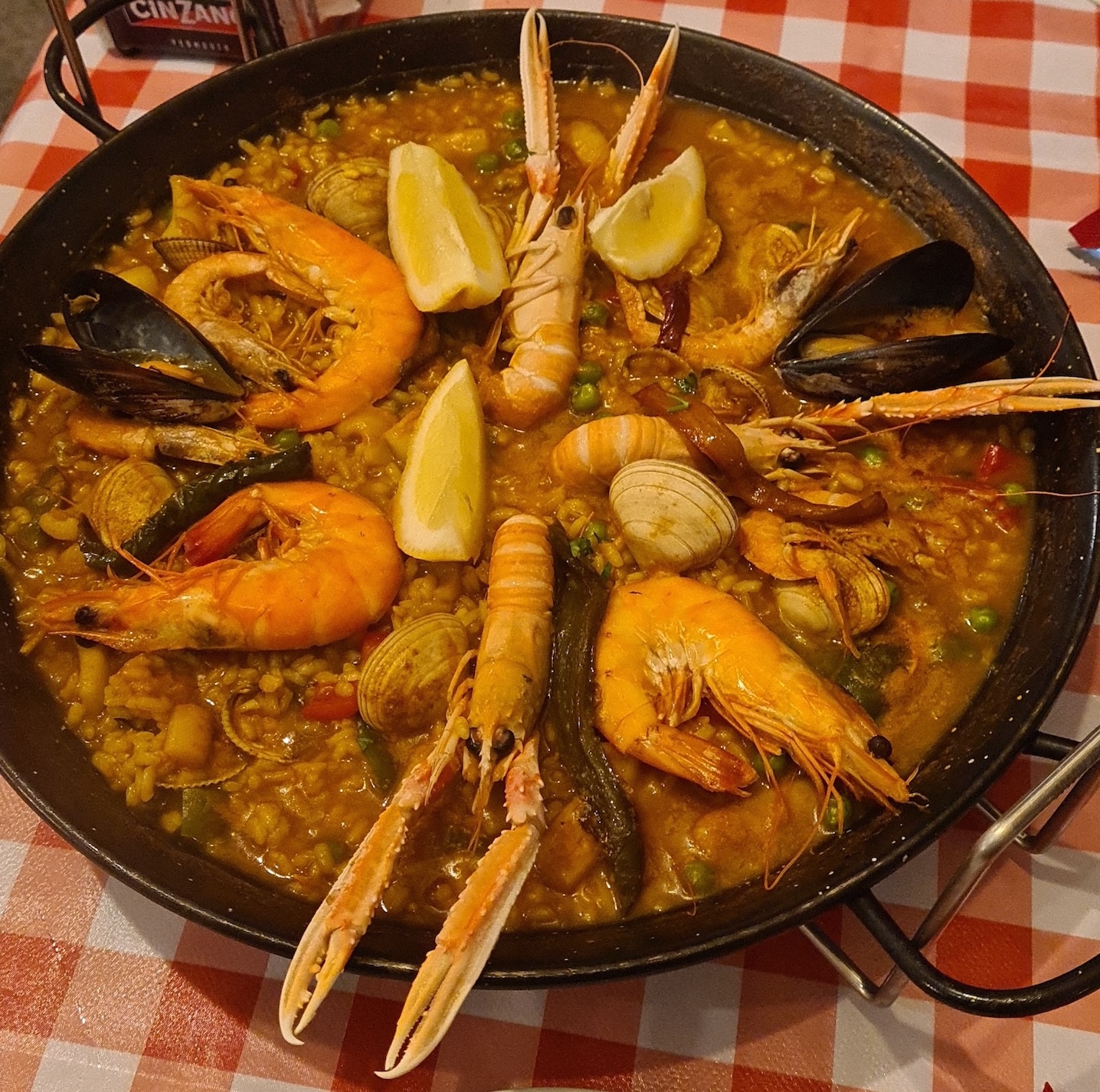
Delicious sea fruit paella from a restaurant in the old town. Photo: Anna 2025

Down at the port, instead of beaches and sand, there are numerous ships to admire. From cruise ships to industrial vessels to yachts, there is something for every ship enthusiast. Vigo’s harbours have not only a Mediterranean flair but also a strong industrial port city character.

In a few weeks, one of these ports, in the Bouzas district, will host our field experiment.

But first, we headed west, about 20 minutes from the center, along the coast, past beautiful beaches and scenery, to the Centro Oceanográfico de Vigo.

There, we were warmly welcomed by our two team supervisors, Eva Cacabelos and Paplo Otero. First on the agenda, of course, was a tour of the institute – beautifully situated, right on the rugged Atlantic coast. Up on the roof terrace, with coffee in hand and a sea breeze around us, we turned to the real reason for our stay: our master’s thesis and this year’s GAME project, which is themed “ALAN.” You’ll find out exactly what’s behind it and what initial difficulties we encountered in a moment.

But first, a moment to take it all in and enjoying the view of the Cíes Islands.

Before the hustle and bustle of summer begins, we should definitely take the ferry across and ideally camp there for a night. Not only do the paradisiacal beaches and crystal-clear water attract hundreds of visitors every year, the nature reserve also serves as a refuge for countless bird species.
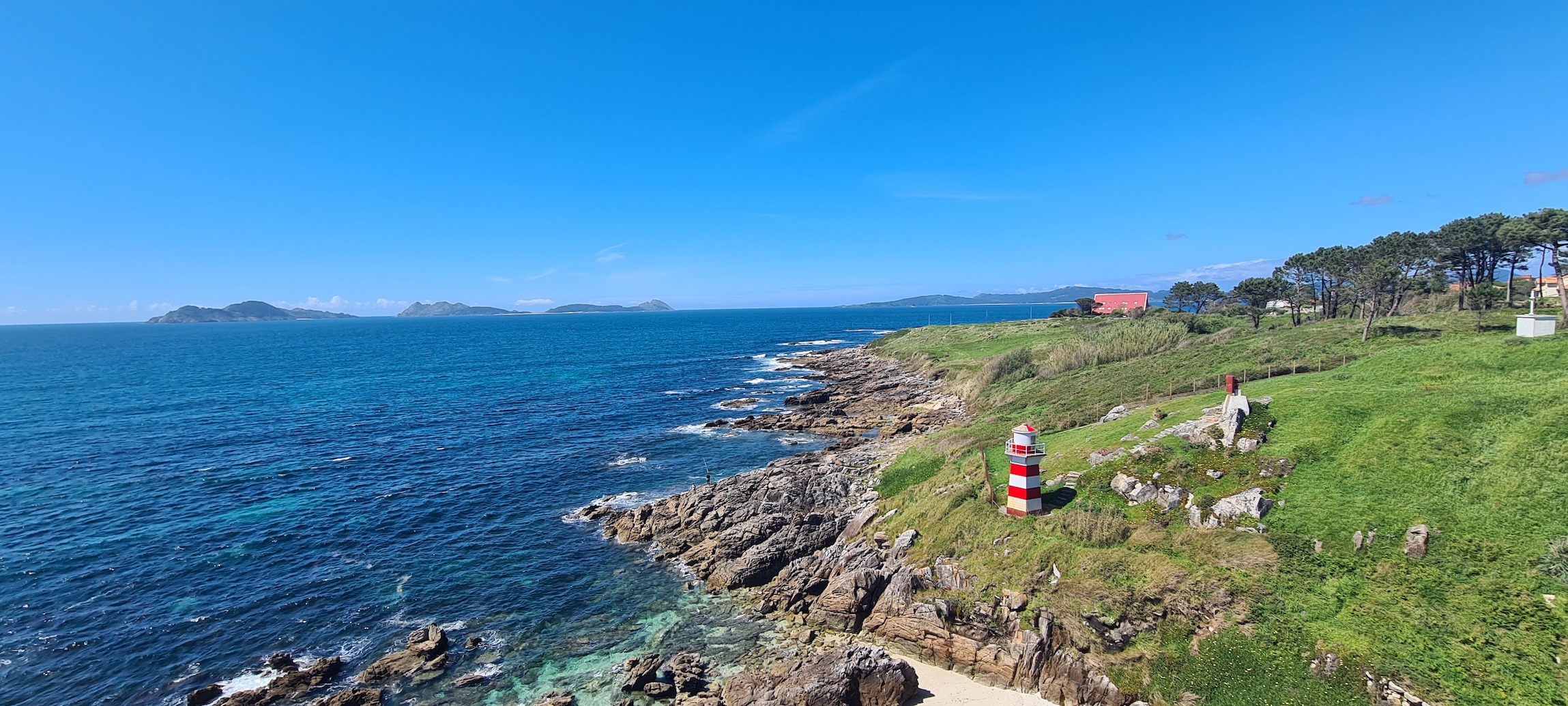
Yes, there could be a worse place to work. View from the roof terrace of the Centro Oceanográfico de Vigo. In the background are the paradisiacal Cíes Islands. Photo: Anna 2025.

The Centro Oceanográfico de Vigo has been conducting marine research since 1917 and is part of the IEO (Instituto Español de Oceanografía). This, in turn, was founded in 1914 and is now part of the Spanish Ministry of Science, Innovation and Universities. The IEO consists of nine centers: Madrid (headquarters), Vigo, A Coruña, Cádiz, Málaga, Gijón, Murcia, Palma de Mallorca, and Santa Cruz de Tenerife. The research conducted at the Centro Oceanográfico de Vigo supports government advice and focuses on three core areas: aquaculture, marine and environmental protection, and fisheries.

Here, we will also investigate a current but little-researched environmental topic: How does artificial light at night (ALAN) affect the growth of epiphytes on macroalgae? Our experiment will take place directly at the coast, where urban light and natural darkness collide—an exciting setting for a question whose relevance grows with every illuminated city.

But why light – and why at night? Artificial light has become an integral part of our everyday lives. This is especially true along the coasts – where cities are growing, streetlights illuminate the night sky, and industrial plants operate around the clock. A look at satellite images of the Earth at night clearly shows it: Our coasts are glowing. And with each year, there are more lights – and they are getting brighter.

The impact of this constant lighting is well documented scientifically. ALAN – Artificial Light at Night – disrupts our natural day-night rhythms and influences the behaviour of numerous animal species. A classic example: newly hatched sea turtles. Instead of being guided by the moonlight towards the ocean, they often follow streetlights – and thus fatally end up on roads instead of in the water. Other species, however, seem to benefit from nighttime lighting: Certain sharks hunt more successfully under artificial light, because their prey is easier to spot.

And us humans? We, too, feel the effects. Not just through studies, but through personal experience. During our first few weeks in Vigo, there was a widespread power outage – across Spain, Portugal, and parts of France. It was 12:30 p.m. – and without a generator, suddenly nothing worked. Metro stations came to a standstill, traffic lights failed, and supermarkets could no longer refrigerate frozen goods. And at night? Suddenly, it was – really – dark. An event that made us reflect and reminded us once again how important light is—and how much we take it for granted. As beautiful as the starry sky above Vigo was that evening, the total darkness felt almost surreal. For us, it was an unusual experience—but for many organisms, this natural darkness is vital and is becoming increasingly rare. What seemed like an exception to us is a disappearing norm for a lot of animals and plants.
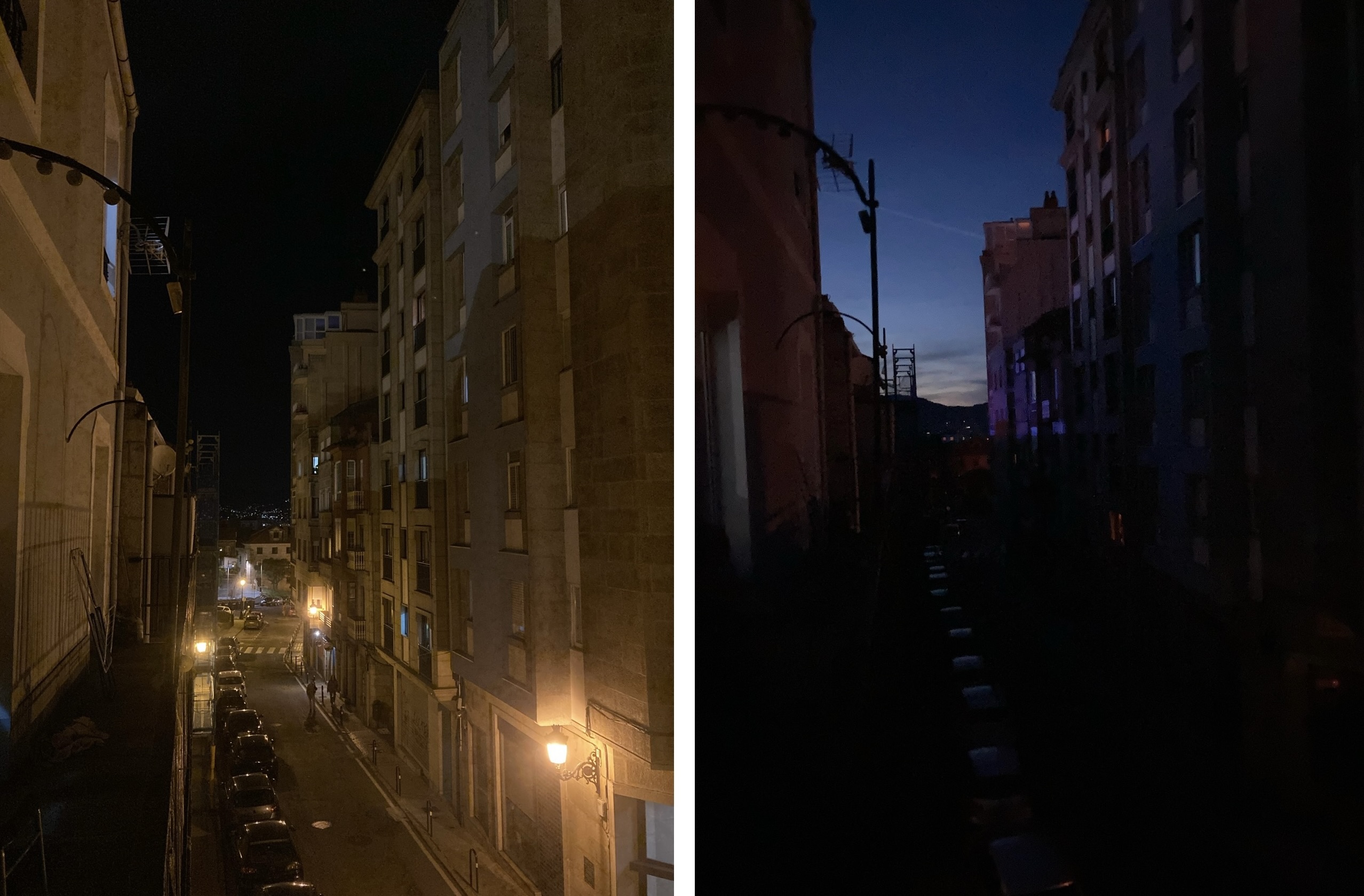
The street in front of Verena’s apartment with the lights on on a normal day (left). The same street without electricity (right). Shortly afterwards, many people came outside, carrying candles or simply gazing at the starry night sky. Photo: Verena 2025.

Species that are not so charismatic are quickly forgotten in this context. For example, the inconspicuous epiphytes – small growing photoautotropic organisms like unicellular microalgae or small filamentous macroalgae that colonize larger macroalgae and other solid surfaces. They make significant contributions to the services of marine benthic ecosystems by binding CO₂, stabilizing communities and providing food. At the same time, they also impair the performance of their hosts by reducing their access to light, CO2 and nutrients. Hence, a change in their abundances can have far-reaching consequences for benthic ecosystems. Yet, little is known about how they respond to artificial light at night.

There was already a GAME project in Vigo during which field experiments were conducted, but with a different scientific focus for which artificial light at night was not relevant. They were situated at the same location for which we had also received approval. Thus, we were relatively quickly confronted with the first hurdles in scientific field research – which many people don’t even realize!

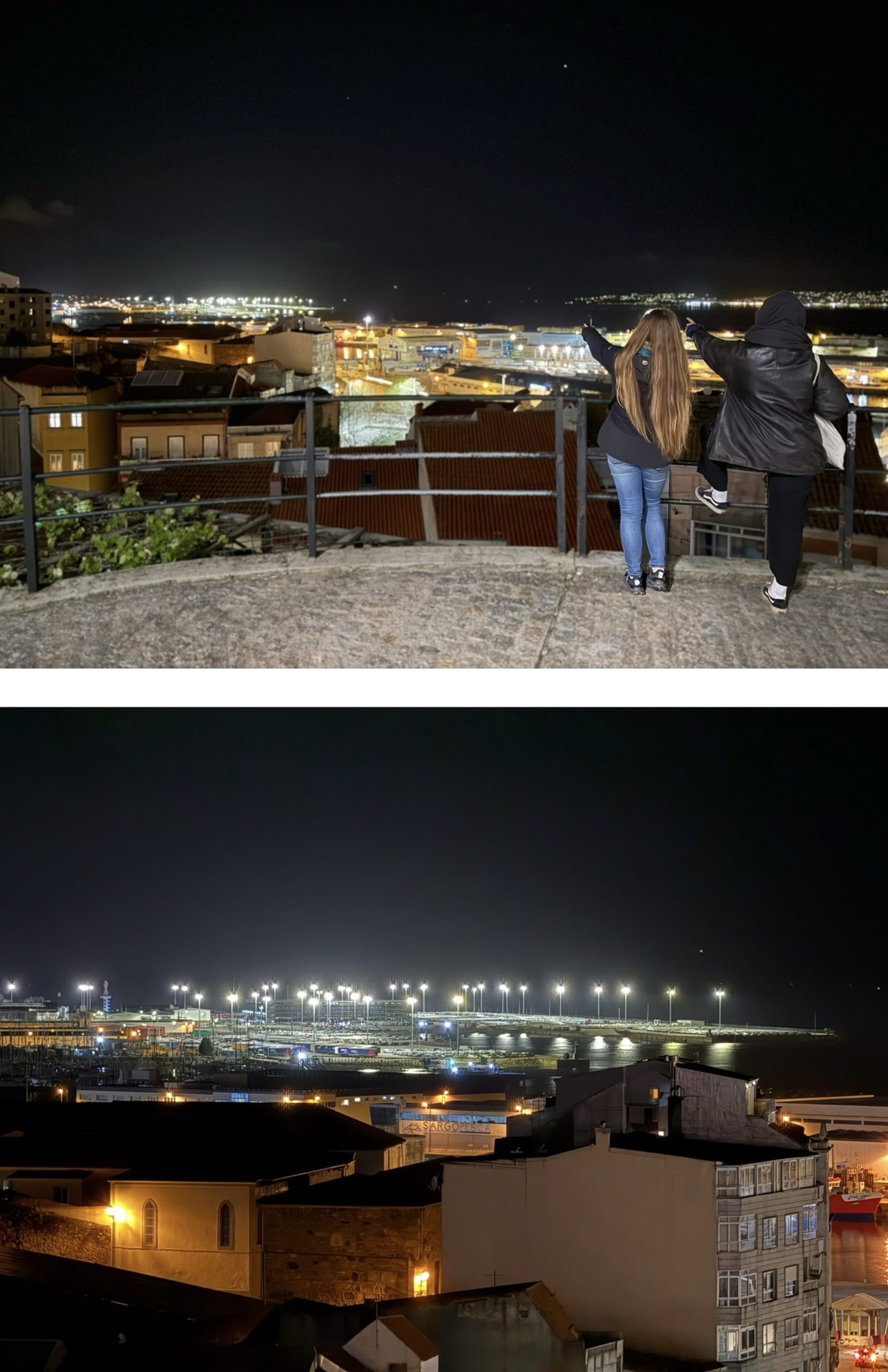
The problem is that Marina Davila is located directly next to an industrial port, or rather, a large car transfer point, which is illuminated all night long with gigantic lights. It’s probably the brightest place in all of Galicia. Bad for our experimental control group, which was supposed to be in complete darkness at night. So, we spent the first week wandering around various harbor areas in the area at night, measuring the background illumination in order to find a better place for our experiments.
[PICTURE 10]
Fig. 10: Where was our study site supposed to be? We can show you! Right there (upper picture)! The brightest spot in the port. At a closer look all the cars that will be transported around the world are visible as well (lower picture). Photo: Anna 2025.

Thanks to the friendly harbourmaster at Marina Davila, we found a darker spot with even less wave exposure. However, we’re dealing with a tidal range of 4 meters, which could be tricky and is something we should keep in mind while planning our experimental setup.

Great! That was the first trick – and the second will follow quick.
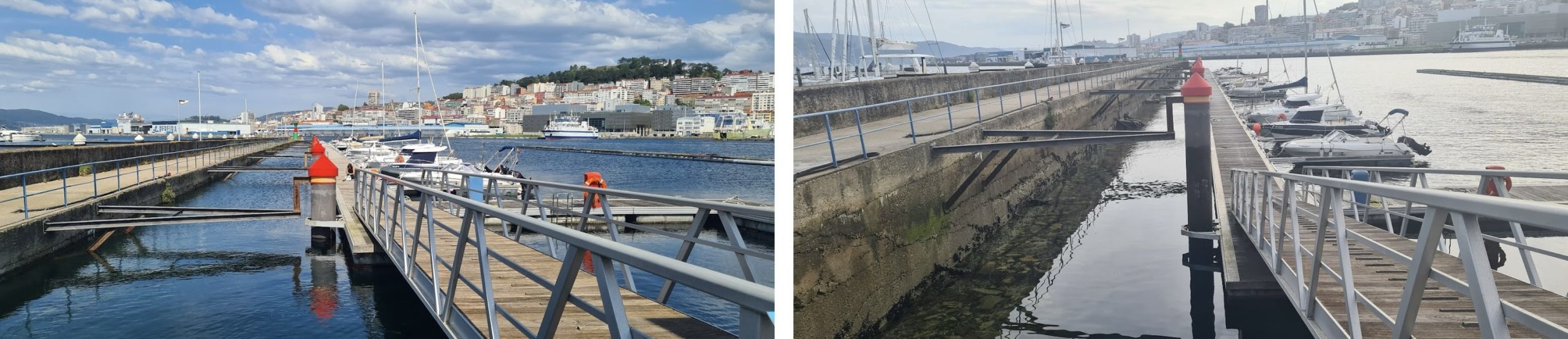
Our new study site at the Marina Davila while high tide (left) and low tide (right). The port and the City Center in the background with the beautiful park area around the Monte O Castro. Not a bad view! Photo: Anna 2025.

Next, we need to find a suitable algae species and conduct initial trials – so-called pilot studies. This will allow us to determine the best options for our location and get a feel for the handling of the organisms, materials, and analytical methods.

Eva supports us wherever she can. As part of her own research, which focuses on plastic pollution in the ocean, we are able to accompany her one morning to the rocky bay near the institute. We were able to find different species of algae and marine organisms at low tide and also collect potential macroalgae for our project. However, the two more common Laminaria species here – Laminaria hyperborea or Laminaria ochroleuca – are difficult to distinguish from each other at a young age.
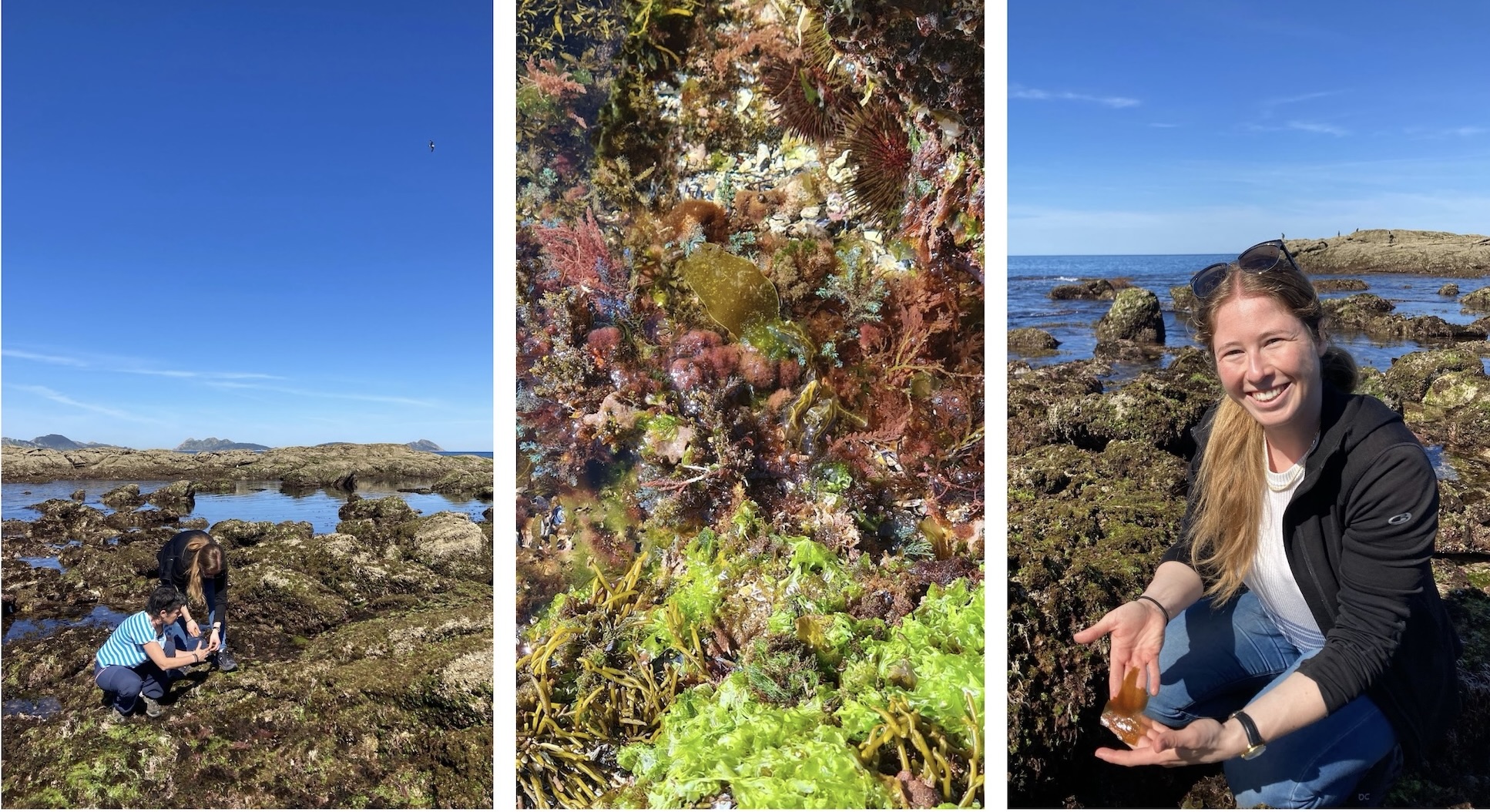
A short excursion to the rocky shore next to the institute during low tide. Eva showed us around (left) and explained a lot about various algae (middle). In the end, we were able to collect some young Laminaria (right). Photo: Team Spain 2025.

These were deployed the next day, along with other algae fragments, at our harbour site in a preliminary test. Now we just have to keep our fingers crossed that our setup holds and that it doesn’t get washed away… or even eaten by fish or invertebrate grazers.
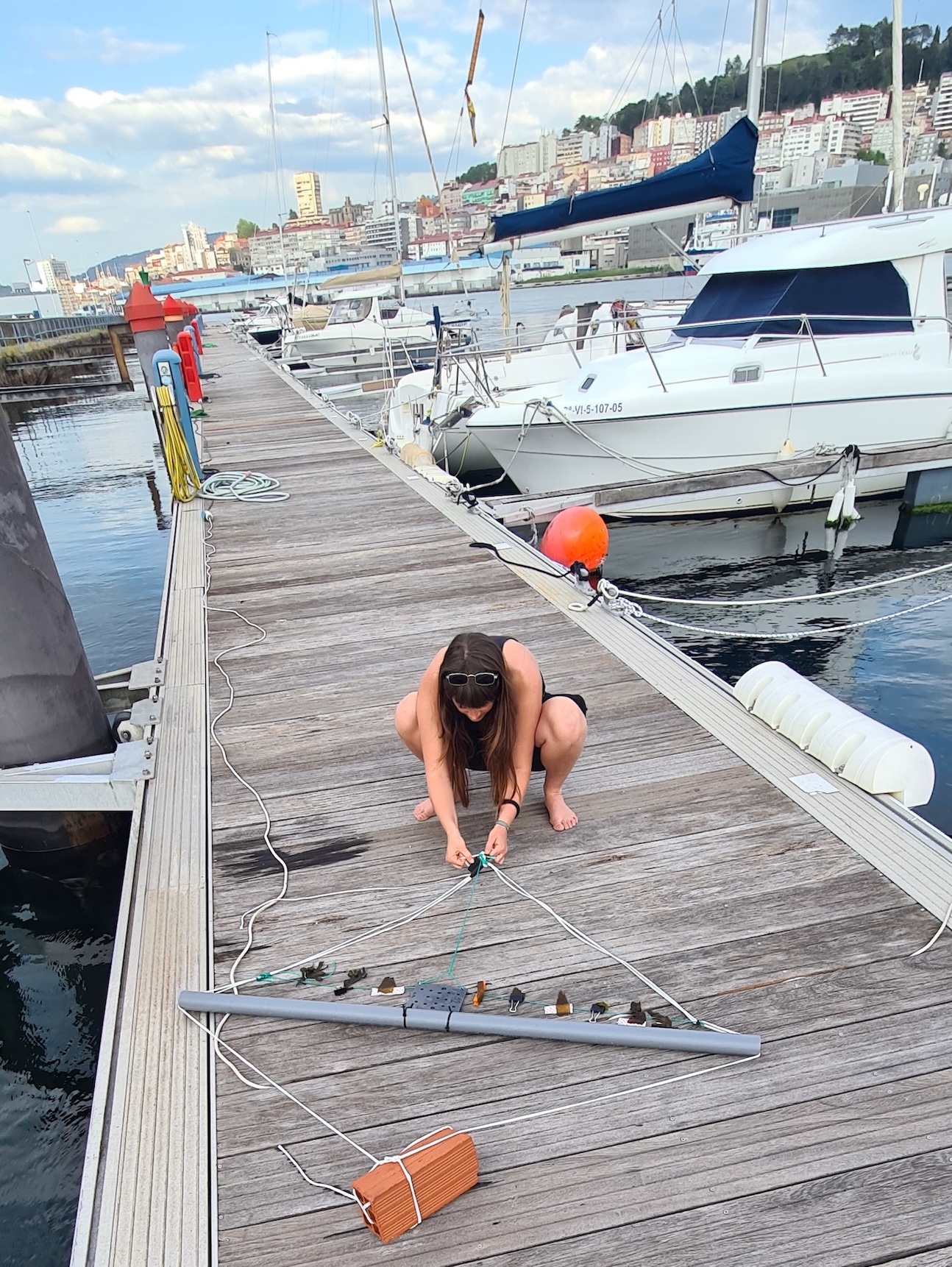
Verena is building up the first pilot study at our study site. The little setup with PVC panel, different algae, which were attached using different fastening methods. Photo: Anna 2025.
 

So, everything remains exciting.

In any case, we’re ready to diligently tinker and by this solve any problems that arise in the coming weeks.

Anna & Verena


There’s good news: GAME 2025 has started!

Continue Reading

Ocean Acidification

First Spotted, or Simply First Recorded? Velella and Our Ecological Blind Spots

Published

on

A remarkable strandline discovery deserves attention, but not exaggeration. The arrival of Velella velella on Sylt is probably Germany’s first documented record. It is not the first occurrence in the North Sea, nor is one stranding sufficient proof of a climate-driven invasion.

The discovery of Velella velella on Sylt on 23–24 August 2026 has been announced as the first German record of this oceanic hydrozoan (Listen to the News here). It is an exciting observation, but the word “first” needs careful interpretation. A first documented record is not necessarily the species’ first arrival. It may instead be the first time somebody recognized, photographed and reported it through the right channels. Fragile marine organisms such as Velella decompose rapidly, and their transparent floats are easily overlooked among material on the strandline.

A photographed Velella found on the west coast of Jutland in 2018 was considered the country’s first documented record. However, earlier reports exist (see here). Velella velella, known as the by-the-wind sailor or Segelqualle, is often described in the German media as a “Mediterranean jellyfish.” This is misleading. The species is a widely distributed oceanic hydrozoan found in tropical and warm-temperate waters, including the Mediterranean and the Northeast Atlantic. The familiar blue object is not a single conventional jellyfish but a floating colony of specialized polyps. Its diagonal sail allows wind to push the colony across the sea surface. Velella cannot swim effectively against this transport, so large strandings are principally the outcome of population size, surface currents and persistent onshore winds. The Sylt animals should therefore be understood as oceanic visitors transported into German waters, not automatically as an invasive species or an established North Sea population.

The North Sea has seen Velella before

In February 1988, thousands of colourless Velella floats washed ashore along the Belgian coast after strong westerly storms. The event was described as the first published North Sea record (See the article) Denmark also has a documented history. A photographed colony was found at Grønhøj on the west coast of Jutland on 26 July 2018. It was considered Denmark’s first documented record, although unverified reports exist from 1947, 1976 and 1997. Naturbasen

In Scotland, strandings have been recorded since at least the 1950s, with another mass event in the Clyde in 2002. Scottish Marine Atlas

The Sylt discovery is therefore regionally unusual, but it is part of a longer history of intermittent Velella transport into northern European waters.

Is this climate change?

Ocean warming may increase the probability that warm-water organisms survive and occur farther north, while winds and currents determine whether they reach Sylt in a particular year. Calling this one observation definitive proof of climate-driven range expansion would be premature. Equally, dismissing it as an irrelevant accident would ignore the wider pattern of warming seas and increasing biological movement into the North Sea.

This is exactly why systematic observations matter.

Historical absence from a database is not proof of ecological absence. It may reflect limited monitoring, failed identification or observations that were never preserved. The public can help close this gap. Photograph unusual strandline organisms, record the date and exact location, include a size reference, estimate their number and submit the observation to us (GoJelly/JellySpotter APP) or another biodiversity platform like the iNaturalist. Today’s carefully documented beach find may become tomorrow’s essential evidence of how marine distributions are changing.

Recommened for reading:

  1. Pires RFT, Cordeiro N, Dubert J, Marraccini A, Relvas P, dos Santos A (2018) Untangling Velella velella (Cnidaria: Anthoathecatae) transport: a citizen science and oceanographic approach. Mar Ecol Prog Ser 591:241-251 https://doi.org/10.3354/meps12266
  2. Betti, F., Bo, M., … Enrichetti, F. (2019). Massive strandings of Velella velella (Hydrozoa: Anthoathecata: Porpitidae) in the Ligurian Sea (North-western Mediterranean Sea). The European Zoological Journal86(1), 343–353. https://doi.org/10.1080/24750263.2019.1671506

Picture courtesy to https://commons.wikimedia.org/wiki/File:20160518_170717_Velella_velella_1.jpg

First Spotted, or Simply First Recorded? Velella and Our Ecological Blind Spots

Continue Reading

Ocean Acidification

Lessons from Coastal Legends

Published

on

Storytelling is one of our oldest human behaviors. Across every culture and continent, people have used stories to share values, pass down knowledge and make sense of the world around them. The tales that survive, retold across generations, kept alive through memory and ceremony, aren’t arbitrary. These coastal legends carry essential wisdom.

For countless coastal communities, that wisdom is related to the ocean.

Here are five coastal stories that are important parts of different oral traditions and teach us about our ocean.

Scotland: Selkie Stories

Early written records from the coast of Scotland describe seal-people who shed their aquatic skins to walk among humans on land.

These are the selkie. Their stories follow a familiar arc. One is discovered on shore, their sealskin is stolen and they are bound to a human life. They marry, raise children, but remain melancholy, always watching the water. When the skin is finally found, they return to the sea without hesitation.

It’s not difficult to see where the concept took root. Gray and harbor seals have strikingly humanesque features like expressive eyes, complex vocalizations, mothers who nurse their pups. Early coastal communities observed those qualities, and the selkie story began to spread. It produced a cultural taboo against the excessive hunting of seals.

Today, the selkie is one of Scotland’s most recognized figures. Conservation organizations have adopted the selkie as a bridge symbol of cultural identity and ocean protection. Gray seal populations in Scottish waters continue to face pressure from abandoned fishing gear and historical culling practices, behaviors the selkie taboo was designed to prevent.

Get Ocean Updates in Your Inbox

Sign up with your email and never miss an update.

This field is hidden when viewing the form

Name(Required)


By providing your email address, you consent to receive emails from Ocean Conservancy.
Terms & Conditions and Privacy Policy

This field is hidden when viewing the form
Email Opt-in: Selected(Required)

Pasifika: Wayfinding

Pasifika is a collective term for the Indigenous Peoples of the Pacific Islands. For more than 3,000 years, they’ve managed to pass along extremely complex knowledge on how to navigate the vast expanse of the Pacific Ocean.

Their secret weapon? Storytelling.

They shared stories of the demigod Māui and his canoe, Waka-a-Māui, then navigated by their corresponding constellations in the sky. Tāwhirimātea was the god of wind and storms. When his eyes appeared in the sky (as the Pleiades cluster), it meant that it was a good time to start a long voyage. Stories like these gave navigators a framework for planning their journeys and navigating the distances.

Wayfinding is a science. The people of Pasifika developed their knowledge system through thousands of years of empirical observation, experimentation at sea and rigorous knowledge transmission. The names and stories were a medium of storing and sharing this knowledge, and an effective one at that.

Mexico: Chalchiuhtlicue

Chalchiuhtlicue is the Aztec goddess of rivers, lakes, seas and the ocean, as well as the protector of fishermen and navigators. In Aztec cosmology, she was one of the most actively worshiped deities.

In different stories, she is portrayed as both a creator and destroyer, as surges of water can result in abundant harvests or devastating floods. Today, Mexico’s Pacific and Gulf coasts are among the world’s most biologically rich but storm-exposed marine environments.

Chalchiuhtlicue’s tradition reflects an understanding of how water has the potential to be life-giving or destructive depending on amount and location. Mexico’s Indigenous cultures understood water as the foundational substance of existence, from the ocean to the hydrological routes that fed agricultural soil.

Vietnam: Grandfather Whales

The coastal communities of Vietnam have long shared stories of whales as divine protectors, often referring to them as Cá Ông or “Grandfather Whales.” 

It is believed that when fishing boats are lost in a storm, whales physically rescue the crew by sending them toward shore. Several fishing villages in Vietnam still celebrate the Whale Prayer Festival twice a year. Because the whales are so revered, fishermen report whale encounters. Whales received sacred funerals whenever they are beached.

These coastal villages demonstrate a relationship with whale species marked by reciprocity. Sperm whales, humpbacks and gray whales, in fact, show behaviors that are consistent with the stories about rescue. They may approach distressed swimmers, encircle capsized vessels or even support injured kin. When a whale dies, gratitude and grief are expressed. The practice of providing a proper Confucian funeral to beached whales reflects the way that a whale carcass can still sustain hundreds of species after death.

Caribbean: Mami Wata

Many cultures in the Caribbean have carried a belief in Mami Wata. She is an ocean deity, often depicted as a mermaid, who goes by several names: La Siréne in Haiti, River Mumma in Jamaica, and Yemonja in Brazil. Her reinterpretation across several cultures maps how her oral tradition was carried across the Atlantic by enslaved Africans and adapted in different Caribbean settings. Mami Wata is depicted as a beautiful woman, skilled at music, who can be both generous and dangerous. This dual nature is parallel to the Caribbean. It is one of the world’s most biodiverse marine environments, supporting coral reef ecosystems of extraordinary productivity, but it is also a region of violent tropical storms, dangerous currents and unpredictable weather.

Sightings of Mami Wata are thought by some scholars to be related to sightings of manatees. The large, slow marine mammals with humanlike eyes and nursing behavior may match the characterizations of the deity. When the belief in Mami Wata began to decline, so did manatee populations. This reflects a phenomenon researchers call the “sacred species” effect. When a creature holds deep spiritual significance in a culture, harming it carries social and moral consequences that can be more powerful than legal ones. This provides an element of protection that is sometimes more effective than law.

Long before satellites tracked ocean temperatures, people who lived alongside the water were paying close attention. They noticed which creatures signaled safe weather and which behaviors led to abundant catches. They encoded those observations into the stories they told—deities, creatures, warnings and rituals that traveled across centuries intact.

These aren’t relics. Many are living traditions, still practiced and still relevant. And when held up alongside what marine science has since confirmed, the parallels are striking.

The stories contain lessons

What connects a fisherman’s reverence for seals in Scotland to a Vietnamese community’s funeral rites for a beached whale? Around the world, people understand that the ocean is not only a resource for extraction but also offers a relationship to be maintained.

Ocean Conservancy operates on the same understanding. This drives our work today, from protecting marine ecosystems and rebuilding fish populations to fighting the pollution and policy decisions that put our ocean at risk. Right now, aging offshore oil and gas infrastructure is corroding on the seafloor, threatening many of the species that cultures around the world hold dear. The companies that build this infrastructure exploit loopholes to avoid cleaning it up. But we can change that. The proposed Offshore Leasing Standards and Accountability Act before Congress now would require oil and gas companies to take responsibility for their operations before, during and after they drill.

The ocean has always been worth protecting. Add your name and help us pass the Offshore Leasing Standards and Accountability Act now.

The post Lessons from Coastal Legends appeared first on Ocean Conservancy.

Lessons from Coastal Legends

Continue Reading

Ocean Acidification

Meet Team Chile: Science, Sea Lions and the South American Winter

Published

on

¡Hola y bienvenidos a Chile!

We are Paula and Tim, Team Chile of GAME 2026. For the past four months, we have been working together to investigate how different underwater soundscapes (i.e. natural and human-made sounds) affect the settlement of benthic organisms and the formation of hard-bottom communities in a field experiment. We are based in Concepción, Chile (latitude -36.8 and longitude -73.0), and therefore have a rather unique position within the GAME network as the only location on the Southern Hemisphere.

Concepción has a mild Mediterranean climate with a strong ocean influence. The summers are warm, while the winters are cool and rainy, but never cold enough for snow due to the city’s low elevation and coastal location. However, if we want to see snow during our stay here, we only need to reach the nearby Andes Mountains that are just an hour away. At this time of the year, the day-time temperatures typically range from 11–15°C, while at night the average is about 5–8°C. The Pacific Ocean actually remains cool throughout the entire year due to the upwelling of cool deep water, and the winter sea surface temperature is about 11–13°C. This means that swimming is a definite no-go right now. Of course, we tried it on various occasions, but only to back out soon every single time. One of Concepción’s greatest attractions are its diverse natural surroundings. There are beautiful Pacific beaches, rolling hills, native forests, green landscapes, rivers and waterfalls – and all of this is within easy reach. To the east, the snow of the Andes provides excellent opportunities for skiing and hiking. To the west, we can enjoy surfing and diving along the Pacific coast (once the water warms up), exploring nature trails, or simply admiring breathtaking scenery. Altogether, Concepción offers a wide range of outdoor activities for everyone.

Beautiful hidden beach near Concepción, only a 10 minutes walk away from one of our field stations.

In 2026, we are the only GAME team that works on the Southern Hemisphere and the only one that is located in the Americas. This distinction comes with both advantages and disadvantages. On the one hand, it means that we have to get up earlier than anyone else for the weekly GAME Zoom meetings, which take place every Wednesday at 1 pm European summer time. Furthermore, we are also the only team experiencing winter while everyone else, in Europe and in Asia, is enjoying summer. On the other hand, we were in the ideal time zone for watching this year’s World Cup matches.

The first team picture we took on our first day scouting for experimental sites, back when the weather was sunny and no hot chocolate was needed to lift our spirits.

Now, in the austral winter, the days in Concepcíon are just starting to get longer; the rain, however, more frequent, and grey skies have become a familiar sight. Actually, our record were two straight weeks without seeing the sun, but having constant rain instead. Fortunately, our morale remains high, and this is achieved in no small parts by increasing quantities of coffee and hot chocolate, which we drink whenever and wherever possible to boost our frozen spirits.

The first month of the practical phase of the project was dedicated almost entirely to the preparation of our experimental setup. We spent countless hours identifying suitable field sites, solving logistical challenges, assembling equipment, and navigating the realities of conducting marine ecological research in Chile. Fortunately, the staff at the CENDYR Náutico facility and the Marine Science Outpost of the UCSC near Caleta Lenga provided tremendous support. They helped us to establish our experimental setup by providing local expertise on tidal conditions or allowing us to use their kayaks for the final deployment of our constructions.

At our experimental site, Tim measures the acoustic isolation distance required between the sound-exposed settlement panels and those that should not be exposed to boat noise. Acoustic isolation means that no sound from the noise treatment level should reach the panels of the other experimental group. While Tim is doing this, the local sea lions continue to ignore him completely.

However, not every challenge came from the scientific side. For example, the local sea lions seemed determined to remind us that we were visitors in their territory. Sadly, these sea lions are less the cute, curious, and cuddly kind and more the gigantic, grunting, and grumpy kind. Every trip to the experimental site involves negotiating space with our new noisy neighbours, who rarely appeared impressed by our presence. On sunny days the negotiations are often fruitless, while they are frequently watched by curious tourists, who regularly come to the pier to watch the marine mammals.

Tim, confidently asking the sea lions to let him through. The sea lions, confidently pretending he doesn´t exist.

After this first month full of challenges, we were finally able to begin the experiment. It is designed to compare the effects of two very different underwater soundscapes on the settlement of marine organisms. Rather than investigating the effects of the two soundscapes simultaneously, we run two subsequent experiments using the same experimental setup. It consists of two frames: one for the sound application and one that is experiencing the natural, un-manipulated acoustic environment of our study site. Each frame supports a circular ring as its main structure, which carries the settlement panels on which marine invertebrates and algae establish during the experiment. To minimize the influence of the played back sounds on the second set-up, the two frames are placed as far apart from each other as possible. One is at the very beginning of the pier and the other one at its end.

Sixteen settlement panels are attached to each ring, which are equivalent to the surface of a ship hull or a rocky cliffside, and which provide a suitable surface for the colonization by marine sessile organisms. The establishing communities can be very diverse and identifying every species that settled on the panels can be a slow and sometimes painstaking process. However, this is part of our work and every time we come across a species we haven’t seen before, curiosity and excitement take over. We then feel just like little kids making a new and awesome discovery.

Paula is a marine biology student at the Universidad Católica de la Santísima Concepción. Before joining GAME, she had already gained experience in marine acoustics through projects supervised by Dr. Iván Hinojosa. Participating in GAME has pushed her well beyond her comfort zone. To attend the initial course in Germany, she left South America for the first time and travelled to Europe, which was an exciting but challenging experience. The journey was filled with many firsts – from her first intercontinental flight and her first European spring, to meeting Tim and the other members of the project in person for the very first time. The introductory course at GEOMAR provided an excellent opportunity to exchange ideas and learn new techniques. Beyond the scientific experience, it also allowed her to explore new cultures, visit beautiful places, and grow both personally and professionally. As English is not commonly used in everyday life in Chile and opportunities to practice it are limited, the course also gave her the chance to improve her language skills and gain confidence while working alongside students from around the world. Everything felt completely new, even going to the supermarket in Germany became an adventure. Making mistakes while choosing ingredients or accidentally buying the wrong sauce for lunch, became something fun to laugh about and remember. In March, travelling within the country became one of her favourite adventures. At first, she chose the safest option and bought bus tickets, but during her last days before leaving again, she challenged herself to take the train and travel anywhere without thinking too much. That sense of independence and discovery made her feel unstoppable. Exploring new destinations, discovering different architectural styles, and visiting Chilean friends living in Berlin made the experience even more special and unforgettable.

Germany had always been on Paula’s list of places to visit. Not only because of its history, but also because of the opportunity to study and collaborate internationally. Back in Chile, the project now provides another personal challenge for her. Most of her previous work experience took place in laboratories and offices, meaning that the winter fieldwork in coastal Chile, which we need to do now, is something that is unfamiliar to her. It is not completely new, but was definitely not part of her everyday routines so far. Every field day comes with a little bit of uncertainty: Will the weather cooperate? Will the sea be calm? Will everything go according to plan?

Working outdoors means adapting to whatever nature decides to bring. The job can be physically demanding and mentally exhausting. Sometimes Paula finds herself feeling seasick on the pier, trying to focus on the work and there are moments when the idea of sitting in a warm office, drinking a coffee, and staying far away from the waves sounds like the best scientific strategy ever created. However, she is determined to embrace this experience with curiosity, enthusiasm, and the best energy possible. After all, not every researcher gets the chance to work surrounded by the ocean, gain new insights into marine bioacoustics, and collect stories that will last far beyond the end of the project. Every working day is simply another part of the adventure, and, fortunately, conducting the project in her hometown means having family, friends, and local contacts nearby whenever a helping hand is needed.

In this picture, Paula is doing two things at once: putting the finishing touches on our experimental frame and teaching Tim her secret signature knot.

Tim is a Master’s student in the programme “Biodiversity, Ecology and Evolution” at the University of Tübingen. Outside marine ecology, his main passion is handball. Within days after arriving in Chile, he joined the UCSC university handball team and is now helping them pursue qualification for the Chilean national championships. This sounds highly prestigious until one learns that the number of competitive handball teams in Chile is considerably smaller than in Germany.

During the first months in Chile he also made an intensive effort to relearn Spanish – which he had forgotten after his schooltime. Progress has been steady: he can now confidently introduce himself and can understand approximately every second or third word of a conversation, provided that it is spoken slowly enough. Nevertheless, this has not discouraged him from speaking Spanish whenever possible. Unfortunately, his inability to properly roll the letter “r” still reveals his foreign origins almost instantly. Despite occasional linguistic mishaps, he is thoroughly enjoying to experience South America for the first time and is looking forward to discovering more of Chile in the months ahead.

After constructing our frames, it was time to test their durability, which is why Tim is taking them for a ride around town.

In the first months of the practical phase, opportunities for travel were limited due to the demanding preparation of the experiment. Between building frames, preparing equipment, scouting field sites, and carrying out the first sampling events, there was little time left to explore the country. However, now that the experiment is running smoothly and sampling events are more structured, there is finally enough time to enjoy life outside the field. Tim interpreted this newfound free time somewhat differently than expected and promptly booked a two-week trip to Rio de Janeiro—partly in search of warmer temperatures and partly because renewing his visa required leaving the country. After several weeks of cold, rainy Chilean winter weather, Rio offered exactly the kind of break he had hoped for: sunshine, beaches, mountains, and the unmistakable energy of one of South America’s most iconic cities. However, this experience made the rain in Chile seem only slightly less grey.

Before heading to Brazil, he also spent a weekend exploring the volcanic landscapes around Pucón. Hiking through forests, lava fields and snow-covered mountains quickly became one of the highlights of his time in Chile so far and confirming that Chile’s reputation for spectacular nature is well deserved.

Magnificent view at lunchtime during one of Tim´s hikes around the national parks near Pucón.

With several weeks of fieldwork still ahead, there are already more adventures on the horizon. A trip to Buenos Aires is planned for the end of August, and before returning to Germany, Tim hopes to visit both, Patagonia in the far south and the Atacama Desert in the north. Few regions in the world offer such an incredible variety of landscapes within a single country, and after spending most of the winter along Chile’s central coast, seeing more of what Chile has to offer has become one of his goals for the remaining weeks of the project.

However, back to the experiment: For the first two months, our underwater loudspeakers continuously played recordings of container ship noise, recreating a busy shipping environment to our settlement panels. However, by now we have officially entered the second phase of the experiment, in which we replaced the anthropogenic noise by recordings of natural reef sounds. Over the coming weeks, we are looking forward to seeing whether the establishing communities differ between these two contrasting acoustic worlds.

Applying the two different soundscapes in separate experiments, has given us the opportunity to work closely together throughout every stage of the experimental work. We have been able to support each other during the harder tasks, double-check our work and decisions, and by this learnt from every step of the process. This collaboration has been essential for improving our methods and preparing us to carry out the second experiment in the best possible way. Working as a team has not only helped us overcome difficulties more easily, but has also made the journey much more enjoyable, with the phrase “It is what it is” becoming our team mantra to remind us to stay positive and adaptable when some things became challenging.

As if to test whether our team mantra really holds up under pressure, nature decided to throw us one final challenge. Just two weeks ago, a severe winter storm with wind speeds exceeding 100 km/h swept across the coast of Talcahuano. The combination of strong winds, high waves, and an exceptionally high tide pushed the water level over the seawall and straight into the crate containing all of our playback equipment, dragging it into the ocean. What had taken weeks to assemble was suddenly soaked and destroyed. After a brief moment of disbelief (or maybe two or three moments), there was only one option: rebuild everything. It took us around five days, plenty of patience, and more than a few nerves before the experiment was running again. Fortunately, we managed to get everything back into operation with only minimal interruption—proving once again that sometimes “It is what it is” really is the only way forward.

Assessing the aftermath of the storm, while still being in denial about the reality of the problem.

Our experiment will be continued until approximately mid-September. As we now move into the final weeks of fieldwork, we are excited to see how the project develops and what the data will ultimately reveal about the influence of underwater sounds on the diversity and composition of hard-bottom communities. We are especially curious about the final results of the second experiment, as the outcomes of the first phase were quite unexpected and contrary to what we had initially anticipated. These surprising results have made us even more eager to understand how marine organisms respond to different underwater soundscapes and what new insights the second experiment will bring.

Together, we have challenged ourselves to achieve two important goals: successfully completing this project and winning the endless battle to pronouncing the “R” sound in both of our new native languages. So far, the first one seems much more achievable than the second.

The work has been demanding, the weather at times challenging, and the sea lions consistently uncooperative, but the experience has already been incredibly rewarding. We are both very grateful for the opportunity to participate in GAME 2026 and look forward to sharing more updates as the project progresses.

Team Chile wishes everyone a great day!

Meet Team Chile: Science, Sea Lions and the South American Winter

Continue Reading

Trending

Copyright © 2022 BreakingClimateChange.com