

We handpick and explain the most important stories at the intersection of climate, land, food and nature over the past fortnight.
This is an online version of Carbon Brief’s fortnightly Cropped email newsletter. Subscribe for free here.
Key developments
‘Deadly’ wildfires
WINE BRAKE: France experienced its “largest wildfire in decades”, which scorched more than 16,000 hectares in the country’s southern Aude region, the Associated Press said. “Gusting winds” fanned the flames, Reuters reported, but local winemakers and mayors also “blam[ed] the loss of vineyards”, which can act as a “natural, moisture-filled brake against wildfires”, for the fire’s rapid spread. It added that thousands of hectares of vineyards were removed in Aude over the past year. Meanwhile, thousands of people were evacuated from “deadly” wildfires in Spain, the Guardian said, with blazes ongoing in other parts of Europe.
MAJOR FIRES: Canada is experiencing its second-worst wildfire season on record, CBC News reported. More than 7.3m hectares burned in 2025, “more than double the 10-year average for this time of year”, the broadcaster said. The past three fire seasons were “among the 10 worst on record”, CBC News added. Dr Mike Flannigan from Thompson Rivers University told the Guardian: “This is our new reality…The warmer it gets, the more fires we see.” Elsewhere, the UK is experiencing a record year for wildfires, with more than 40,000 hectares of land burned so far in 2025, according to Carbon Brief.
-
Sign up to Carbon Brief’s free “Cropped” email newsletter. A fortnightly digest of food, land and nature news and views. Sent to your inbox every other Wednesday.
WESTERN US: The US state of Colorado has recorded one of its largest wildfires in history in recent days, the Guardian said. The fire “charred” more than 43,300 hectares of land and led to the temporary evacuation of 179 inmates from a prison, the newspaper said. In California, a fire broke out “during a heatwave” and burned more than 2,000 hectares before it was contained, the Los Angeles Times reported. BBC News noted: “Wildfires have become more frequent in California, with experts citing climate change as a key factor. Hotter, drier conditions have made fire seasons longer and more destructive.”
FIRE FUNDING: “Worsening fires” in the Brazilian Amazon threaten new rainforest funding proposals due to be announced at the COP30 climate summit later this year, experts told Climate Home News. The new initiatives include the Tropical Forests Forever Facility, which the outlet said “aims to generate a flow of international investment to pay countries annually in proportion to their preserved tropical forests”. The outlet added: “If fires in the Amazon continue to worsen in the years to come, eligibility for funding could be jeopardised, Brazil’s environment ministry acknowledged.”
Farming impacts
OUT OF ORBIT: US president Donald Trump moved to “shut down” two space missions which monitor carbon dioxide and plant health, the Associated Press reported. Ending these NASA missions would “potentially shu[t] off an important source of data for scientists, policymakers and farmers”, the outlet said. Dr David Crisp, a retired NASA scientist, said the missions can detect the “glow” of plant growth, which the outlet noted “helps monitor drought and predict food shortages that can lead to civil unrest and famine”.
FARM EXTREMES: Elsewhere, Reuters said that some farmers are considering “abandoning” a “drought-hit” agricultural area in Hungary as “climate change cuts crop yields and reduces groundwater levels”. Scientists warned that rising temperatures and low rainfall threaten the region’s “agricultural viability”, the newswire added. Meanwhile, the Premium Times in Nigeria said that some farmers are “harvest[ing] crops prematurely” due to flooding fears. A community in the south-eastern state of Imo “has endured recurrent floods, which wash away crops and incomes alike” over the past decade, the newspaper noted.
SECURITY RISKS: Food supply chains in the UK face “escalating threats from climate impacts and the migration they are triggering”, according to a report covered by Business Green. The outlet said that £3bn worth of UK food imports originated from the 20 countries “with the highest numbers of climate-driven displacements” in 2024, based on analysis from the Energy and Climate Intelligence Unit. The analysis highlighted that “climate impacts on food imports pose a threat to UK food security”. Elsewhere, an opinion piece in Dialogue Earth explored how the “role of gender equity in food security remains critically unaddressed”.
Spotlight
Fossil-fuelled bird decline
This week, Carbon Brief covers a new study tracing the impact of fossil-fuelled climate change on tropical birds.
Over the past few years, biologists have recorded sharp declines in bird numbers across tropical rainforests – even in areas untouched by humans – with the cause remaining a mystery.
A new study published this week in Nature Ecology and Evolution could help to shed light on this alarming phenomenon.
The research combined ecological and climate attribution techniques for the first time to trace the fingerprint of fossil-fuelled climate change on declining bird populations.
It found that an increase in heat extremes driven by climate change has caused tropical bird populations to decline by 25-38% in the period 1950-2020, when compared to a world without warming.
In their paper, the authors noted that birds in the tropics could be living close to their “thermal limits”.
Study lead author Dr Maximilian Kotz, a climate scientist at the Barcelona Supercomputing Center in Spain, explained to Carbon Brief:
“High temperature extremes can induce direct mortality in bird populations due to hyperthermia and dehydration. Even when they don’t [kill birds immediately], there’s evidence that this can then affect body condition which, in turn, affects breeding behaviour and success.”
Conservation implications
The findings have “potential ramifications” for commonly proposed conservation strategies, such as increasing the amount of land in the tropics that is protected for nature, the authors said. In their paper, they continued:
“While we do not disagree that these strategies are necessary for abating tropical habitat loss…our research shows there is now an additional urgent need to investigate strategies that can allow for the persistence of tropical species that are vulnerable to heat extremes.”
In some parts of the world, scientists and conservationists are looking into how to protect wildlife from more intense and frequent climate extremes, Kotz said.
He referenced one project in Australia which is working to protect threatened wildlife following periods of extreme heat, drought and bushfires.
Prof Alex Pigot, a biodiversity scientist at University College London (UCL), who was not involved in the research, said the findings reinforced the need to systematically monitor the impact of extreme weather on wildlife. He told Carbon Brief:
“We urgently need to develop early warning systems to be able to anticipate in advance where and when extreme heatwaves and droughts are likely to impact populations – and also rapidly scale up our monitoring of species and ecosystems so that we can reliably detect these effects.”
There is further coverage of this research on Carbon Brief’s website.
News and views
EMPTY CALI FUND: A major voluntary fund for biodiversity remains empty more than five months after its launch, Carbon Brief revealed. The Cali Fund, agreed at the COP16 biodiversity negotiations last year, was set up for companies who rely on nature’s resources to share some of their earnings with the countries where many of these resources originate. Big pharmaceutical companies did not take up on opportunities to commit to contributing to the fund or be involved in its launch in February 2025, emails released to Carbon Brief showed. Just one US biotechnology firm has pledged to contribute to the fund in the future.
LOSING HOPE: Western Australia’s Ningaloo reef – long considered a “hope spot” among the country’s coral reefs for evading major bleaching events – is facing its “worst-ever coral bleaching”, Australia’s ABC News reported. The ocean around Ningaloo has been “abnormally” warm since December, resulting in “unprecedented” bleaching and mortality, a research scientist told the outlet. According to marine ecologist Dr Damian Thomson, “up to 50% of the examined coral was dead in May”, the Sydney Morning Herald said. Thomson told the newspaper: “You realise your children are probably never going to see Ningaloo the way you saw it.”
‘DEVASTATION BILL’: Brazil’s president, Luiz Inácio Lula da Silva, signed a “contentious” environmental bill into law, but “partially vetoed” some of the widely criticised elements, the Financial Times reported. Critics, who dubbed it the “devastation bill”, said it “risked fuelling deforestation and would harm Brazil’s ecological credentials” just months before hosting the COP30 climate summit. The newspaper said: “The leftist leader struck down or altered 63 of 400 provisions in the legislation, which was designed to speed up and modernise environmental licensing for new business and infrastructure developments.” The vetoes need to be approved by congress, “where Lula lacks a majority”, the newspaper noted.
RAINFOREST DRILLING: The EU has advised the Democratic Republic of the Congo (DRC) against allowing oil drilling in a vast stretch of rainforest and peatland that was jointly designated a “green corridor” earlier this year, Climate Home News reported. In May, the DRC announced that it planned to open the conservation area for drilling, the publication said. A spokesperson for the European Commission told Climate Home News that the bloc “fully acknowledges and respects the DRC’s sovereign right to utilise its diverse resources for economic development”, but that it “highlights the fact that green alternatives have facilitated the protection of certain areas”.
NEW PLAN FOR WETLANDS: During the 15th meeting of the Ramsar Convention on Wetlands, held in Zimbabwe from 23 to 31 July, countries agreed on the adoption of a new 10-year strategic plan for conserving and sustainably using the world’s wetlands. Down to Earth reported that 13 resolutions were adopted, including “enhancing monitoring and reporting, capacity building and mobilisation of resources”. During the talks, Zimbabwe’s environment minister announced plans to restore 250,000 hectares of degraded wetlands by 2030 and Saudi Arabia entered the Convention on Wetlands. Panamá will host the next COP on wetlands in July 2028.
MEAT MADNESS: DeSmog covered the details of a 2021 public relations document that revealed how the meat industry is trying to “make beef seem climate-friendly”. The industry “may have enlisted environmental groups to persuade people to ‘feel better’ about eating beef”, the outlet said, based on this document. The strategy was created by a communications agency, MHP Group, and addressed to the Global Roundtable for Sustainable Beef. One of the key messages of the plan was to communicate the “growing momentum in the beef industry to protect and nurture the Earth’s natural resources”. MHP Group did not respond to a request for comment, according to DeSmog.
Watch, read, listen
MAKING WAVES: A livestream of deep-sea “crustaceans, sponges and sea cucumbers” has “captivated” people in Argentina, the New York Times outlined.
BAFFLING BIRDS: The Times explored the backstory to the tens of thousands of “exotic-looking” parakeets found in parks across Britain.
PLANT-BASED POWER: In the Conversation, Prof Paul Behrens outlined how switching to a plant-based diet could help the UK meet its climate and health targets.
MARINE DISCRIMINATION: Nature spoke to a US-based graduate student who co-founded Minorities in Shark Science about her experiences of racism and sexism in the research field.
New science
- Applying biochar – a type of charcoal – to soils each year over a long period of time can have “sustained benefits for crop yield and greenhouse gas mitigation”, according to a Proceedings of the National Academy of Sciences study.
- New research, published in PLOS Climate, found that nearly one-third of highly migratory fish species in the US waters of the Atlantic Ocean have “high” or “very high” vulnerability to climate change, but the majority of species have “some level of resilience and adaptability”.
- A study in Communications Earth & Environment found a “notable greening trend” in China’s wetlands over 2000-23, with an increasing amount of carbon being stored in the plants growing there.
In the diary
- 18-29 August: Second meeting of the preparatory commission for the Agreement on Marine Biological Diversity of Areas beyond National Jurisdiction | New York
- 24-28 August: World Water Week | Online and Stockholm, Sweden
- 26-29 August: Sixth forum of ministers and environment authorities of Asia Pacific | Nadi, Fiji
Cropped is researched and written by Dr Giuliana Viglione, Aruna Chandrasekhar, Daisy Dunne, Orla Dwyer and Yanine Quiroz. Please send tips and feedback to cropped@carbonbrief.org

The post Cropped 13 August 2025: Fossil-fuelled bird decline; ‘Deadly’ wildfires; Empty nature fund appeared first on Carbon Brief.
Cropped 13 August 2025: Fossil-fuelled bird decline; ‘Deadly’ wildfires; Empty nature fund

Climate Change
Senate Democrats Say Trump’s EPA Curries Corporate Favor By Weakening Air Pollution Standards
Ozone and particulate matter air pollutants cause over 100,000 premature deaths per year and affect the health of millions of Americans. EPA Administrator Lee Zeldin said last month that his agency would stop considering those costs when drafting new regulations.
Senate Democrats have launched an investigation into the U.S. Environmental Protection Agency’s decision in January to disregard human health impacts when calculating the costs and benefits of regulating the harmful air pollutants ozone and PM2.5.
Senate Democrats Say Trump’s EPA Curries Corporate Favor By Weakening Air Pollution Standards
A new poll finds that 85 percent of Iowans in “toss-up” congressional districts would be more likely to vote for a candidate who prioritizes clean water and cuts to industrial agriculture pollution.
Two key congressional races will be decided by Iowa voters who say clean water is a top priority, a new survey finds.
Iowa’s Water Crisis Could Help Tip the Scales for Control of US House
The economics of clean energy “just get better and better”, leaving opponents of the transition looking like “King Canute”, says Chris Stark.
Stark is head of the UK government’s “mission” to deliver clean power by 2030, having previously been chief executive of the advisory Climate Change Committee (CCC).
In a wide-ranging interview with Carbon Brief, Stark makes the case for the “radical” clean-power mission, which he says will act as “huge insurance” against future gas-price spikes.
He pushes back on “super daft” calls to abandon the 2030 target, saying he has a “huge disagreement” on this with critics, such as the Tony Blair Institute.
Stark also takes issue with “completely…crazy” attacks on the UK’s Climate Change Act, warns of the “great risk” of Conservative proposals to scrap carbon pricing and stresses – in the face of threats from the climate-sceptic Reform party – the importance of being a country that respects legal contracts.
He says: “The problems and woes of this country, in terms of the cost of energy, are due to fossil fuels, not due to the Climate Change Act.”
The UK should become an “electrostate” built on clean-energy technologies, says Stark, but it needs a “cute” strategy on domestic supply chains and will have to interact with China.
Beyond the UK, despite media misinformation and the US turn against climate action, Stark concludes that the global energy transition is “heading in one direction”:
“You’ve got to see the movie, not the scene. The movie is that things are heading in one direction, towards something cleaner. Good luck if you think you can avoid that.”
- On the rationale for clean power 2030: “We’re trying to do something radical in a short space of time…It has all the characteristics of something that you can do quickly, but which has long-term benefit.”
- On grid investment: “[T]he programme of investment in infrastructure and in networks is genuinely once in a generation and we haven’t really done investment at this scale since the coal-fired generation was first planned.”
- On 88 “critical” grid upgrades: “We really need them to be on time, because the consumer will see the benefit of each one of those upgrades.”
- On electricity demand: “I think we are in the point now where we are starting to see the signal of that demand increase – and it is largely being driven by electric vehicle uptake.”
- On high electricity prices: “[I]t’s largely the product of decades of [decisions] before us. We do have high electricity prices and we absolutely need to bring them down.”
- On industrial power prices: “[W]e’ve got a whole package of things that…[will] take those energy prices down very significantly, probably below the sort of prices that you’ll see on the continent.”
- On cutting bills further: “The investments that we think we need for 2030…will add to some of those fixed costs, but…facilitate a lower wholesale price for electricity, [which] we think will at least match and probably outweigh those extra costs.”
- On insuring against the next gas price spike: “The amount of gas we’re displacing when that [new renewable capacity] comes online is a huge insurance [policy] against the next price spike that [there] will be, inevitably, [at] some point in the future for gas prices.”
- On Centrica boss Chris O’Shea’s comments on electricity bills in 2030: “I don’t think he’s right on this…I’m much more optimistic than Chris is about how quickly we can bring bills down.”
- On the need for investment: “I think there’s a hard truth to this, that any government – of any colour – would face the same challenge. You cannot have a system without that investment, unless you are dicing with a future where you’re not able to meet that future demand.”
- On the high price of gas power: “If you don’t think that offshore wind is the answer for [rising electricity demand], then you need to look to gas – and new gas is far more expensive.”
- On calls to scrap the 2030 mission: “I have a huge disagreement with the Tony Blair Institute on this…I think it’s daft – like, super daft – to step back from something that’s so clearly working.”
- On Conservative calls to scrap carbon pricing: “We absolutely have to have carbon pricing…if you want to make progress on our climate objectives. It also has been a very successful tool…I think it’s a great risk to start playing around with that system.”
- On gas prices being volatile: “[A]t the time that Russia invaded Ukraine…the global gas price spiked to an extraordinary degree…I’m afraid that is a pattern that is repeated consistently.”
- On insulating against gas price spikes: “[Y]ou cannot steer geopolitics from here in the UK. What you can do is insulate yourself from it…Clean power is largely about ensuring that.”
- On Reform threats to renewable contracts: “[A]ll this sort of threatening stuff, that is about ripping up existing contracts, has a much bigger impact than just the energy transition. This has always been a country that respects those legacy contracts.”
- On the wider benefits of the clean-power mission: “In the end, we’re bringing all sorts of benefits to the country that go beyond the climate here. The jobs that go with that transition, investment that comes with that and, of course, the energy security that we’re buying ourselves by having all of this domestic supply. It’s hard to argue that that is bad for the country.”
- On the UK’s plans for a renewable-led energy system: “[The] idea of a renewables-led system, with nuclear on the horizon, is just so clearly the obvious thing to do. I don’t really know what the alternative would be for us if we weren’t pursuing it.”
- On the UK becoming an “electrostate”: “Yes, that’s quite good for the climate…It’s also extraordinarily good for productivity, because you’re not wasting energy. Fossil fuels bring a huge amount of waste…You don’t get that with electrotech. I want us to be an electrostate.”
- On bringing supply chains and Chinese technology: “I want to see us adopt electrotech. I also want us to own a large part of the supply chain…I don’t think it’s ever going to be the case that we can…avoid the Chinese interaction…[B]ut I think it’s really important that our industrial strategy is cute about which bits of that supply chain it wants to see here.”
- On attacks on UK climate policy: “A lot of the criticism of the Climate Change Act I find completely…crazy. It has not acted as a straitjacket. It has not restricted economic growth. The problems and woes of this country, in terms of the cost of energy, are due to fossil fuels, not due to the Climate Change Act.”
- On media misinformation: “[C]limate change and probably net-zero have taken on a role in the ‘culture wars’ that they didn’t previously have.”
- On winning the argument for clean power: “Actually, it’s not to shoot down every assertion that you know to be false. It’s just to get on with trying to do this thing, to demonstrate to people that there’s a better way to go about this.”
- On net-zero: “I think we are getting beyond a period where net-zero has a slogan value. I think it’s probably moved back to being what it always should have been, really, which is a scientific target – and in this country, a statutory target that guides activity.”
- On the geopolitics of climate action: “[I]t’s striking how much it’s shifted, not least because of the US…It is slightly weird…that has happened at a time when every day, almost, the evidence is there that the cleaner alternative is the way that the world is heading.”
- On US withdrawal from the Paris Agreement: “I wish that hadn’t happened, but the economics of the cleaner alternative that we’re building just get better and better over time.”
- On watching “the movie, not the scene”: “The movie is that things are heading in one direction, towards something cleaner. Good luck if you think you can avoid that – [like] King Canute.”
Carbon Brief: Thanks very much for joining us today. Chris, you’re in charge of the government’s mission for clean power by 2030. Can you just explain what the point of that mission is?
Chris Stark: Well, we’re trying to do something radical in a short space of time. And maybe if I start with the backstory to that, Ed Miliband, as secretary of state, was looking for a project where he could make a difference quickly. And the reason that we are focused on clean power 2030 is because it is that project. It has all the characteristics of something that you can do quickly, but which has long-term benefits.
What we’re trying to do is to accelerate a process that was already underway of decarbonising the power system, but to do so in a time when we feel it’s essential that we start that journey and move it more quickly, because in the 2030s we’re expecting the demand for electricity to grow. So this is a bit of a sprint to get ourselves prepped for where we think we need to be from 2030 onwards. And it’s also, coming to my role, it’s the job I want to do, because I spent many years advising that you should decarbonise the economy by electrifying – and stage one of that is to finish the job on cleaning up the supply.
So it’s kind of the perfect project, really. And if you want to do clean power by 2030, [the] first thing is to say we’re not going to take an overly purist approach to that. So we admit and are conscious – in fact, find it useful – to have gas in the mix between now and 2030. The challenge is to run it down to, if we can, 5% of the total mix in 2030 and to grow the clean stuff alongside it. So, using gas as a flexible source, and that, we think is a great platform to grow the demand for electricity on the journey, but especially after 2030 – and that’s when the decarbonisation really kicks in.
So it’s a sort of exciting thing to try and do. And if you want to do it, here comes the interesting thing. You need the whole system, all the policies, all the institutions, all the interactions with the private sector, interactions with the consumer, to be lined up in the right way.
So clean power by 2030 is also the best expression of how quickly we want the planning system to work, how much harder we want the energy institutions like NESO [the National Energy System Operator] and energy regulator Ofgem to support it – and how we want to send a message to investors that they should come here to do their investment. Turns out, it’s a great way of advertising all of that and making it happen. And so far, it’s working great.
CB: Thanks. So do you still think it’s achievable? We’re sitting in “mission control”. You’ve got some big screens on the wall. Is there anything on those screens that’s flashing red at the moment?
CS: So, right behind you are the big screens. And it’s tremendously useful to have a room, a physical space, where we can plan this stuff and coordinate this stuff. There’s lots of things that flash red. There’s no question. And it’s an expression of it being a genuine mission. This is not business as usual. So you wouldn’t move as quickly as this, unless you’ve set your North Star around it. And it does frame all the things that, especially this department is doing, but also the rest of government, in terms of the story of where we are.
We’re approaching two years into this mission and – really important to say – if the mission is about constructing infrastructure, it’s in that timeframe that you’ll do most of the work, setting it up so that we get the things that we think we need for 2030 constructed.
We’re already reaching the end of that phase one, and we did that by first of all, going as hard and as fast as we could to establish a plan for 2030, which involved us going first to the energy system operator, NESO, to give us their independent advice. We then turned that into a plan, and the expression of that plan is largely that we need to see construction of new networks, new generation, new storage and a new set of retail models to make all of that stick together well for the consumer.
Phase one was about using that plan to try and go hard at a set of super-ambitious technology ranges for all the clean technologies, so onshore wind, offshore wind, solar [and] also the energy storage technologies. We’ve set a range that we’re trying to hit by 2030 that is right at the top end of what we think is possible. Then we went about constructing the policies to make that happen.
Behind you on the big screens, what we’re often doing is looking at the project pipeline that would deliver that [ambition]. At the heart of it is the idea that if you want to do something quickly by 2030, there is a project pipeline already in development that will deliver that for you, if you can curate it and reorder it to deliver. And therefore, the most important and radical thing that we did – alongside all the reforms to things like contracts for difference and the kind of classic policy support – is this very radical reordering of the connection queue, which allows us to put to the front of the queue the projects that we think will deliver what we need for 2030 – and into the 2030s.
Then, alongside that, the other big thing, and I think this is going to be more of a priority in the second phase of work for us, is the networks themselves. We are trying to essentially build the plane while it flies by contracting the generation whilst also building the networks, and of course, doing this connection queue reform at the same time. That is, again, radical, but the programme of investment in infrastructure and in networks is genuinely once in a generation and we haven’t really done investment at this scale since the coal-fired generation was first planned. We think a lot about 88 – we think – really critical transmission upgrades. We really need them to be on time, because the consumer will see the benefit of each one of those upgrades.
CB: You already talked about electricity demand growing as the economy electrifies. Do you think that there’s a risk that we could hit the clean power 2030 target, but at the same time, perhaps meeting it accidentally, by not electrifying as quickly as we think – and therefore demand not growing as quickly?
CS: So, an unspoken – we need to clearly make this more of a factor – an unspoken factor in the shape of the energy system we have today has been an assumption, for well over 20 years, really, that demand for electricity was always going to pick up. In fact, what we’ve seen is the opposite. So for about a quarter of a century, demand has fallen. Interestingly, the system – the energy system, the electricity system – generally plans for an increase in demand that never arrives. We could have a much longer conversation about why that happened and the institutional framework that led to that. But it is nonetheless the case.
I think we are at the point now where we are starting to see the signal of that demand increase – and it is largely being driven by electric vehicle uptake. The story of net-zero and decarbonisation does rest on electrification at a much bigger scale than just electric cars. So part of what we’re trying to do is prepare for that moment.
But you’re absolutely right, if demand doesn’t increase, the biggest single challenge will be that we’ve got a lot of new fixed costs and a bigger system – on the generation side and the network side – that are being spread over a demand base that’s too small. So, slightly counter-intuitively, because there’s a lot of coverage around the world about the concern about the increase in electricity demand, I want that increase in electricity demand, but I also want it to be of a particular type. So if we can, we want to grow the demand for electricity with flexible demand, as much as possible, that is matching – as best we can – the availability of the supply when the wind blows or the sun shines. That makes the system itself cheaper.
The more electricity demand we see, the more those fixed costs that are in the system – for networks and increasingly for the large renewable projects – the more they are spread over a bigger demand base and the lower the unit costs of electricity, which will be good, in turn, for the uptake of more and more electrification in the future. So there’s this virtuous circle that comes from getting this right. In terms of where we go next with clean power 2030, a big part of that story needs to be electrification. We want to see more electricity demand, again, of the right sort, if we can. More flexible demand and, again, [the] more that that is on the system, the better the system will operate – and the cheaper it will be for the consumer.
CB: So, the UK has among the highest electricity prices of any major economy. Can you just talk through why you think that is – and what we should be doing about it?
CS: Yeah, there’s a story that the Financial Times runs every three months about the cost of electricity – and particularly industrial electricity prices. Every time that happens, we slightly wince here, because it’s largely the product of decades of [decisions] before us.
We do have high electricity prices and we absolutely need to bring them down. For those industrial users, we’ve got a whole package of things that will come on, over the next few months, into next year, that will make a big difference, I think. For those industrial users, [it will] take those energy prices down very significantly, probably below the sort of prices that you’ll see on the continent, and that, I hope, will help.
But we have a bigger plan to try and do something about electricity prices for all consumers. I think it’s worth just dwelling on this: two-thirds of electricity consumption is not households, it’s commercial. So the biggest part of this is the commercial electricity story – and then the rest, the final third, is for households. The politics of this, obviously, is around households.
You’ve seen in the last six months, this government has focused really hard on the cost of living and one of the best tools – if you want to go hard at it, to improve the cost of living – is energy bills. So the budget last year was a really big thing for us. It involved months of work – actually in this room. We commandeered this room to look solely at packages of policy that would reduce household bills quickly and landed on a package that was announced in the budget last year, that will take £150 off household bills from April. That’s tremendous – and it’s the sort of thing that we were advising when I was in the Climate Change Committee – because the core of that is to take policy costs off electricity bills, particularly, and to put them into general taxation, where [you have] slightly more progressive recovery of those costs.
But there’s not another one of those enormous packages still to come. What we’re dealing with, to answer your question, is a set of system costs, as we think of them, that are out there and must be recovered. Now we’ve chosen, in the first instance, to move some of those costs into general taxation. The next phase of this involves us doing the investments that we think we need for 2030, which will add to some of those fixed costs, but doing so because we are going to facilitate a lower wholesale price for electricity, that we think will at least match and probably outweigh those extra costs.
That opens up a further thing, which I think is where we’ll go next with this story, on the consumer side, which is that we want to give the opportunity to more consumers – be they commercial or household – to flexibly use that power when it’s available, and to do so in a way that makes that power cheaper for them.
You most obviously see that in something we published just a few weeks ago, the “warm homes plan”, which, in its DNA, is about giving packages of these technologies to those households that most need them. So solar panels, batteries and eventually heat pumps in the homes that are most requiring of that kind of support, to allow them to access the cheaper energy that’s been available for a while, actually, if you’re rich enough to have those technologies already. That notion of a more flexible tech-enabled future, which gives you access to cheaper electricity, is where I think you will see the further savings that come beyond that £150. So the £150 is a bit like a down payment on all of that, but there’s still a lot more to come on that. And in a sense, it’s enabled by the clean power mission.
You know, we are moving so quickly on this now and maybe the final thing to say is that as we bring more and more renewables under long-term contracts – hopefully at really good value, discovered through an auction – we will be displacing more and more gas. If you look back over the last two auctions, it’s quite staggering, 24 gigawatts [GW] – I think it is maybe more than that – we’ve contracted through two auction rounds. The amount of gas we’re displacing when that stuff comes online is a huge insurance [policy] against the next price spike that [there] will be, inevitably, [at] some point in the future for gas prices. There’s usually one or two of these price spikes every decade. So, when that moment comes, we’re going to be much better insulated from it, because of these – I think – really good-value contracts that we’re signing for renewables.
CB: We’ve seen quite a few public interventions by energy bosses recently – just this week, Chris O’Shea at Centrica, saying that electricity prices by 2030 could be as high as they were in the wake of Russia invading Ukraine. Just as a reminder, at that point, we were paying more than twice as much per unit of electricity as we’re paying now – or we would have been if the government hadn’t stepped in with tens of billions in subsidies. Can I just get your response to those comments from Chris O’Shea?
CS: Well, listen, Chris and I know each other well. In fact, he’s a Celtic fan, he lives around the corner from me in Glasgow and he comes up for Celtic games regularly. So I do occasionally speak to him about these things. I don’t think he’s right on this. To put it as simply as I can, our view is very definitely that as we bring on the projects that we’re contracting in AR6 [auction round six], AR7 and into AR8 and 9, as those projects are connected and start generating, we are going to see lower prices. That doesn’t mean that we’re complacent about this, but we’ve got, I would say, a really well-grounded view of how that would play out over the next few years. And you know, £150 off bills next year is only part one of that story. So I’m much more optimistic than Chris is about how quickly we can bring bills down.
CB: This government was obviously elected on a pledge to cut bills by £300 from 2024 to 2030. Do you think that’s achievable? You talked about £150 pounds. That’s half…
CS: Well if Ed [Miliband, energy secretary] were here, he would remind you it was up to £300. And of course, that matters. But yes, I do think – of course – I think that’s well in scope. I don’t want to gloss over this, though; there are real challenges here. We are entering a period where there’s a lot of investment needed in our energy system and our power system.
I think there’s a hard truth to this, that any government – of any colour – would face the same challenge. You cannot have a system without that investment, unless you are dicing with a future where you’re not able to meet that future demand that we keep referring to. So I think we’re doing a really prudent thing, which is approaching that investment challenge in the right way, to spread the costs in the right way for the consumer – so they don’t see those impacts immediately – and to get us to the to the situation where we’re able to sustain and meet the future demands that this country will have, in common with any other country in the world as it starts to electrify at scale. That’s what we should be talking about.
We have really tried to push that argument, particularly with the offshore wind results, where we were making the counter case, that if you don’t think that offshore wind is the answer for this, then you need to look to gas – and new gas is far more expensive. In a world where you’re having to grow the size of the overall power system, I think it’s very prudent to do what we’re doing. So the network costs, the renewables costs that are coming, these are all part of the story of us getting prepared for the system that we need in the future, at the best possible price for the consumer. But of course, we would like to see a quicker impact here. We’d like to see those bills fall more quickly and I think we still have a few more tools in the box to play.
CB: There’s an argument around that the clean power mission is, in fact, part of the problem, or even the biggest problem, in driving high bills. Do you think that getting rid of the mission would help to cut bills, as the Tony Blair Institute’s been suggesting?
CS: I have a huge disagreement with the Tony Blair Institute on this. I mean, step back from this. The word mission gets bandied around a lot and I am very pleased that this mission continues. Mission government is quite a difficult thing to do and we’re definitely delivering against the objectives that we set ourselves. But it’s interesting just to step back and understand why that’s happening. We deliberately aimed high with this mission because if you are mission-driven, that’s what you should do. You should pitch your ambitions to…the top of where you think you can reach, in the knowledge that you shouldn’t do that at any price. We’ve made that super clear, consistently. This is not clean power at any price. But also in the knowledge that if you aim your ambitions high, in a world where actually most of the work is done by the private sector, they need to see that you mean it – and we mean it.
There’s a feedback loop here that, the more that the industry that does the investment and puts these projects in the ground, the more that they see we mean it, the more confident they are to do the projects, the more we can push them to go even faster. And Ed, in particular, has really stuck to his guns on this, because his view is, the minute you soften that message, the more likely it is [that] the whole thing fails.
So occasionally, you know – our expression of clean power is 95% clean in the year 2030 – occasionally you get people, particularly in the energy industry itself, say, “wow, you know, maybe it’d be better if you said 85%”. The reality is, if you said 85%, you wouldn’t get 85%, you would get 80%, so there’s a need to keep pushing the envelope here, because if we all stick to our guns, we’ll get to where we need to get to.
And that message on price, I have to say that was one of the best things last year, is that Ed Miliband made a really important speech at the Energy UK conference, to say to the industry, we will support offshore wind, but only if it shows the value that we think it needs to show for the consumer. And the industry stepped up and delivered on that. So that’s part of the mission. So that’s a very long way of saying I think it’s daft – like, super daft – to step back from something that’s so clearly working now.
CB: The Conservatives, in opposition, are claiming that we could cut bills by getting rid of carbon pricing and not contracting for any more renewables. They say getting rid of carbon pricing would make gas power cheap. What’s your view on their proposals and what impact would it have if they were followed through?
CS: Well, look, carbon pricing has a much bigger role to play. We absolutely have to have carbon pricing in the system and in this economy, if you want to make progress on our climate objectives. It also has been a very successful tool, actually sending the right message to the industry to invest in the alternatives – the low-carbon alternatives – and that is one of the reasons why this country is doing very well, actually, cleaning up the supply of electricity – quite remarkably so actually, we really stand out. I think it’s a great risk to start playing around with that system.
My main concern, though, is that the interaction with our friends on the continent [in the EU] does depend on us having carbon pricing in place. A lot of the stuff that I read – and not particularly talking about the Conservative proposals here at all, actually – but some of the commentary on this imagines a world where we are acting in isolation. Actually, we need to remember that Europe is erecting – and has erected now – a carbon border around it. Anything that we try to export to that territory, if it doesn’t have appropriate carbon pricing around it, will simply be taxed.
I think we need to remember that we’re in an interconnected world and that carbon pricing is part of that story. In the end, we won’t have a problem if we remove the fossil [fuel] from the system in the first place, that’s causing those costs. I think we’re following the right track on this. In a sense, my strategy isn’t to worry so much about the carbon pricing bit of it. It’s to displace the dirty stuff with clean stuff. That strategy, in the end, is the most effective one of all. It doesn’t matter what the ETS [emissions trading system] is telling you in terms of carbon pricing or what the carbon price floor is, we won’t have to worry at all about that if we have more and more of this clean stuff on the system.
CB: Just in terms of that idea that gas is actually really cheap, if only we could ignore carbon pricing. What do you think about that?
CS: Well, gas prices fluctuate enormously. The stat I always return to, or the fact that was returned to, is that we had single-digits percentage of Russian gas in the British system at the time that Russia invaded Ukraine, but we faced 100% of the impact that that had on the global gas price – and the global gas price spiked to an extraordinary degree after that. I’m afraid that is a pattern that is repeated consistently.
We’ve had oil crises in the past and we’ve had gas crises – and every time we are burned by it. The best possible insulation and insurance from that is to not have that problem in the first place. What we are about is ensuring that when that situation – I say when – that situation arises again, who knows what will drive it in the future? But you cannot steer geopolitics from here in the UK. What you can do is insulate yourself from it the next time it happens.
Clean power is largely about ensuring that in the future, the power price is not going to be so impacted by that spike in prices. Sure, there’s lots of things you could do to make it [electricity] cheaper, but these are pretty marginal things, in terms of the overall mission of getting gas out of the system in the first place.
CB: Another opposition party, Reform, thinks that net-zero is the whole problem with high electricity prices. They’re pledging to, if they get into government, to rip up existing contracts with renewables. To what extent do you think the work that you’re doing now in mission control is locking in progress that will be very difficult to unpick?
CS: Well, it’s important to say that we do not start from the position that we’re trying to lock in something that a future government would find difficult to unwind. I mean, this is just straightforwardly an infrastructure challenge, in terms of what…we would like to see built and need to see built. And yes, I think it will be difficult to unwind that, because these are projects we want to actually have in construction.
We don’t want to find ourselves – ever – in the future, in the kind of circumstance that you might see in the US, where projects are being cancelled so late that actually they end up in the courts. So look, it’s not my job to advise the Reform Party and what their policy is on this. But all I would say is that all this sort of threatening stuff, that is about ripping up existing contracts, has a much bigger impact than just the energy transition. This has always been a country that respects those legacy contracts. I’m happy that it would be very difficult to change those contracts, because we [the government] are not a counterparty to those contracts. The Low Carbon Contracts Company was set up for this purpose. These are private-law contracts between developers and the LCCC. It would be extraordinarily difficult to step into that – you probably would need to take extraordinary measures to do so – and to what end?
I suppose my objective is simply to get stuff built and, in so doing, to demonstrate the value of those things, even if you don’t care about climate change. In the end, we’re bringing all sorts of benefits to the country that go beyond the climate here. The jobs that go with that transition, [the] investment that comes with that and, of course, the energy security that we’re buying ourselves by having all of this domestic supply. It’s hard to argue that that is bad for the country. It seems to me that that, inevitably, will mean that we will lock in those benefits into the future, with the clean power mission.
CB: One of the things that’s been happening in the last few years is that solar continues this kind of onward march of getting cheaper and cheaper over time, but things like offshore wind, in particular – but arguably also gas power [and] other forms of generation – have been getting more expensive, due to supply chain challenges and so on. Do you think that means the UK has taken the wrong bet by putting offshore wind at the heart of its plans?
CS: I mean, latitude matters. It is definitely true that, were we in the sun-belt latitude of the world, solar would be the thing that we’d be pursuing. But we are blessed in having high wind speeds, relatively shallow waters and a pretty important requirement for extra energy when it’s cold over the winter. And all that stuff coincides quite nicely with wind – and in particular, offshore wind. So I think our competitive advantage is to develop that. There are plenty of places, particularly in the northern hemisphere, [but] also potentially places like Japan down in Asia, where wind will be competitive.
The long future of this is, I tend to think, in terms of where we’re heading, we are going to head eventually – ultimately – to a world where the wholesale price of this stuff is going to be negligible, whether it’s solar or wind. Actually, the competitive challenge of it being slightly more expensive to have wind rather than solar is not going to be a major factor for us. But we can’t move the position of this country – and therefore we should exploit the resources that we have. I think it’s also true that there’s room in the mix for more nuclear – and yes, we have solar capacity, particularly in the south of the country, that we want to see exploited as well.
Bring it all together, that idea of a renewables-led system, with nuclear on the horizon, is just so clearly the obvious thing to do. I don’t really know what the alternative would be for us if we weren’t pursuing it. It’s a very obvious thing to do. Solar has this astonishing collapse in price over time. We’re in a period, actually, where [solar’s] going slightly more expensive at the moment because some of the components, like silver, for example, are becoming more expensive. So, a few blips on the way, but the long-term journey is still that it will continue to fall in price.
We want to get wind back on that track. The only way that happens and the only way that we get back on the cost-saving trajectory is by continuing to deploy and seeing deployment in other territories as well. We are a big part of that story. The big auction that we had recently for offshore wind [was a] huge success for us, that’s been noticed in other parts of the world. We had the North Sea summit, for example, in Hamburg.
Just a few weeks ago, we were the talk of the town, because we have, I think, righted the ship on the story of offshore wind. That’s going to give investors confidence. Hopefully, we can get those technologies back on a downward cost curve again and allow into the mix some of the more nascent technologies there, particularly floating offshore wind. We’ve got a big role to do some of that, but it’s all good for this country and any other country that finds itself in a similar latitude.
CB: The UK strategy is – you mentioned this already – it’s increasingly all about electrification. Electrotech, as it’s being called, solar, batteries, EVs, renewables. Do you think that that is genuinely a recipe for energy security, or are we simply trading reliance on imported fossil fuels for reliance on imports that are linked to China?
CS: So there’s a lot in that question. I mean, the first thing to say, I’ve been one of the people that’s been talking about electrostates. Colleagues use the term electrotech interchangeably, essentially, but the electrostates idea is basically about two things. These are the countries of the world that are deploying renewables, because they are cheap, and then deploying electrified technologies that use the renewable power, especially using it flexibly when it’s available. The combination of those two things is what makes an electrostate.
Yes, that’s quite good for the climate – and that’s obviously where I’ve been most interested in it. It’s also extraordinarily good for productivity, because you’re not wasting energy. Fossil fuels bring a huge amount of waste – almost two-thirds, perhaps, of fossil-fuel energy is wasted through the lost heat that comes from burning it. You don’t get that with electrotech. So there’s lots of good, solid productivity and efficiency reasons to want to have an electrostate and a system that is based – an economy that’s based – more on electrotech.
You’ve come now to the most interesting thing, which is inherent in your question, which is, are we trading a dependency on increasingly imported fossil fuels for a dependency on imported tech? And I do think that is something that we should think about. I think underneath that, there are other issues playing out, like, for example, the mineral supply chains that sit in those technologies.
I think we in this country need to accept that some of that will be imported, but we should think very carefully about which bits of that supply chain we want to host and really go at that, as part of this story. So I want us to be an electrostate. I want to see us adopt electrotech. I also want us to own a large part of the supply chain.
Now, offshore wind is an obvious example of that. So we would like to see the blade manufacturing happening here, but also the nacelles and the towers. It’s perfectly legitimate for us to go for that. That’s the story of our ports and our manufacturing facilities. I think it is also true that we should try and bring battery manufacturing to the UK. It’s a sensible thing to have production of batteries in this territory. Yes, we wouldn’t sew up the entire supply chain, but that is something we should be going for.
Then there are other bits to this, including things like control systems and the components that are needed in the power system, where we have real assets and strength, and we want to have those bits of the supply chain here too. So, you know, we’re in a globalised world. I don’t think it’s ever going to be the case that we can, for example, avoid the Chinese interaction. I don’t think that should be our objective at all, but I think it’s really important that our industrial strategy is cute about which bits of that supply chain it wants to see here and that is what you see in our industrial strategy.
So as we get into the next phase of the clean power mission, electrification and the industrial strategy that sits alongside that, I think, probably takes on more and more importance.
CB: I want to pan out a little bit now and you obviously were very focused, in your previous role, on the Climate Change Act. There’s been quite a lot of suggestions – particularly from some opposition politicians – that the Climate Change Act has become a bit of a straitjacket for policymaking. Do you think that there’s any truth in that and is it time for a different approach?
CS: We should always remember what the Climate Change Act is for. It was passed in 2008. It was not, I think, intended to be this sort of originator of the government’s economic plans. It is there to act as a sort of guardrail, within which governments of any colour should make their plans for the economy and for broader society and for industry and for the energy sector and every other sector within it. I think to date, it’s done an extraordinarily good job of that. It points you towards a future. A lot of the criticism of the Climate Change Act, I find completely…crazy. It has not acted as a straitjacket. It has not restricted economic growth. The problems and woes of this country, in terms of the cost of energy, are due to fossil fuels, not due to the Climate Change Act.
But I think it is also true to say that as we get further along the emissions trajectory that we need to follow in the Climate Change Act, it clearly gets harder. And you know, the Act was designed to guide that too. So what it’s saying to us now is that you have to make the preparations for the tougher emissions targets that are coming, and that is largely about getting the infrastructure in place that will guide us to that. If you do that now, it’s actually quite an easy glide path into carbon budgets five and six and seven. If you don’t, it gets harder, and you then need to look to some more exotic stuff to believe that you’re going to hit those targets.
I think we’ve got plenty of scope for the Climate Change Act still to play the role of providing the guardrails, but it doesn’t need to define this government’s industrial policy or economic policy – and neither does it. It should shape it – and I think the other thing to say about the Climate Change Act is it has definitely shown its worth on the international stage. It brings us – obviously – influence in the climate debate. But it has also kept us on the straight and narrow in a host of other areas too, not least the energy sector.
We have shown how it is possible to direct decarbonisation of energy, while seeing the benefits of all that and jobs that go with it, and investment that comes with it, probably more so than any other country, actually. So a Western democracy that’s really going to follow the rules has seen the benefits from it. I want to see that kind of strategy, of course, in the power sector, but I want to see us direct that towards transport, towards buildings and especially towards the industries that we have here. Reshoring industries, because we are a place that’s got this cheap, clean energy, is absolutely the endpoint for all of this.
So I’m not worried about the Climate Change Act, as long as we follow the implications of what it’s there for. You know, we’ve got to get our house in order now and get those infrastructure investments in place and in the spending review just last year, you could see the provision that was made for that – Ed Miliband [was] extraordinarily successful in securing the deal that he needed. This year, of course, we will have to see the next carbon budget legislated. That’s a lot easier when you’ve got plans that point us in the right direction towards those budgets.
CB: I wanted to ask about misinformation, which seems to be an increasingly big feature of the media and social-media environment. Do you think that’s a particular problem for climate change? Any reflections on what’s been happening?
CS: I suppose I don’t know if it’s a particular problem for climate change, but I know that it is a problem for climate change. There may well be similar campaigns and misinformation on other topics. I’m not so familiar with them. But it’s a huge frustration that it’s become as prevalent and as obvious as it is now. I mean, I used to love Twitter. You and I would interact on Twitter. I would interact with other commentators on Twitter and interact with real people on Twitter…But that’s one of the great shames, is that platform has been lost to me now – and one of the reasons for that is it’s been engulfed by this misinformation. It is very difficult to see a way back from that.
Actually, I don’t know quite what leads it to be such a big issue, but I think you have to acknowledge that climate change and probably net-zero have taken on a role in the “culture wars” that they didn’t previously have, or if they did, it wasn’t as prevalent as it is now. That is what feeds a lot of this stuff. It’s quite interesting doing a job like this now [within government], because when we were at the Climate Change Committee, I felt this stuff more acutely. It was quite raw. If someone made a real, you know, crazy assertion about something. Here – maybe it’s the size of the machine around government – it causes you to be slightly more insulated from it.
It’s been good for me, actually, to do that, because it means you just get your head down and get on with it, because you know, at the end of it, you’re doing the right thing. I think in the end, that’s how you win the arguments. Actually, it’s not to shoot down every assertion that you know to be false. It’s just to get on with trying to do this thing, to demonstrate to people that there’s a better way to go about this. That is largely what we’ve been trying to do with the clean-power mission, is try not to be too buffeted by that stuff, but actually spend, especially the last two years – it’s hard graft right – putting in place the right conditions. Hopefully now, we’re in a period where you’re going to start to see the benefits of that.
CB: Final question before you go. Just stepping back to the big picture, how optimistic do you feel – in this world of geopolitical uncertainty – about the UK’s net-zero target and global efforts to avoid dangerous climate change?
CS: I’m going to be very honest with you, it’s been tough, right? There was a different period in the discussion of climate when I was very fortunate to be at the Climate Change Committee and there was huge interest globally – and especially in the UK – on more ambition. It did feel that we were really motoring over that period. Some of the things that have happened in the last few years have been hard to swallow.
[It’s] quite interesting doing what I do now, though, in a government that has stayed committed to what needs to be done in the face of a lot of things – and in particular the Clean Power mission, which has acted as sort of North Star for a lot of this. It’s great – you see the benefit of not overreacting to some of that shift in opinion around you, [which] is that you can really get on with something.
We talked earlier about the industry reaction to what we’re trying to do on clean power. You do see this virtuous circle of government staying close to its commitments and the private sector responding and a good consumer impact, if you collectively do that well. I think the net-zero target implies doing more of that. Yes, in the energy system, but also in the transport system and in the agriculture system and in the built environment. There’s so much more of this still to come.
The net-zero target itself, I think, we are getting beyond a period where net-zero has a slogan value. I think it’s probably moved back to being what it always should have been, really, which is a scientific target – and in this country, a statutory target that guides activity.
But I don’t want to gloss over the geopolitical stuff, because it’s striking how much it’s shifted, not least because of the US and its attitudes towards climate. It is slightly weird then to say that, well, that has happened at a time when every day, almost, the evidence is there that the cleaner alternative is the way that the world is heading.
As we talk today, there’s the emission stats from China, which do seem to indicate that we’re getting close to two years of falls in carbon dioxide emissions from China. That’s happening at a time when their energy demand is increasing and their economy is growing. That points to a change, that we are seeing now the impact of these cleaner technologies [being] rolled out. So I suppose, in that world, that’s what I go back to, in a world where the discussion of climate change is definitely harder right now – no doubt – and the multilateral approach to that has frayed at the edges, with the US departing from the Paris Agreement. I wish that hadn’t happened, but the economics of the cleaner alternative that we’re building just get better and better over time – and it’s obvious that that’s the way you should head.
Pete Betts, who I knew very well, was for a long time, the head of the whole climate effort – when it came to the multilateral discussion on climate. I always remember he said to me – and this was before he was diagnosed and sadly died – he said look, it’s all heading in one direction, this stuff, you’ve just got to keep remembering that. The COP, which is often the kind of touch point for this – I know you go every year, Simon – you know, he said, I always remember Pete said this, “you’ve got to see the movie, not the scene”. The movie is that things are heading in one direction, towards something cleaner. Good luck if you think you can avoid that – King Canute standing, trying to make the waves stop, the waves lapping over him. But the scene is often the thing that we talk about, if it’s the COP or the latest pronouncement from the US on the Paris Agreement. These are disappointing scenes in that movie, but the movie still ends in the right place, it seems to me, so we’ve got to stay focused on that ending.
CB: Brilliant, thanks very much, Chris.



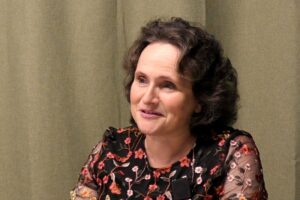
The post Chris Stark: The economics of clean energy ‘just get better and better’ appeared first on Carbon Brief.
Chris Stark: The economics of clean energy ‘just get better and better’


ICE Agents Checking IDs

What We Can Learn from the Life and Death of Rush Limbaugh

How Human Beings form Societies
Guest post: Why China is still building new coal – and when it might stop
Guest post: Why China is still building new coal – and when it might stop
Bill Discounting Climate Change in Florida’s Energy Policy Awaits DeSantis’ Approval
-
Climate Change6 months ago
Guest post: Why China is still building new coal – and when it might stop
-
Greenhouse Gases6 months ago
Guest post: Why China is still building new coal – and when it might stop
-
Climate Change2 years ago
Bill Discounting Climate Change in Florida’s Energy Policy Awaits DeSantis’ Approval
-

 Greenhouse Gases2 years ago
嘉宾来稿:满足中国增长的用电需求 光伏加储能“比新建煤电更实惠”
-
Climate Change2 years ago
Spanish-language misinformation on renewable energy spreads online, report shows
-

 Climate Change2 years ago
嘉宾来稿:满足中国增长的用电需求 光伏加储能“比新建煤电更实惠”
-
Climate Change Videos2 years ago
The toxic gas flares fuelling Nigeria’s climate change – BBC News
-

 Carbon Footprint2 years ago
US SEC’s Climate Disclosure Rules Spur Renewed Interest in Carbon Credits