Climate Change
COP31 Bulletin Day 7: Sharp divisions lower expectations for COP outcome
The second week of the UN climate conference in Antalya has opened with a sober outlook, as fossil-fuel producers and large developing countries push back strongly against some of the key anticipated outcomes from the talks. Ministers will need to work hard to resolve differences, COP watchers said.
In a late-night stocktaking session on Saturday, the groups of Arab and Like-Minded Developing Countries – which includes powerful emerging economies – said they did not want to see new sectoral targets included in the cover decision. That’s a reference to the electrification pledge proposed by the Turkish presidency, now reportedly backed by 30 nations though a list has yet to be made available.
In addition, Saudi Arabia rejected moves to reference Brazil’s global roadmap to transition away from fossil fuels, while India opposed mentioning scientific reports and findings “external” to the UN process. Those include a recent report from the UN Environment Programme on how to deal with an inevitable overshoot of the 1.5C warming limit.
These groups of countries, along with Russia, Argentina and African nations, also objected to ongoing consultations over reforms to the UN climate process to make it more effective, saying there was no consensus on proposals so far and they should be kept out of the cover decision too.
Experts said the sharp divisions would be hard to reconcile in time to land an ambitious cover decision. Alden Meyer, senior associate at E3G, told journalists the co-presidency of Turkiye and Australia is “under growing pressure to both clarify how the formal negotiations, the cover decision and the Action Agenda initiatives on electrification, in particular, fit together, and to resolve the deep splits on many issues”.
-
Scientists defend UN overshoot report after Saudi-led push to sideline it at COP31
In response to critics who have questioned the report’s scientific legitimacy, its authors say the review matches IPCC standards -
COP31 Bulletin Day 6: Climate marchers call for justice as talks make limited progress
After campaigners took to the streets, red lines are set to emerge at the summit as Australia and Türkiye preside over a stocktaking plenary on Saturday night

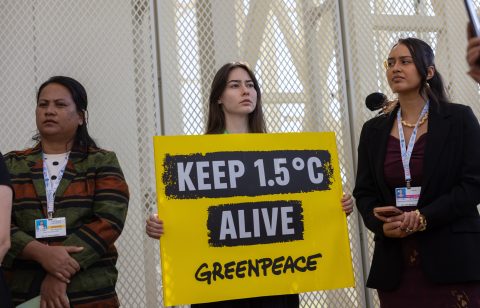

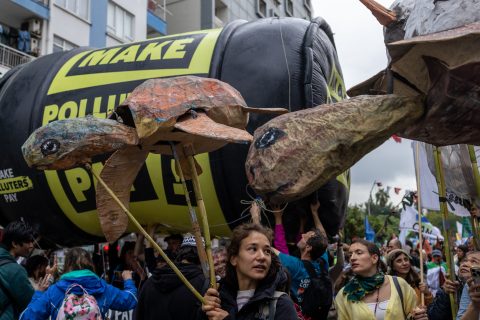
A first draft of the cover decision is expected to be published later on Monday. With ministers having arrived in Antalya and now tasked with finding common ground, the Turkish presidency plans to convene them mid-week to hear their views on the text.
One key problem is that developed countries have come to COP31 with very little to offer in the form of new climate finance pledges for poorer nations, leaving them with few cards to trade for ramping up measures to cut emissions. This has seen European countries already taming expectations for what the summit can achieve.
Fights are set to erupt this week over where and how a vague pledge to triple finance for adaptation will be anchored in the talks, with many developing countries demanding it be defined as at least $120 billion a year by 2035. Donor nations have generally been reluctant to agree to specifics.
Tatiana Oliveira, international strategy lead at WWF-Brazil, said the first week of COP31 had exposed “a significant contradiction in the negotiations”. “Everyone says they want to accelerate the implementation of the Paris Agreement, yet we still have not made progress on how developed countries will meet their public finance obligations,” she said in a statement, echoing what India told Saturday’s plenary.
“We cannot allow implementation to become an endless succession of technical dialogues while resources remain insufficient and increasingly difficult to access,” she added.
Also happening on Monday are many events on AI, with the launch of a voluntary – but so far not well-supported pledge – for its sustainable deployment and use, as well as a focus on green industrialisation.
Democrat members of the US Congress have arrived in town to tell the COP that, despite the US government’s empty seat at the negotiations, they are planning to drive climate action forward after the midterms swung the House of Representatives and the Senate in their favour.
Germany downplays need for fossil fuel roadmap and electrification goal in cover decision
Germany has poured cold water on hopes that Brazil’s roadmaps for transitioning away from fossil fuels and Türkiye’s flagship “35×35” electrification goal will be referenced in COP31’s cover decision, setting a low bar for the summit’s second week.
Speaking to reporters on Monday morning, Heike Henn, state secretary at the German environment ministry, said it was not necessary for the two hot-button issues to be anchored in the cover decision that will be the main formal summary of the summit’s achievements.
“You can always wish and fight for this, but this is not for us the ultimate benchmark for success,” she added.
Including the voluntary fossil fuel roadmap in the official negotiations always looked like a tall order given strong opposition from some major fossil fuel producers led by Saudi Arabia. After Brazil delivered on its promise to produce the document, it is now largely up to Türkiye and Australia to find a way to carry it forward.
European nations signal support for fossil fuel roadmap, says COP30 president
Henn said it is important to keep the focus on the fossil fuel transition at COPs, adding that Ethiopia, the next COP host, has already shown some interest in championing the topic.
But, she added, success will come from a growing coalition of countries committed to carrying out the shift from oil, coal and gas “at speed” through new national roadmaps to that end.
The real pressure for change, she said, is coming from the fossil fuel price crisis and geopolitical insecurity, independent of climate objectives.
Türkiye’s voluntary pledge to raise electricity’s share of global final energy consumption to 35% by 2035 has also attracted lukewarm support from countries so far. Climate Home News understands that few nations want the goal referenced in the cover decision – either because they disagree with it or because they are fatigued with setting new global targets when the existing ones have yet to be met.
Germany has formally backed the electrification pledge and would ideally like to see the numeric goal mentioned in COP31’s final political outcome. But Henn said that wasn’t essential and alternative wording could signal that “ambitious” electrification needs to be rolled out without including a specific target.
The place and time for new quantitative goals is the next Global Stocktake of climate plans, due to be completed in 2028, she added.

Canada pledges to rainforest fund but $10bn target still unmet
The Canadian government has promised to loan up to C$560 million (US$392 million) to the fledgling Tropical Forest Forever Facility over four years. The money will come out of Canada’s existing international climate finance commitment managed by Global Affairs Canada.
The announcement, made as Canadian Prime Minister Mark Carney met his Brazilian counterpart Lula on the sidelines of the ASEAN summit in Manila on Sunday, brings the TFFF’s total pledges to around $8.2 billion.
Carney said that protecting tropical forests “is essential to halting biodiversity loss, stabilising our climate, and safeguarding the well-being of communities everywhere”.
Brazil confident new rainforest fund will reach $10bn donor milestone
The biggest pledger to the TFFF so far Norway which has promised $3 billion. However that money is conditional on the fund reaching $10bn in sponsor capital by 2026 and Norway’s contribution not making up more than 20% of the total. So, with a few weeks left in 2026, the fund is close to $1.8bn short and Norway’s contribution is 36% of the total.
With most European nations having already pledged, the chances of meeting the goal rest largely on China, Japan and South Korea – which have been in talks with the Brazilian government but have yet to offer anything. Brazil and Indonesia are both putting in $1 billion.
The post COP31 Bulletin Day 7: Sharp divisions lower expectations for COP outcome appeared first on Climate Home News.
COP31 Bulletin Day 7: Sharp divisions lower expectations for COP outcome