

Nayyir Ransome builds relationships between the government and the people it serves to support the ocean. As Senior Analyst with Ocean Conservancy, Nayyir sees the power of small, incremental steps that lead to big impacts for people and waterways.
“I want to encourage people to start where they are. Start with your friends, your church group, your classroom”, Nayyir shared.
Nayyir started advocacy work when they were young, joining the Campfire Youth Legislature as a seventh-grade student in Broadmoor Middle School in East Baton Rouge Parish School System, a school that was closed in 2019. “I was one of the youngest people in the room. The bill that I proposed didn’t even make it out of committee. So, when it was time to come together on the floor and vote on all the bills that came out of committee, I decided that I was going to speak on every single bill that hit the floor, literally, all of them. I ended up winning Outstanding Legislator that year. This honor is given only to one legislator out of almost 500 young people from across the state. I still have the medal. I keep it on my desk lamp with all my other conference tags and medals. It reminds me how much impact a person simply speaking up can have. Whether or not the vote goes your way at that moment, someone is still listening.”

Nayyir got involved in Youth Legislature at a time in Baton Rouge, Louisiana, when many students were feeling unheard, anxious and facing physical displacement after Hurricane Katrina.
Remembering the day Hurricane Katrina landed
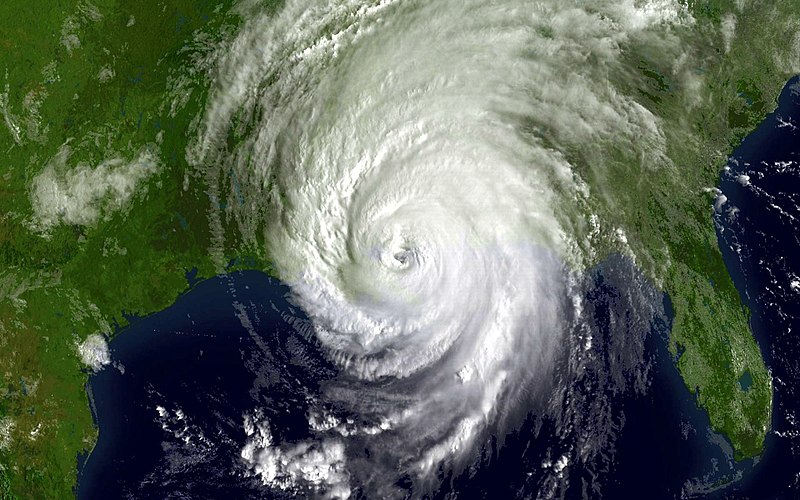
On August 29th, 2005, Hurricane Katrina made landfall in New Orleans. At least 1,900 people were killed in the storm and, due to medical and infrastructure complications, post-storm. The devastation of one of the deadliest hurricane seasons in United States history forced 650,000 survivors from their homes—some were never able to return.
“We were out of school for two weeks. Compared to New Orleans where many schools closed for months and others shut their doors permanently, this felt like a privilege. When we went back to school, there were 200 more students in the building. Many families from New Orleans were forced to move to temporary housing in Baton Rouge. Our school was one of many that saw a large influx of students from New Orleans where many schools were unable to reopen due to Katrina. There wasn’t enough space, services or support to handle that, and it became a tense environment for all of us.”
Nayyir’s family moved to Baton Rouge just one year before the storm. Coming from Philadelphia, one of the largest metropolitan cities in the country, Nayyir experienced an intense culture shock when adjusting to life in open-air, sea-centric Southern Louisiana. Nayyir reflected on the contrast of towering buildings and lightning-fast train transport to kids catching mudbugs from the crawfish mounds in the drainage ditches, designed to channel storm water, along roads without sidewalks.
“When I started participating in Camp Fire USA’s Youth Legislature program, I felt intimidated. It was a strange experience, grappling with my own sense of displacement while watching other kids being displaced on such a large scale due to Hurricane Katrina. I wasn’t from the area, but I was there, and I did understand how it felt to be pushed out, to feel discarded.”
New Orleans has a culture unlike any other place in the world, and this rich weaving of languages, ethnicities and histories creates an unshakable strength that still stands today. Yet, the crippling impacts of Hurricane Katrina can be traced through the yet-to-be-rebuilt homes in the Lower Ninth Ward and the reality of long-term health consequences and economic instability for many residents, even now, 20 years after the storm.
Hurricane detection is better than ever, thanks to NOAA
In 2005, the best hurricane detection science provided around a 48-hour warning. The people of New Orleans had less than 24 hours from the time the mandatory evacuation order was issued to when water began to spill over one of the levees.
When Hurricane Katrina developed into a Category 3 storm, receded and then reformed as a Category 5 storm, scientists, local officials and communities scrambled to keep up and spread information quickly.
“We didn’t know what was happening in New Orleans for three days. People with friends and family there were starting to panic.”
Now, thanks to the steady, decades-long efforts of organizations like the National Oceanic and Atmospheric Administration (NOAA), current predictive technologies can provide up to five days warning of extreme weather—enough time potentially to prevent storms from having the same catastrophic impact as Katrina. Yet, the question remains, ”Will we continue funding the hurricane forecasting systems we know are protecting our communities?”
Tell Congress to Protect NOAA Today
Take action to ensure Congress stands up for NOAA, demanding the agency be fully funded and fully staffed.
Understanding NOAA’s vital role during storm season
It might not be clear what NOAA does during hurricane season because much of their work is behind the scenes. The National Weather Service sits under NOAA, and NOAA scientists and professionals are key players in many of the long-term conservation measures, research and technology that prevent the most dire consequences of extreme weather. Their work includes projects that we may not think of as disaster preparedness and resilience, such as coastal restoration initiatives.
NOAA uses a variety of scientific instruments on crafts such as planes, saildrones and gliders to gather data from inside hurricanes. Long term ocean observations contribute to hurricane and weather models. This hurricane season we have an opportunity to speak up about the proposed cuts to NOAA and the vital resources we would lose if these budget changes are approved by Congress. Continuing to fund NOAA is one way to ensure ongoing improvements to weather forecasting, honor those lost to Hurricane Katrina and, in the aftermath, support the people of New Orleans today, as they rebuild and heal.
We can all speak up for life-saving hurricane detection and research
As storm seasons intensify, we need faster, more accurate weather prediction and storm detection more than ever. NOAA is America’s first line of defense against the deadliest impacts of natural disasters on our communities. Yet, NOAA’s funding is facing major cuts that, if enacted, will result in lives lost. We need to keep moving forward keeping in mind and heart the nearly 2,000 people who lost their lives during Katrina, the thousands more New Orleanians who lost their land and legacies, and the hundreds of thousands of people who are impacted by deadly storms in the United States each year.
Looking back, Nayyir can see how these experiences growing up in post-Katrina Louisiana shaped their advocacy and approach to community organizing.
“My time in Southeast Louisiana taught me a lot about people-centered advocacy. Even if we haven’t experienced something at its most extreme, we can find a way to understand the root of it by looking at our lives and the places we live. Ocean Conservancy has helped me to grow in how and why we must work across government agencies and lines to protect our ocean and the people who rely on it.”
Ocean Conservancy works alongside NOAA as a science-led advocacy organization mobilizing federal, state and local action for our ocean. Every investment in NOAA translates into vital seconds, hours and days of response time for communities when hurricane season strikes. The more data we can collect and use to predict the behavior and patterns of storms, the better we can respond and prevent tragedies.
Each year, storm season is intensifying from climate change—and not just on our coasts. Communities throughout the U.S. are affected by hurricanes and floods that threaten lives and livelihoods. We all rely on NOAA’s vital research and tools for weather prediction and extreme weather warnings. These services are a lifeline we cannot afford to lose.
Call on your Congress members today and insist they support full funding and operation of NOAA.
The post Honoring New Orleans 20 Years After Hurricane Katrina Means Protecting NOAA appeared first on Ocean Conservancy.
Honoring New Orleans 20 Years After Hurricane Katrina Means Protecting NOAA

What do you think about when you hear the words “microplastic pollution?” Your mind may immediately go to imagery of colorful fragmented plastics broken off from bottles, buckets and other items we use in our everyday lives. Or, perhaps, you imagine a pile of microplastic fibers—the tiny, squiggly, spaghetti-shaped plastics that shed from our synthetic clothing. You may be surprised to hear there is another major source of microplastic pollution that’s hiding in plain sight, quite literally under our feet, that might change how you think about microplastics: tire particles.
We all know tires wear down over time—that’s why we have to replace them on our cars roughly every 60,000 miles or so. Every time a vehicle accelerates, brakes or simply drives down the road, the friction between its tires and the pavement creates tiny fragments of rubber, known as tire wear particles.
Driving a car or even riding in a bus is a bit like dragging an eraser across the planet, except the crumbs are microplastics. Toxic microplastics.
Tires are made from a complex mix of natural and synthetic rubber along with a range of additives, fillers and chemical compounds—some of which, like the preservative 6PPD, have been shown to be highly toxic to coho salmon when they break down into derivative product 6PPD-Q in the environment—even in tiny concentrations.
Some studies have shown that a single vehicle’s tires can emit more than two trillion particles per mile driven—and that the average person generates nearly two pounds of tire particles per year! Once these particles are shed from tires, they don’t just disappear. Some are small and light enough to become airborne, drifting away from roadways as dust. Others settle on road surfaces, where they accumulate until the next heavy rain washes them into storm drains and from there, into streams, rivers and eventually the ocean.
That’s why tire wear particles are now considered one of the top sources of microplastics to the environment. In fact, until recent developments in analytical methods, scientists weren’t reliably able to detect tire wear particles in microplastic counts—thus, these pesky microplastics may have been evading our detection for years.
Why green infrastructure may be one of our best near-term solutions
Unlike some sources of plastic pollution, we can’t simply stop driving overnight. Reformulating tire rubber to be less toxic or shed less material, while promising, will take time to develop, test and scale across the global vehicle fleet. So, what can we do about tire wear particle pollution right now?
This is where green infrastructure comes in. Green infrastructure refers to engineered natural systems (things like bioswales, rain gardens, roadside buffers and permeable pavement) that are designed to slow down, filter and treat stormwater before it reaches rivers, lakes and coastlines. Instead of routing runoff directly into storm drains and out to sea, green infrastructure gives contaminated water a chance to percolate through soil, plants and other natural filtration media, which helps trap microplastics, including tire wear particles, preventing them moving further downstream.
Early research on green infrastructure has been promising, showing that these systems are quite effective at capturing microplastics and other contaminants carried in road runoff. But there’s a critical piece we still don’t fully understand: What would it take to scale up green infrastructure across an entire city, and how much of a dent would that actually make in long-term tire wear particle pollution?
Our research on green infrastructure capture of tire wear particles
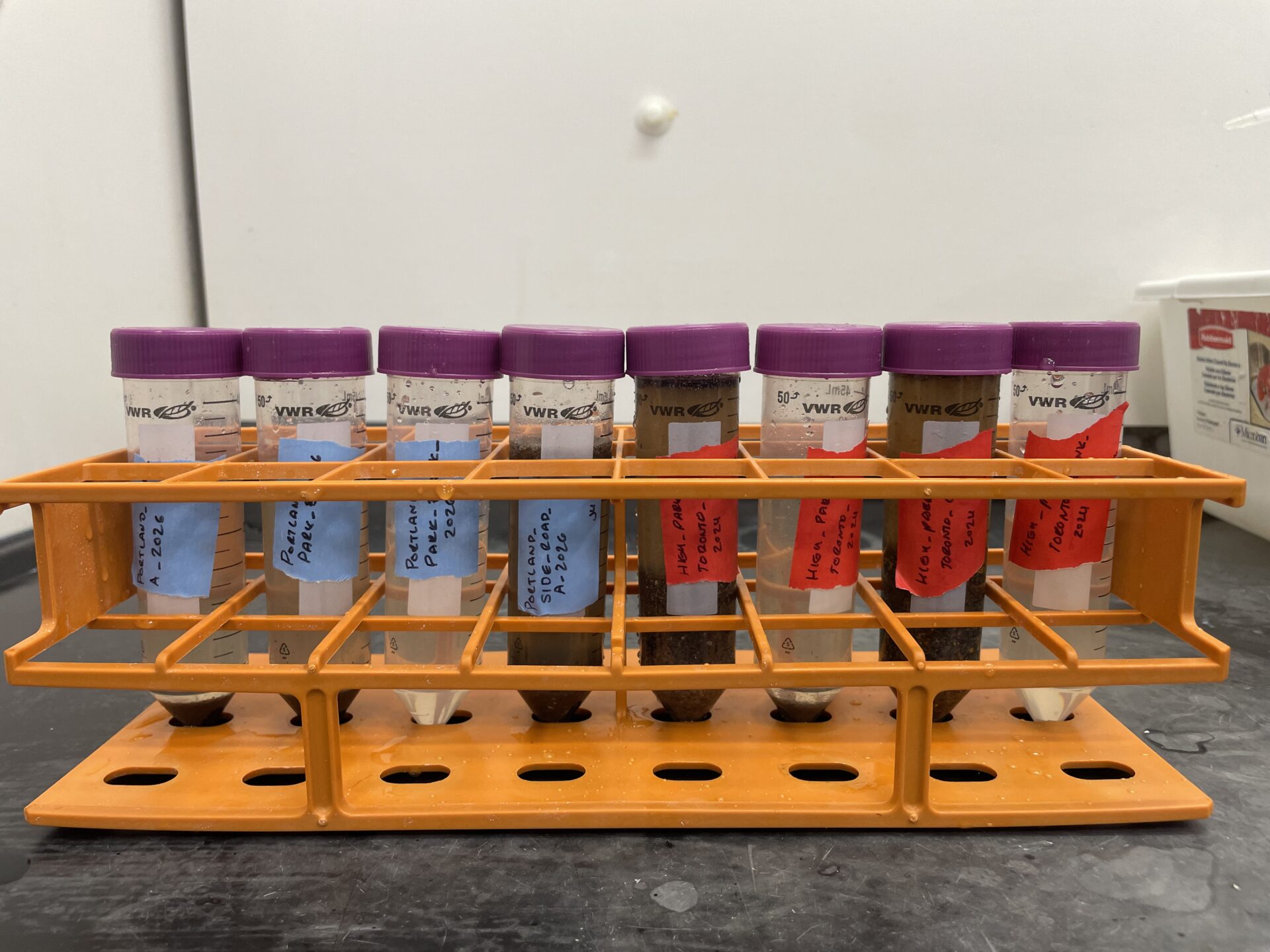
Funded by the Tire Industry Project, our plastics science and policy teams at Ocean Conservancy have partnered with the University of Toronto on a new study evaluating the costs and benefits of scaling up green infrastructure at the city level specifically to capture tire wear particles.
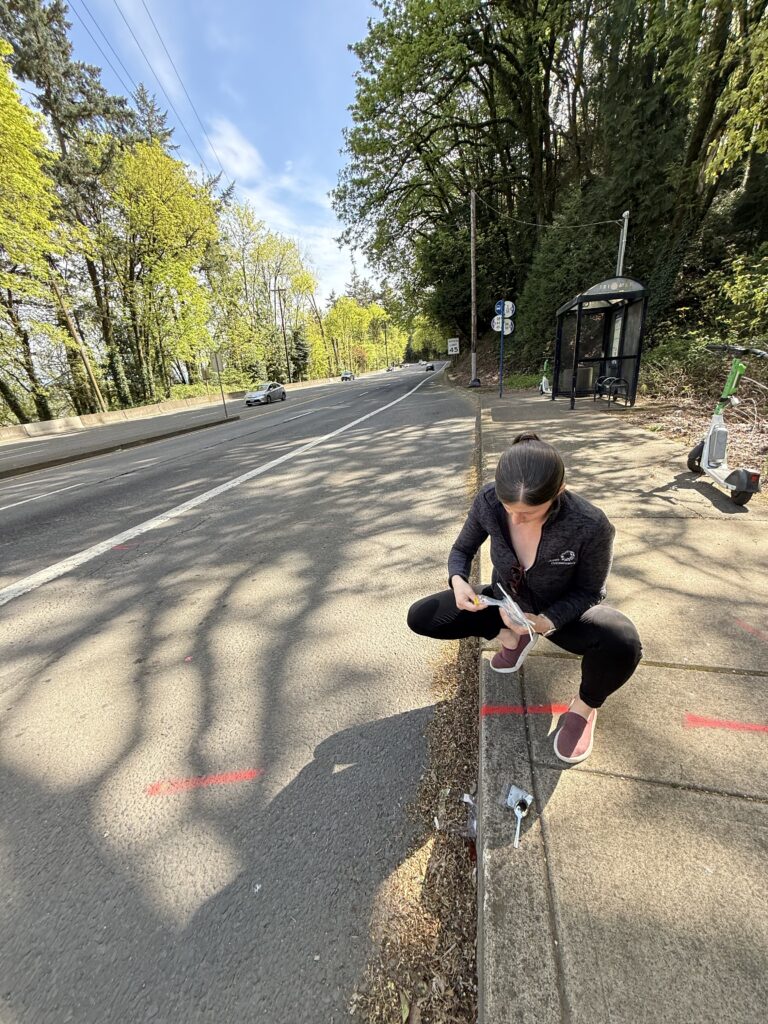
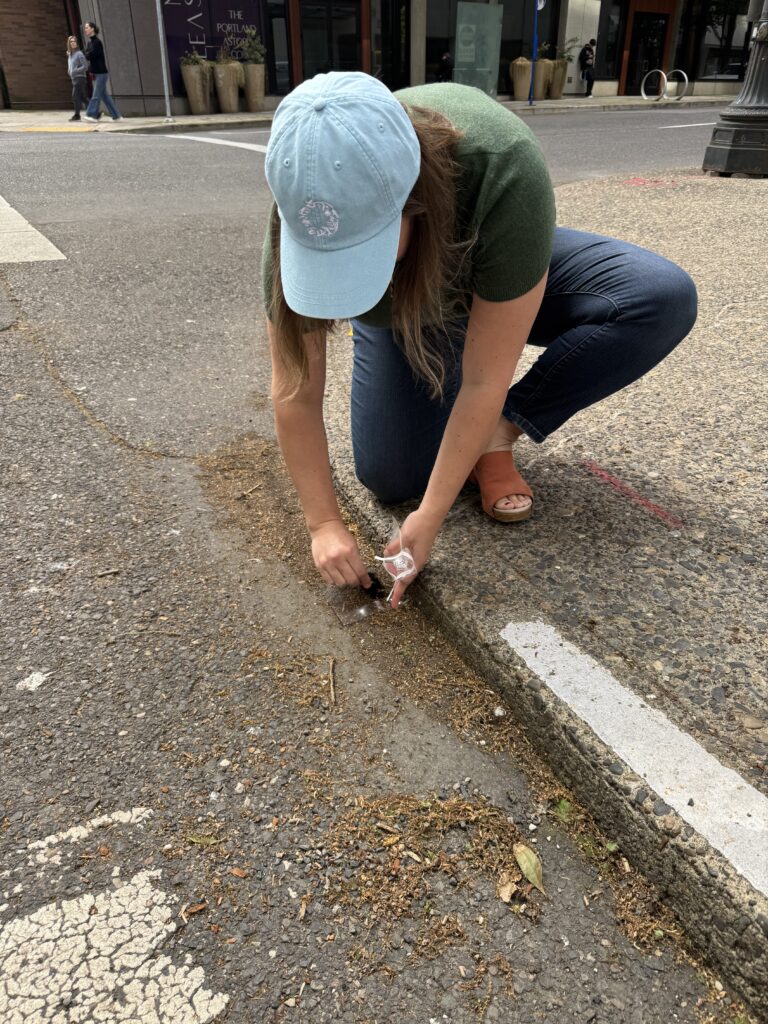
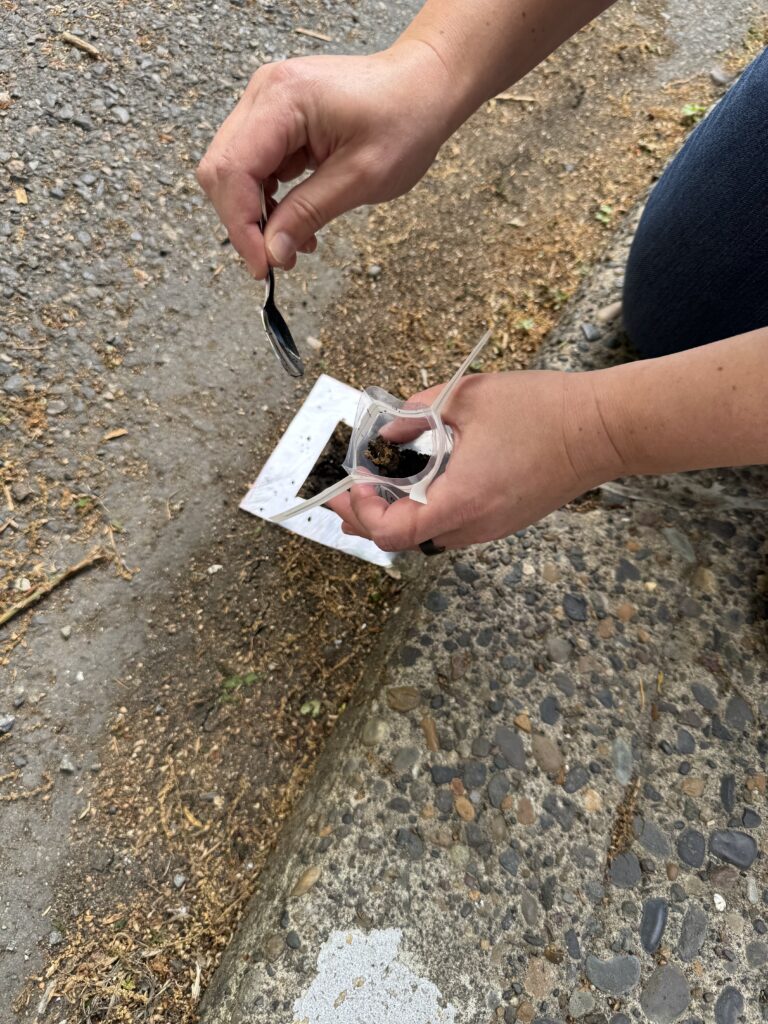
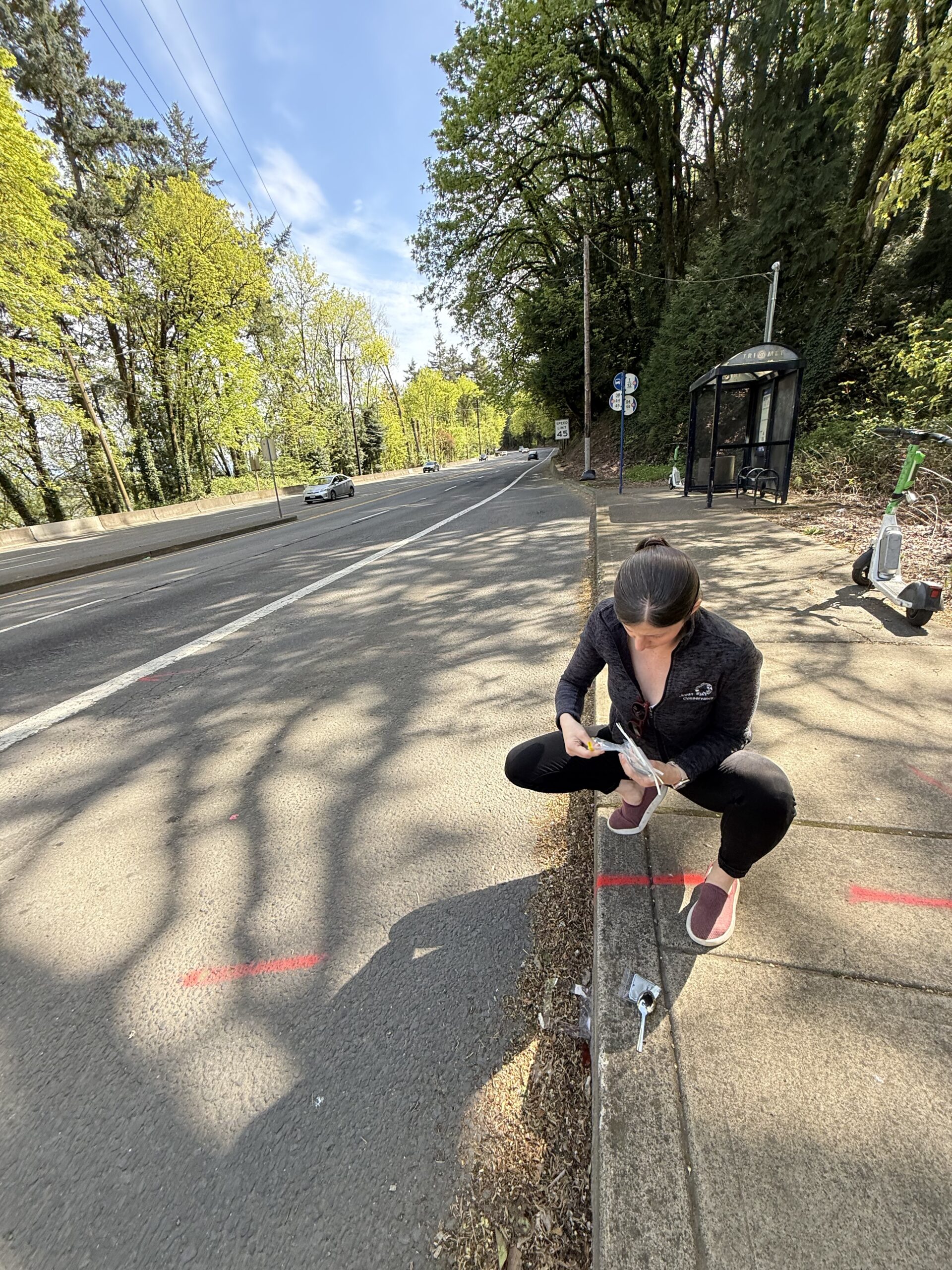
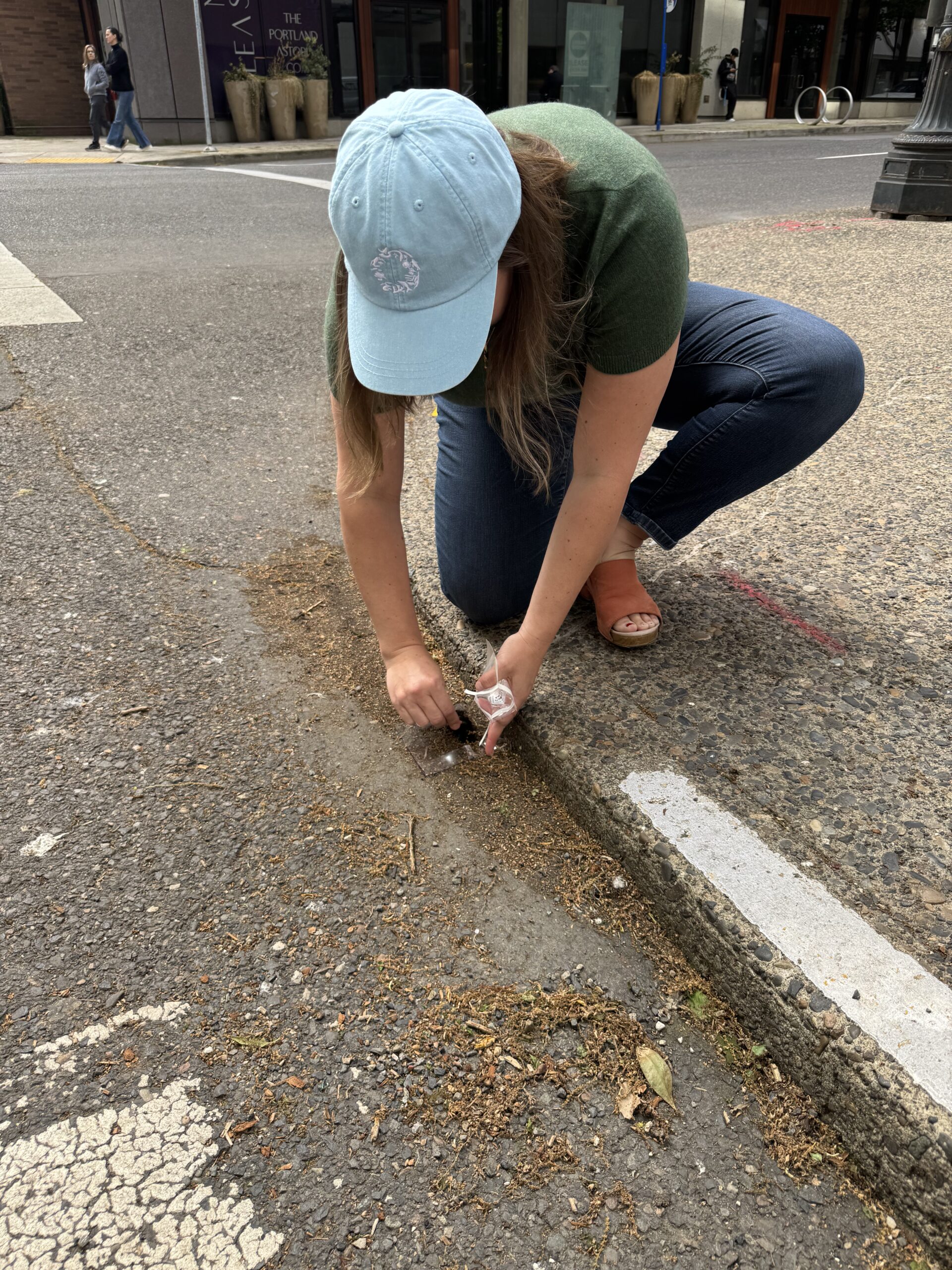
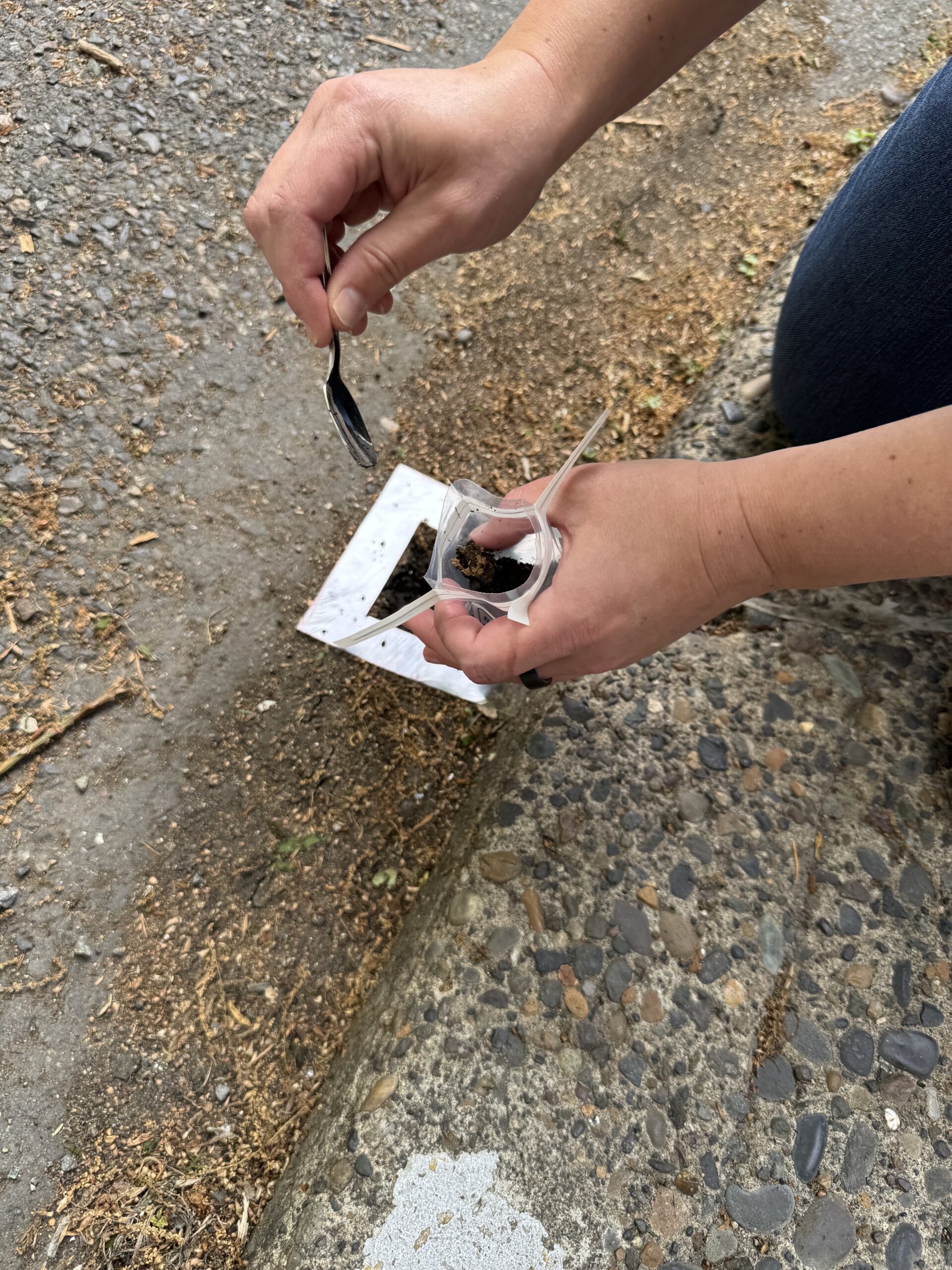
If you happen to be driving on the roadways of Portland, Oregon, you may spot our scientists crouched over, precariously scooping dirt with spoons from a sample area on the roadside. Don’t be alarmed—that’s just us doing science! Feel free to give us a wave.
Ocean Conservancy is currently working to:
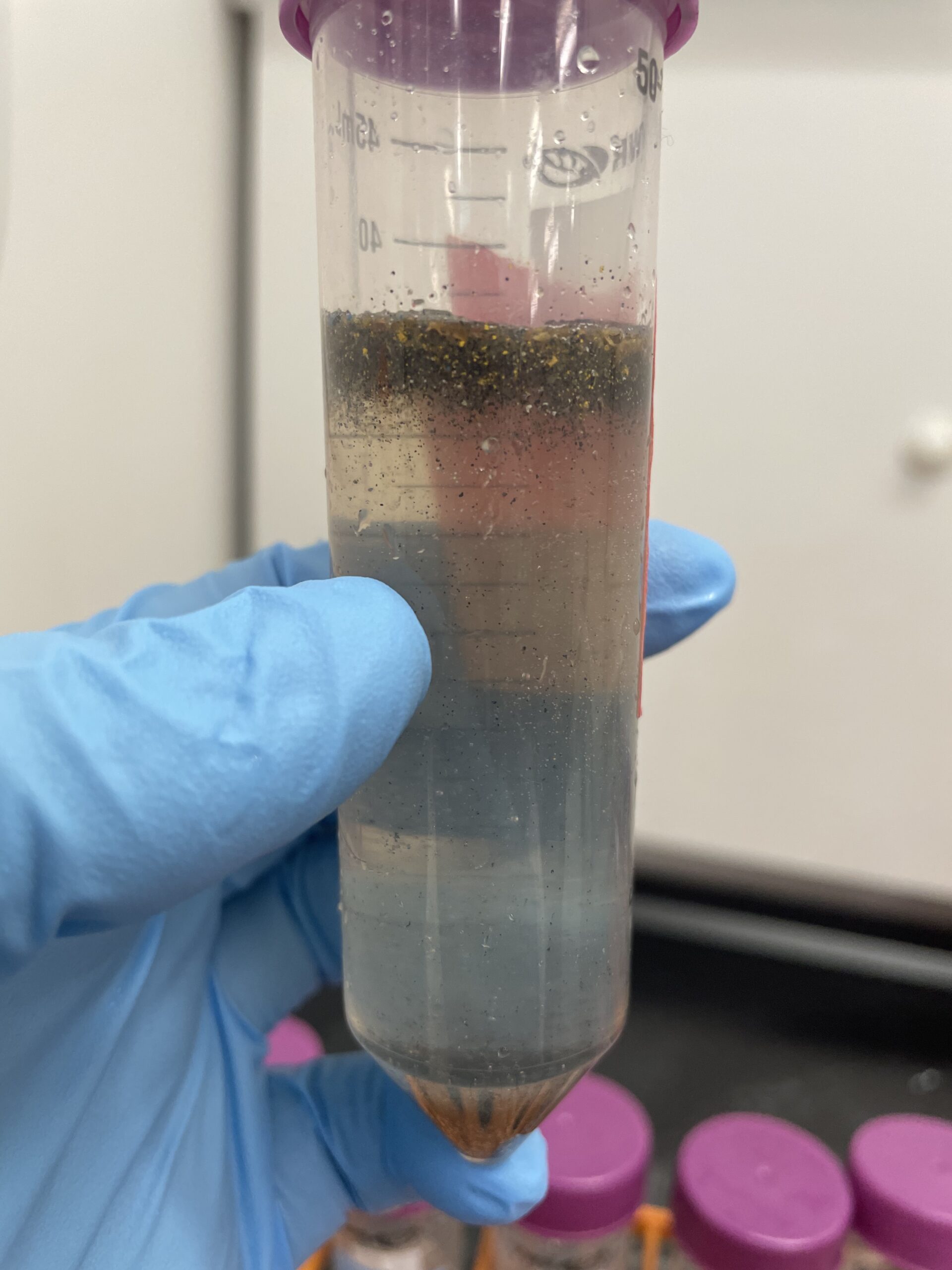
- Quantify the scale of pollution: Collect road dust samples from 30 cities globally to measure both total microplastic and tire wear particle concentrations and determine how different variables (population density, road size, rainfall) might influence those values.
- Assess feasibility: Determine what it would take realistically—logistically, financially and spatially—to scale up green infrastructure across an entire city.
- Model positive impacts: Estimate how much city-scale green infrastructure could reduce tire wear particle pollution entering aquatic ecosystems.
- Compare across cities: Understand how well these solutions might translate across different urban contexts, focusing on Portland, Oregon; Toronto, Canada; and London, England as case-study cities.
- Make our findings accessible: Produce a public-facing toolkit to help city planners, engineers and advocates guide real-world implementation of infrastructure that captures tire-wire particles.
By pairing rigorous science with practical guidance, we hope to help cities move from asking “Could this work?” to confidently building solutions that we know can be effective.
Give today and make a difference!
How can I help?
Tire wear particle pollution can feel like an overwhelming problem. After all, it’s tied to transportation, which most of us rely on every day. But that’s exactly why research like this matters: It gives us a real, near-term path forward that doesn’t require waiting for the entire global transportation system to change first.
You can help by staying engaged with Ocean Conservancy as we continue to dig into solutions for the plastic pollution crisis—one roadway, one storm drain and one city at a time. Together, we can keep working toward a world and ocean free of plastic pollution, forever and for everyone.
The post What are Tire Wear Particles? appeared first on Ocean Conservancy.
A small jellyfish-like animal recently reported from Vejle Fjord has attracted attention. Clear photographs suggest that it belongs to the genus Gonionemus and may possibly be the clinging jellyfish, Gonionemus vertens (Picture courtesy to Jonas Bøgelund Poulsen)
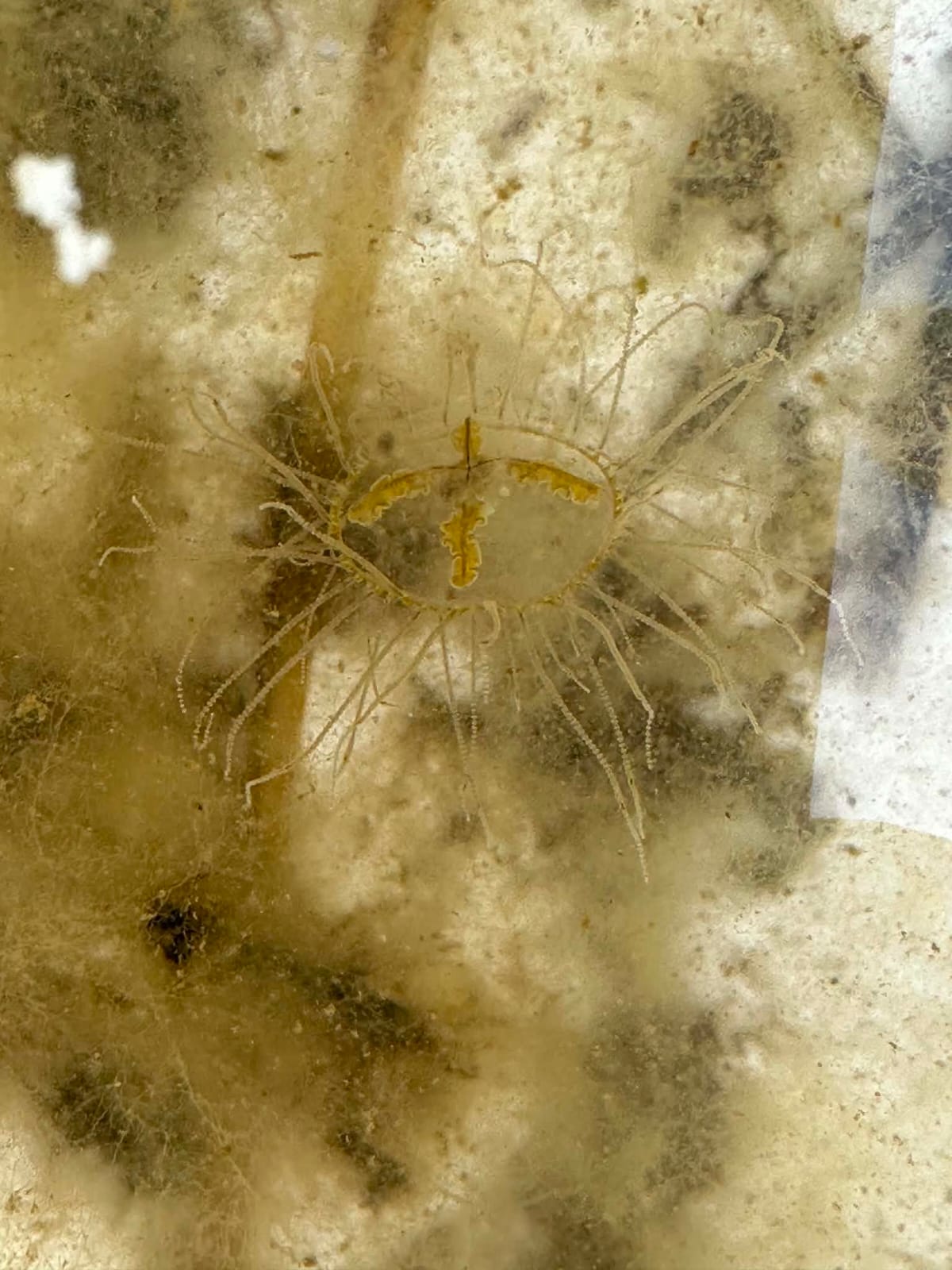
Unlike the large jellyfish commonly encountered along Danish coasts, Gonionemus vertens is a small hydromedusa, usually only around 1.5–2.5 centimetres across. Its transparent bell reveals four coloured reproductive structures arranged like a cross. Numerous fine tentacles surround the bell, often appearing bent or angled. Small adhesive pads near the ends of the tentacles allow the animal to attach itself to eelgrass, seaweed and other submerged vegetation.
This unusual behaviour explains its English name: the clinging jellyfish. During the day, it often remains attached to vegetation rather than drifting freely with the current. At night, it becomes more active and swims into the water column to feed on zooplankton and small crustaceans. Consequently, it can easily remain unnoticed even in places where it is already established. Another reason the species can be difficult to detect is its life cycle. The visible medusa is only one stage. For much of its life, the animal may persist as a minute polyp attached to a hard surface, shell or vegetation. These inconspicuous polyps can reproduce asexually and later release new medusae when environmental conditions become favourable.
Gonionemus vertens is generally considered native to the northern Pacific but has been introduced into several parts of Europe and the Atlantic. Transport on ship hulls, in ballast water or with movements of oysters and other marine organisms has been suggested as possible pathways, although the pathway responsible for any particular occurrence is rarely known with certainty.
Despite its delicate appearance, the animal should not be touched. Some populations possess powerful stinging cells and have caused intense pain, swelling, muscle cramps and, in rare cases, serious allergic reactions. Sting severity differs considerably among regions, which is one reason researchers suspect that animals currently grouped under the name G. vertens may represent a complex of closely related forms.
The Vejle Fjord observation is therefore scientifically interesting, but it should not yet be presented as a confirmed record of G. vertens. Anyone encountering a similar animal should photograph it without handling it and record the date, exact location, approximate size, number observed and surrounding habitat. Observations can be submitted to Denmark’s national species portal, Arter, where they can be evaluated and contribute to tracking changes in Danish marine biodiversity. Please use either my App: GoJelly JellySpotter or reprot to the Arter.dk: Gonionemus taxon page and Danish species-reporting portal.
References:
Edwards, C. (1977). A study in erratic distribution: The occurrence of the medusa Gonionemus in relation to the distribution of oysters. Advances in Marine Biology, 14, 251–284. DOI: 10.1016/S0065-2881(08)60448-4.
Govindarajan, A. F., Källström, B., Selander, E., Östman, C., & Dahlgren, T. G. (2019). The highly toxic and cryptogenic clinging jellyfish Gonionemus sp. (Hydrozoa, Limnomedusae) on the Swedish west coast. PeerJ, 7, e6883. DOI: 10.7717/peerj.6883.
The JOIDES Resolution (JR) was a renowned, international, scientific research ship. It was home to over 190 expeditions, each sailing for 60 days at a time without docking. Scientists and crew members from all over the world met to discover Earth’s secrets through studying ocean cores. Every two months the JR would get a new crew, sailing to an entirely new place. This once in a lifetime experience forms special and unforgettable social connections.
Since working on the JR I’ve kept those connections strong with snail mail. I have always been an avid penpal, so meeting new friends means new addresses to send my letters and postcards to. Experiences like sailing on the JOIDES Resolution or participating in programs like OCEAN CORE Academy is one of the ways I’ve met people from all over the world.
Now that the JR is retired, there is no more scientific research drilling being done through the International Ocean Discovery Program (IODP). But, there is still plenty to learn from ocean cores, and plenty of people to meet through programs like OCEAN CORE Academy (OCA). OCA is an annual summer opportunity from the U.S. Scientific Support Program (USSSP) that hosts undergraduates interested in geoscience related careers. Students can apply to this program for a chance to research and study data recovered from cores originally brought up by the JR, now located at the Gulf Coast Repository (GCR) in College Station, Texas. Students also practice forms of science communication with the guide of mentors. As a science communicator and fan of snail mail, I ran a craft night teaching students how to make and send science-themed postcards.

Fig. 1) students using watercolor to paint onto 4 by 6 inch board paper, a photo of a thin section slide is in the background. Photo by Dr. Leah Joseph.
For this project, we based the cover image of the postcards off of rock thin section slides. These slides are a slice of a hard rock or mineral that’s been glued to a microscope slide, sanded to 0.03 millimeter thickness, and polished. Thin section slides are used to identify grain size, shape, color, and other physical properties. This helps scientists understand the textural relationships between the rocks and determine the origin or evolution of the parent rock. Thin sections can also be helpful for identifying minerals using cross polarized light (XPL). XPL reduces light reflection and glare, commonly used for sunglasses and professional photography, but in a polarizing microscope, XPL is used to create a dark field causing certain minerals to appear brighter and more visible. Different colors are associated with different minerals, and as the stage of the microscope rotates, light passes through the slide in unique ways aiding scientists with identification. Identifying minerals can help scientists in understanding more about where the rocks came from and how old they are. These thin sections are not only informative, but are incredibly beautiful, making unique and stunning postcard covers.

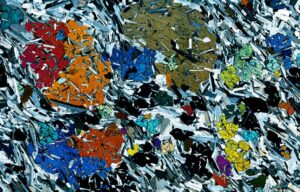
Fig. 2) Examples of thin section slides under a XPL microscope, bronzitite (left) and gabbro (right). Sourced from here.
After the OCA students finished their paintings, my home-made “post card” stamps go on the back, a stamp gets added, and they’re ready to be mailed out. Although most OCA participants this year were U.S. based, they came from all over, ranging from Staten Island to San Francisco to Arizona to Connecticut. In addition to one mentor from New Zealand! For many of these students this was their first time traveling on their own, and their first time forming long-distance connections. With these scientific postcards, OCA students can stay connected by reminding each other of the science they learned together. My experience on the JR taught me great things about geological research, but it also gave me life long connections that I cherish. Although the JR is gone, its legacy lives on in our memories and the ways we stay connected with friends. I’m grateful to know that even without an international ship, I’m still able to add friends to my address book.
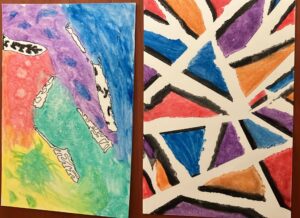
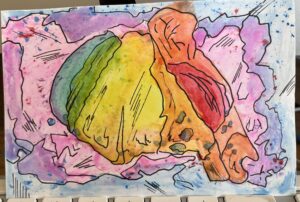
Fig. 3) Examples of participant made postcards
Written by Kellan Moss



-
Climate Change12 months ago
Guest post: Why China is still building new coal – and when it might stop
-
Greenhouse Gases12 months ago
Guest post: Why China is still building new coal – and when it might stop
-

 Greenhouse Gases2 years ago
嘉宾来稿:满足中国增长的用电需求 光伏加储能“比新建煤电更实惠”
-

 Climate Change2 years ago
嘉宾来稿:满足中国增长的用电需求 光伏加储能“比新建煤电更实惠”
-
Climate Change2 years ago
Bill Discounting Climate Change in Florida’s Energy Policy Awaits DeSantis’ Approval
-

 Renewable Energy10 months ago
Sending Progressive Philanthropist George Soros to Prison?
-

 Carbon Footprint2 years ago
US SEC’s Climate Disclosure Rules Spur Renewed Interest in Carbon Credits
-
Greenhouse Gases1 year ago
嘉宾来稿:探究火山喷发如何影响气候预测