

Published
1 year agoon
By
Alice RushIs your solar power system secretly failing you?
Well, in 2025, Australia’s rooftops are gleaming with solar panels, a true symbol of energy independence and sustainability. But behind those panels, there could be lots of underlying problems.
Every year, thousands of Aussie homeowners discover their trusted solar systems aren’t working as they should. From uncertain power drops to gradual system failures, any silent, overlooked problems can result in shocking electricity bills.
Whether you’re new to solar or have had panels for years, understanding the most common issues could save you thousands and protect your home’s energy future.
Don’t get left in the dark anymore. Here are the 10 most common solar panel problems in Australia in 2025. All you need to do is read them out to maintain optimal performance and avoid costly repairs.
So, let’s flip the switch on solar panels problems with some effective solutions!
In this blog post:
-
Are Solar Panels Still Worth It to Get in Australia?
-
Is Your Solar Panel System Underperforming? Here’s How to Tell!
-
Top 10 Solar Panel System Problems Faced by Aussie Homeowners in 2025
-
What To Do When Your Solar Power System Isn’t Working Right?
-
Partner With Cyanergy & Fix Your Solar Panel Problems Effectively
Are Solar Panels Still Worth It to Get in Australia?
Yes, solar panels are still worth it in Australia in 2025, and in many cases, they’re an even better investment than they were a few years ago.
Due to Australia’s abundant sunshine and relatively high electricity prices, solar energy offers a strong return on investment.
Most Australian homeowners can expect their solar system to pay for itself within 3 to 6 years, and after that, the electricity generated is essentially free.
Also, the upfront cost of installing solar has dropped significantly over the past decade. With solar rebates and government incentives like the Small-scale Renewable Energy Scheme (SRES) still in place, the financial barriers have become relatively low.
However, even though the battery storage is still relatively expensive and may not yet make financial sense for everyone, solar panels remain a highly cost-effective way to reduce energy costs and, most importantly, greenhouse gas emissions.
Is Your Solar Panel System Underperforming? Here’s How to Tell!
If you’re wondering whether your solar panel system is underperforming, you’re not alone in this journey.
Solar power systems are generally low-maintenance, but in Australia, performance issues with solar panels can arise at any time for specific reasons.
So, how to identify?
Here’s how to determine if your system isn’t working as well as it should and what to do about it:
Signs Your Solar Panel System Might Be Underperforming
- Lower-than-Expected Energy Bills or Savings
If your utility bills haven’t decreased as much as expected or they’ve started to escalate again, it could signal an issue.
Therefore, always compare your recent energy bills with those of previous months and check your household’s overall energy consumption rate.
- Drop in Energy Production
Despite consistent sunlight, if your electricity bills are still creeping higher, your system might not be generating as much power as your home requires.
Most systems come with a monitoring app, so if you notice a consistent drop in daily or monthly output, especially under similar weather conditions, it’s clear that your system might be underproducing.
- Alert Notifications from Monitoring Software
The system’s integrated monitoring software can send alerts about inverter faults, shading issues, or other malfunctions. So, make sure you check these regularly.
- Inverter Error Lights
Modern solar inverters often come with monitoring apps that send alerts if there’s an issue. A red or orange light on the inverter, or a complete lack of display, often means it’s not converting energy properly.
- Visible Damage or Debris
Cracks, discolouration, or dirt buildup on panels can reduce solar panel efficiency. Even bird droppings or leaves can block sunlight and lower output.
- Frequent System Shutdowns
Frequent system shutdowns or error messages can point to any underlying issues.
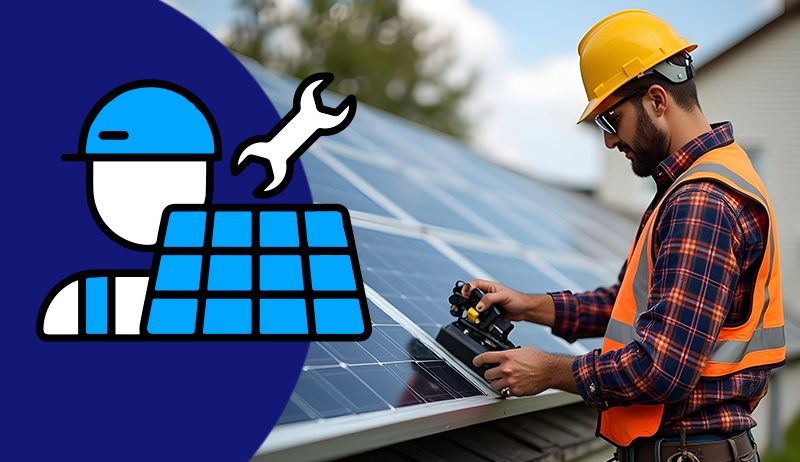
Top 10 Solar Panel System Problems Faced by Aussie Homeowners in 2025
Behind the promise of slashed power bills and powering the nation with renewable energy sources, some homeowners face unexpected issues with their solar panels.
Remember, from finding trusted installers to mysteriously underperforming systems, the road to solar savings isn’t always smooth and successful for all.
So, before you join the solar revolution, here are some common solar panel problems that need to be considered:
1. Solar Battery and Inverter Failures: A Silent System Killer
Inverters significantly convert the direct current (DC) electricity generated by solar panels into alternating current (AC) electricity used by home appliances. Meanwhile, solar batteries store them for later use, ensuring energy security.
According to data, nearly 50% of major solar system failures in Australia result from faulty inverters and inefficient batteries.
They ultimately lead to system shutdowns, making the entire solar setup ineffective even before its 15 to 20-year lifespan.
Common inverter issues might include:
- Overheating: Long-term dust accumulation can cause overheating issues in inverters and batteries.
- Voltage Fluctuations: Inconsistent voltage levels can cause solar inverters and batteries to trip or malfunction.
- Connection Failures: Issues with the connection between the inverter, solar battery storage and monitoring systems can inhibit performance tracking.
Effective Solutions:
- Schedule regular inspections, like every 2 to 3 years.
- Ensure proper ventilation while installing the solar batteries and the inverter.
- Regularly update firmware and software.
- Follow the instructions and guidelines from the manufacturer.
2. Dirt, Dust & Bird Droppings: The Uncovered Efficiency Drainers!
Only dust and dirt in Australia can reduce a solar panel’s efficiency by up to 30%. Specific mounting styles, like panels installed on flat roofs, are more prone to bird droppings, dry leaves and other tiny particles in the air.
This can reduce system output and cause major problems by blocking sunlight.
Also, birds can build nests beneath solar panels, which can be another reason that causes damage to wiring and reduces their efficiency.
Panel Maintenance Tips:
- Clean panels at least once a year using water and a soft brush.
- Install nets or spikes to prevent bird nesting.
- Remove droppings to prevent damage.
- Avoid using harsh chemicals or abrasive materials.
3. Solar Panels With Hot Spots Issue
When the panel’s energy cannot flow through your inverter, it becomes overloaded and radiates excess heat, so it gets hot, creating burning spots.
These hot spots usually occur when certain areas of a solar panel become significantly hotter than others, often due to dirt, shading, or internal defects. These areas can degrade faster, reducing the panel’s overall lifespan.
Hot spot prevention strategies:
- Ensure panels are free from dirt and debris.
- Avoid shading from trees or other structures.
- Check the panels regularly for signs of overheating.
4. Micro-Cracks & Snail Trails: The Invisible Threats
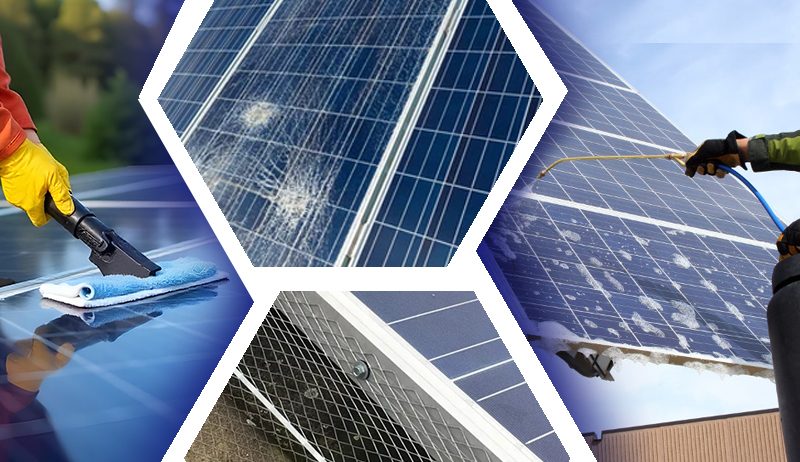
Micro-cracks and snail trails are two lesser-known but significant issues affecting solar panels. Let’s see how these factors affect solar panel efficiency.
- Micro-Cracks
Micro-cracks are tiny fractures in solar cells caused by stress during manufacturing, transport, or installation. They may seem minor initially, but can grow over time, reducing the panel’s electrical output.
However, they are sometimes difficult to detect with the bare eye.
- Snail Trails
Snail trails are dark, discoloured patterns on the solar panel surface formed by moisture infiltration and micro-cracks. Though they appear cosmetic, they signal internal damage that can lower efficiency.
What Protective Measures Can We Take?
- Choose high-quality panels with strong encapsulation materials.
- Handle panels with care during solar system installation to avoid scratches.
- Regularly inspect panels for signs of damage.
- Take immediate action, even if the trail seems like a fine line.
5. Damaged Roof Issues: Is Your Rooftop Compatible for Panel Installation?
Improper solar system installation can damage a roof, such as loose tiles or leaks. To prevent such issues, it’s essential to ensure that solar panels are installed correctly.
So, before installing panels on the rooftop, call an expert and examine your roof condition for safety and long-term savings.
Solar panel installation tips for better efficiency:
- Use appropriate mounting systems compatible with your roof type.
- Secure the panel area to prevent water from entering.
6. Wiring & Junction Box Failures
Faulty wiring and defective junction boxes can lead to open circuits, ultimately preventing electricity from flowing properly through the system.
These open circuits can happen due to moisture accumulation and poor-quality components.
What are the effective solutions?
- Use good-quality, high-rated junction boxes to prevent dust and water ingress.
- Conduct regular checkups on wiring for signs of wear or damage.
- Ensure proper sealing and insulation during installation.
7. Potential Induced Degradation (PID) Effect
If you’ve noticed a significant drop in the electricity produced by your solar panels, it could be due to the PID effect or Potential Induced Degradation.
This indicates a voltage difference between the solar panel and the earthing, which causes a partial voltage discharge. Essentially, you’re losing voltage and potentially threatening the long-term effectiveness of your panels.
Ways to prevent Potential Induced Degradation (PID)
- Use PID-Resistant Panels, high-quality panels specifically designed to resist PID.
- Install a PID recovery device that can reverse PID effects at night by applying a reverse voltage.
- Avoid excessively high system voltages that increase PID risk.
Taking preventive steps during installation and maintenance greatly reduces the risk of PID.
8. Rodents: The Unseen Wiring Destroyers
It’s natural for your roof’s electrical wiring to deteriorate over time due to loose connections, corrosion, and oxidation.
But what if we say gnawing mammals like rats, mice, squirrels, or hamsters can also cause severe damage by chewing the wires of your solar panel system?
Yes, that can happen! Rats and rodents can chew on solar panel wiring, leading to short circuits and system failures. Moreover, in the worst-case scenario, they can even set fire to your roof.
How to prevent wiring issues?
- Seal entry points to prevent rodent access.
- Use rodent-resistant, mesh wiring where possible.
- Periodically examine wiring for signs of damage.
9. Watch Out for High Temperatures
Solar panels actually lose efficiency as they get hotter. Despite the sunshine, extreme heat can reduce output, and most panels lose 0.2% to 0.5% efficiency per °C above 25°C.
To prevent efficiency loss from high temperatures, consider these steps:
- Ensure proper airflow by placing panels with enough space. Allow air to circulate beneath the panel’s surface, cooling it naturally.
- Tilting panels or elevated racking help heat escape more easily.
- Install light-colored or reflective roofs. These reduce heat absorption around the panels.
- Some panels handle heat better, so look for panels with a low temperature coefficient.
- Consider passive or active cooling systems in hot climates to make your panels more efficient.
10. Poor Installation Practices
Improper installation is one of Australia’s leading causes of solar panel system failures. Issues like faulty wiring and inverter malfunctions, roof leaks, structural damage, and lack of expertise can significantly compromise safety and performance.
Why is the Shading and Orientation of the panel Important?
To ensure peak performance, panels should be installed with maximum sun exposure and at the optimal angle for your location.
Incorrect panel placement, such as poor orientation or installation in shaded areas, can drastically reduce energy production. Even small shade from trees, chimneys, or nearby buildings can impact system efficiency.
Choosing a Quality Installer:
- Ensure the solar installer is accredited by the Clean Energy Council (CEC).
- Check for experience and verified customer reviews.
- Ask for warranties on both products and installation work.
- Look for companies that provide the best after-sales support.
- Confirm they follow Australian standards and regulations.
What To Do When Your Solar Power System Isn’t Working Right?
If your solar system isn’t performing as it should, don’t panic. Just start with the basics. Check the inverter display or monitoring app for error codes or abnormal readings.
Ensure the panels are clean and free from debris or shade. Inspect for visible damage or loose connections.
But if everything seems fine and performance still lags, it’s time to take action.
Reach out to your installer or a certified technician for a full inspection. Remember, with regular care and quick action, you’ll keep your solar setup running strong, delivering the power you depend on.
Partner With Cyanergy & Fix Your Solar Panel Problems Effectively
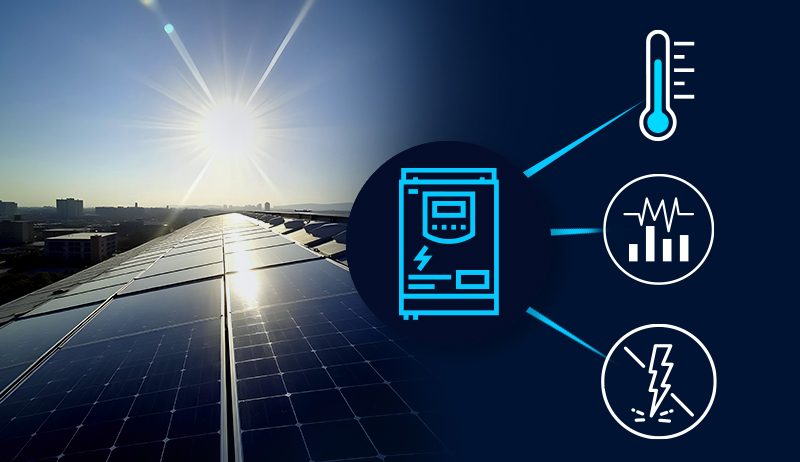
In the upshot, proper timing and expert intervention make all the difference regarding solar panel performance.
By partnering with Cyanergy, you’re choosing industry-leading experience, quality service, and a commitment to sustainable energy solutions.
Let us know what other challenges you have encountered while installing solar panels. We’re here to help you maximize your solar investment efficiently, affordably, and reliably.
Trust